CPMDS News
2026 Summer Intern Program

The 2026 UC Davis Health Summer Internship Program in Precision Medicine and Data Sciences welcomed high school and undergraduate students for an immersive, four-week exploration of the rapidly evolving intersection of biology, medicine and computation. Through hands-on coding, guided workshops and collaborative projects, participants built practical skills across molecular modeling, pharmacology, multiscale physiology, data science and artificial intelligence—learning how integrated approaches can help address complex biomedical challenges.
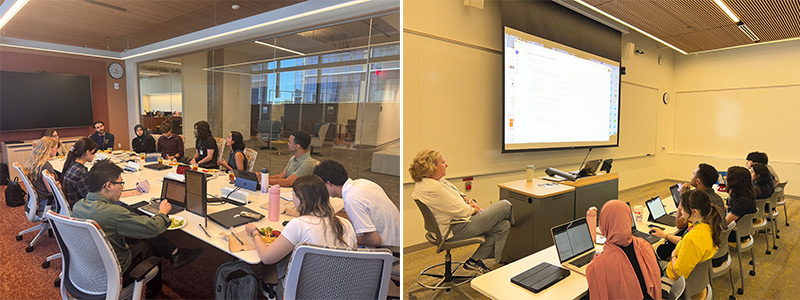
Students applied these skills to real-world research experiences, from simulating cardiac activity and examining how genetic variation affects protein function to using AI tools such as AlphaFold for protein structure prediction and exploring the design of targeted therapeutics. More than a summer internship, the program encouraged curiosity, collaboration and confidence across disciplines, empowering participants to see themselves as future contributors to precision medicine and data-enabled health care.
Optical Digital Twins for Disease Prevention, Diagnosis, Therapy, and Intervention
Optical digital twins are opening new possibilities for disease prevention, diagnosis and personalized treatment.
A new perspective article, “Optical Digital Twins for Disease Prevention, Diagnosis, Therapy, and Intervention,” explores how advanced optical technologies, computational modeling and artificial intelligence could help transform the future of health care.
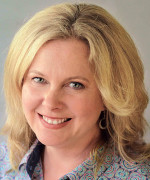
We are proud to highlight Colleen Clancy, Director of the UC Davis Center for Precision Medicine and Data Sciences, as a co-author of this forward-looking publication.
Clancy’s work continues to advance bold, interdisciplinary approaches that connect complex biological data with meaningful clinical insight. Optical digital twins hold exciting potential to deepen our understanding of disease, improve diagnosis, guide treatment and support more individualized interventions.
Congratulations to Director Clancy and her collaborators on helping shape this rapidly emerging frontier in precision medicine!
NIH Office of Research Infrastructure Programs (ORIP) Workshop

Click on the images to enlarge.
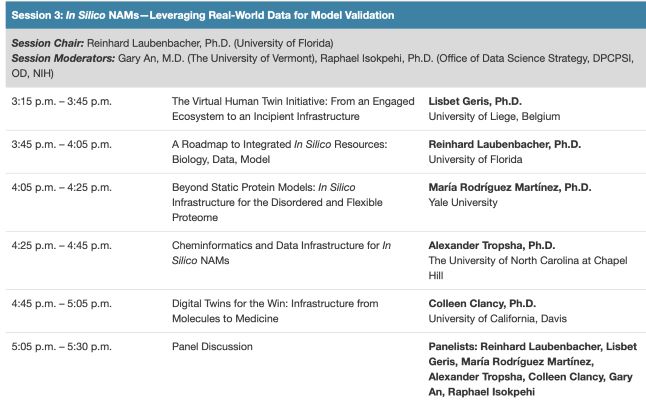

June 2026 — We were honored to participate in the NIH Office of Research Infrastructure Programs (ORIP) Workshop on Advancing Infrastructure to Study Human Diseases, contributing to discussions on the future of innovative models and approaches for biomedical research.
During the In Silico Technologies session, Director Colleen Clancy presented "Digital Twins for the Win: From Molecules to Medicine," highlighting how digital twin technologies integrate mechanistic models, AI, and multimodal data to improve our understanding of disease, accelerate therapeutic discovery, and advance precision medicine.
Thank you to the NIH ORIP organizers and fellow participants for a stimulating conversation about the infrastructure needed to enhance the translatability, reproducibility, and impact of biomedical research.
#DigitalTwins #PrecisionMedicine #ComputationalBiology #SystemsBiology #BiomedicalResearch #NIH #TranslationalScience
Director Colleen Clancy participated in a special symposium at Columbia University
Click on the images to enlarge.


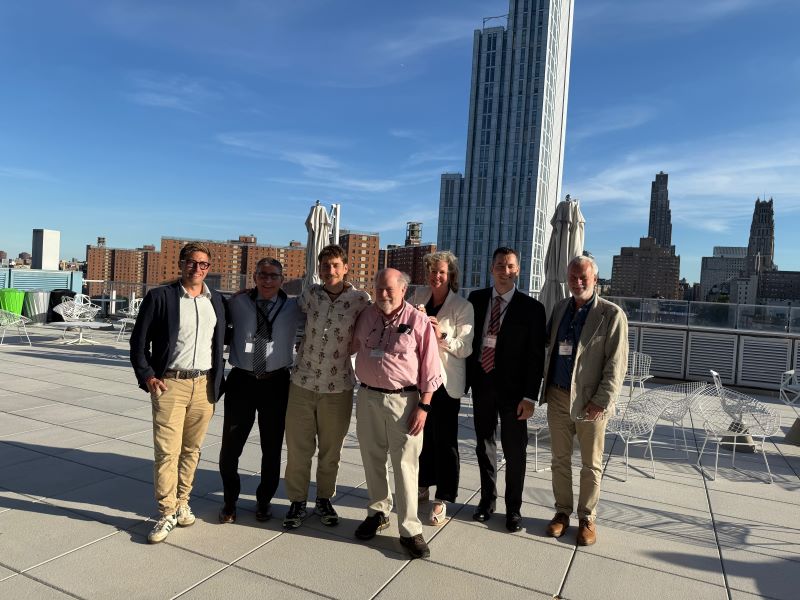
June 2026 — Director Colleen Clancy was honored to participate in a special symposium at Columbia University celebrating the remarkable career and legacy of Professor Robert S. Kass on the occasion of his retirement and 80th birthday.
The symposium brought together former trainees, collaborators, and colleagues to recognize Professor Kass's groundbreaking contributions to cardiovascular science and his extraordinary impact as a mentor. Director Clancy joined fellow speakers in reflecting on the scientific, professional, and personal influence Rocky has had on generations of researchers while sharing advances inspired by his enduring legacy.
Congratulations to Professor Kass on an exceptional career of discovery, leadership, and mentorship. His influence will continue to shape the field and the scientists he has guided for years to come.
Frederick J. Meyers receives two prestigious academic recognitions

April 2026 — Frederick J. Meyers recently received two prestigious honors from the Association for Clinical and Translational Science (ACTS), recognizing his long-standing leadership and impact in the field. Meyers is a distinguished professor of the Department of Internal Medicine, Hematology and Oncology. He was previously director of the Clinical and Translational Science Center (CTSC) training core. He continues in his role as associate director of the comprehensive cancer center’s Office of Education, Training and Workforce Development.
Meyers was named a recipient of the 2026 ACTS Distinguished Educator: Mentorship Innovation Award. He was also inducted into the inaugural cohort of the Fellows of ACTS (FACTS) program. Both were awarded to Meyers in April at the ACTS 2026 Translational Science conference in Milwaukee, Wis.
2025-26 Business Development Fellow - Khoa Ngo

April 2026 — Khoa Ngo, is a postdoctoral fellow in the Center for Precision Medicine and Data Science at UC Davis. Khoa develops tools that translate a person’s DNA into practical medical guidance, helping predict how genetic differences may influence heart-related proteins and medication response. His goal is simple but powerful in helping doctors choose safer, more effective treatments with greater confidence and less trial-and-error.
Khoa was drawn to the Business Development Fellowship after recognizing that discovery alone is not enough. Breakthroughs only matter if they reach patients. He wanted to gain the skills to ensure that the tools he develops are not only scientifically rigorous, but also usable, scalable, and designed with clinicians and healthcare systems in mind.
Emilie Roncali was a Keynote Speaker at the Virtual Imaging Trials in Medicine Workshop 2026
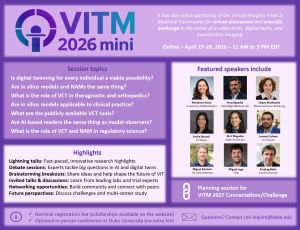
April 2026 — Associate Director for Computational Biomedicine, Emilie Roncali recently gave a keynote on theranostics digital twins and in silico models at the Virtual Imaging Trials in Medicine workshop 2026. This was a two day online gathering of the Virtual Imaging Trials in Medicine Community for virtual discussions and scientific exchange in the world of in-silico trials, digital twins, and quantitative imaging.
In her talk, Roncali introduced core principles of theranostics digital twins, stressing the difference with in silico models. She discussed examples related to nuclear medicine and detailed some of her research on liver digital twins for liver cancer treatment that integrate computational fluid dynamics and radiation physics modeling to optimize treatment. She briefly discussed some ethical considerations to build diverse, equitable, and accessible digital twins.
Same dive, different outcome: Precision medicine in an extreme environment
Voice of the Editor: Professor Colleen E. Clancy, Editor-in-Chief of The Journal of Precision Medicine: Health and Disease
Spring 2026 — Fundamental principles of physiology can be revealed in extreme environments even when not visible under ordinary conditions. Diving to depth is a prime example of an extreme environment in which human physiology is under stress. During diving descent and ascent humans experience rapid changes in pressure that alter the behaviour of dissolved gases within tissues and blood. For more than a century, physiologists, have studied human responses to depth with a particular focus on the risks of gas toxicity. Interestingly, there is a strong precision medicine element to gas toxicity for divers under pressure at depth: Two divers following the same dive profile can experience very different outcomes, where one diver experiences gas toxicity and the other experiences no problem.
2nd Worldwide Sodium Channel Conference 2026
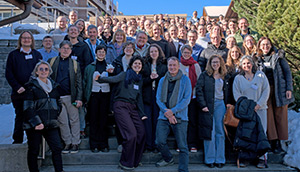
February 2026 — Vladimir Yarov-Yarovoy attended the 2nd World Sodium Channel Conference in Grindelwald, Switzerland, and presented a recently published research project entitled “Exploring voltage-gated sodium channel conformations and protein–protein interactions using AlphaFold2”. This study demonstrates the power of deep learning–based structural methods to advance understanding of voltage-gated sodium channel gating and drug modulation, while emphasizing that computationally predicted states remain hypotheses requiring experimental validation.
Theranostics Digital Twins: A Path to Personalized Medicine
January 2026 — On January 14, the Data Science Seminar Series has tackled an intersection of two critical data science concepts in cancer research: theranostics and digital twins. Emilie Roncali, an associate profession at UC Davis, gave an overview of how these concepts work in practice in liver, prostate, and metastatic cancer.
GenScript Life Science Research Grant (LSRG) for AI Drug Discover Project
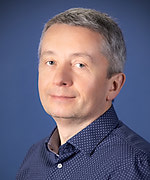
January 2026 — Vladimir Yarov-Yarovoy received the GenScript Life Science Research Grant (LSRG) for AI Drug Discover project. Yarov-Yarovoy’s project focuses on targeting voltage-gated ion channels, which are pivotal in regulating electrical activity in excitable cells and are critical pharmaceutical targets for treating many diseases, including cardiac arrhythmias and neuropathic pain. The LSRG Committee has evaluated over five hundred applications during this review cycle. And selected 19 projects for funding.
Digital Twins as New Approach Methodologies (NAMs) in Biophotonics
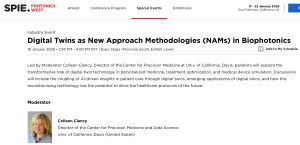
January 2026 — Led by Moderator Colleen Clancy, Director of the Center for Precision Medicine at Univ. of California, Davis, panelists will explore the transformative role of digital twin technology in personalized medicine, treatment optimization, and medical device simulation. Discussions will include the coupling of AI-driven insights in patient care through digital twins, emerging applications of digital twins, and how this revolutionizing technology has the potential to drive the healthcare protocols of the future.
From Fire to Ice: The Future of Thermal Precision Medicine
Professor Colleen E. Clancy, Editor in Chief, Journal of Precision Medicine: Health and Disease
December 2025 — A woman walks into the forest on a winter morning. The air bites at her skin as she wades into a pool carved from glacial runoff. Her breath catches, her vessels constrict, and within seconds, her physiology responds and reconfigures to ensure short term survival. Was this scene set a millennium ago in Norway, or today in the California Sierra Nevada mountains?
Humans have long utilized temperature as therapy. The Edwin Smith Papyrus of ancient Egypt (ca. 3500 BCE) describes cooling inflamed wounds. Hippocrates prescribed cold-water immersion for vitality, while Roman bathhouses included the frigidarium for restoration. In Finland, avantouinti, or winter swimming, is both ritual and medicine. Across centuries, the principle endures: the controlled use of heat and cold to promote health, healing and resilience. It should not be forgotten that the history of thermal research also carries a sinister legacy: during World War II, Nazi physicians conducted the Dachau hypothermia experiments, in which prisoners were subjected to lethal cold in the name of “science”. The pursuit of physiological knowledge must always be bound by ethics and humanity.
The Physiological Society’s Member Forum
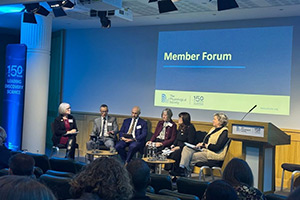
December 2025 — Publishing in the Physiological Society’s family journals supports the future of physiology. To tell us more about research and publishing, the journal's Editors-in-Chief, including Director Colleen Clancy, took to the stage for the In Conversation session at the Member Forum.
Digital Twins and Precision Medicine for Cardiovascular Disease
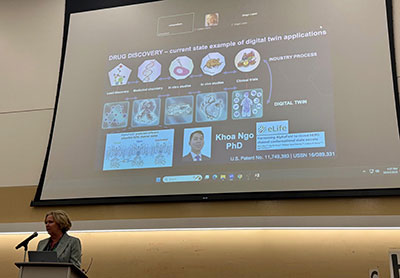 Colleen Clancy, Ph.D. — Institute for Precision Medicine, UC Davis
UC Davis Heart Research Day 2025 Keynote Presentation
October 2025 — Director Colleen Clancy presented groundbreaking work from the Center on the development and application of digital twin technologies to revolutionize cardiovascular care. Her talk highlighted how computational modeling, artificial intelligence, and multimodal biomedical data integration are converging to create individualized virtual replicas or “digital twins” of the human heart.
Digital twins enable researchers and clinicians to simulate disease progression, test therapeutic interventions, and predict patient-specific outcomes with unprecedented precision. Clancy discussed current advances in modeling cardiac dysfunction and recovery, and showcased how this approach is laying the foundation for next-generation diagnostics and personalized therapies in cardiovascular medicine.
CPMDS Featured as Transforming Biomedical Discovery through HPC
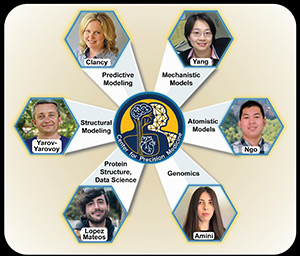
October 2025 — The Center for Precision Medicine and Data Sciences team uses HPC@UCD to study biomedical challenges across multiple scales by integrating molecular modeling, large-scale data analytics, and machine learning. Their work spans from building and simulating large protein systems, such as voltage-gated ion channels, studying how modulators influence their structure and function; analyzing large-scale omics datasets to identify disease-related genes, proteins, and networks; developing predictive AI models that capture the effects of genetic variants; and simulating populations of synthetic cardiomyocytes to model electrophysiological variability and drug sensitivity.
Director Clancy served as Co-Chair and Plenary Speaker at NIH Digital Twins Workshop
September 2025 — Director Colleen E. Clancy, Ph.D., recently co-chaired the NIH Digital Twins in Heart, Lung, Blood, and Sleep Research Workshop, held virtually on September 25–26, 2025. This two-day meeting brought together leaders across science, medicine, and engineering to advance the role of Digital Twins in precision health. More information and video casts can be found here.
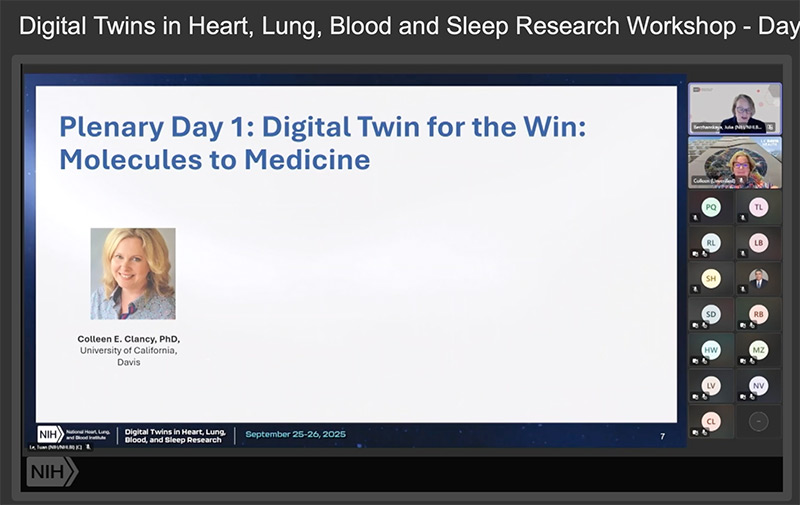
In addition to co-chairing the workshop, Clancy delivered the Plenary Lecture and presented a second talk on the development of precision digital twins in cardiovascular and translational medicine.
The NIH has embraced the concept of Digital Twins, as outlined in a 2024 report from the National Academies of Science, Engineering, and Medicine (NASEM):
“A Digital Twin is a set of virtual information constructs that mimics the structure, context, and behavior of a natural, engineered, or social system (or system-of-systems), is dynamically updated with data from its physical twin, has a predictive capability, and informs decisions that realize value. The bidirectional interaction between the virtual and the physical is central to the Digital Twin.”
This workshop followed the NASEM framework while highlighting applications in Heart, Lung, Blood, and Sleep (HLBS) research. The goals were to showcase the latest scientific advances, identify research gaps, and catalyze collaborations. Sessions also emphasized how NIH resources—including Biodata Catalyst and NHLBI-AI—can accelerate Digital Twin development.
By convening clinicians, scientists, engineers, entrepreneurs, and program staff, this workshop marked an important step in building a robust community of practice around Digital Twins in HLBS research.
Director Clancy presented at the Bay Area Cardiovascular Research Symposium at Stanford University in August 2025
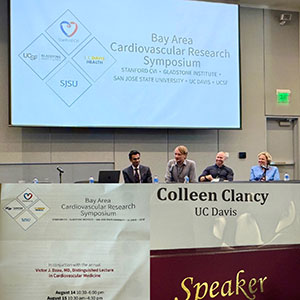
August 2025 — Director Clancy presented at the Bay Area Cardiovascular Research Symposium, “Digital Twins: From Molecule to Medicine”. Stanford University. August 2025. She discussed how digital twins can be applied across multiple disciplinary domains and application from drug discover to digital twin guided clinical trials.
Khoa Ngo Receives UC Davis Business Development Fellowship
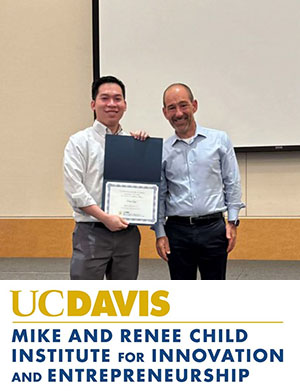
August 2025 — Khoa Ngo, Ph.D., a Postdoctoral Fellow in the Center for Precision Medicine and Data Science at UC Davis, was awarded a Business Development Fellowship from the UC Davis Mike and Renée Child Institute for Innovation and Entrepreneurship. The fellowship helps researchers learn how to bring new ideas from academic research into real-world settings, whether through industry partnerships or new ventures. Through MBA-level coursework, interdisciplinary practicums with MBA students, and guidance from faculty, investors, and entrepreneurs, Ngo is gaining practical training in evaluating the potential of emerging technologies and communicating their value to diverse stakeholders, strengthening the translational reach of his work in computational precision medicine.
Educating for precision: Physiology through a precision medicine lens
Voice of the Editor: Professor Colleen E. Clancy, Editor-in-Chief of The Journal of Precision Medicine: Health and Disease
Summer 2025 — Explosions in development and application of biomedical technologies and the increasingly clear relevance of individual variability in health outcomes is shifting fundamental approaches to biomedical research. Precision medicine, as both a scientific framework and a clinical necessity, constitutes a foundation on which to rethink the structure and substance of biomedical education. The teaching of physiology must evolve quickly to move beyond static established models to reflect the complex, heterogeneous and messy realities of human biology.
Historically, physiology education has centred on canonical representations of average or idealised systems. While this approach has provided clarity, consistency and strong “mental models”, it fails to capture the biological diversity and contextual sensitivity that precision medicine requires. Among the most pressing challenges is the tendency of educational curricula to resist change, so-called curricular inertia, particularly in the persistence of reductionist approaches and educational frameworks that omit variability across sex, ancestry, and molecular phenotype. The other enormous gap is in computational literacy, constituting a substantial barrier for both learners and instructors to make use of the machine learning, multiscale modelling and analyses tools for high-dimensional omics data.
Colleen Clancy and Vladimir Yarov-Yarovoy appointed to HESI Conduction in Silico Subteam

June 2025 — In June 2025, Colleen Clancy attended the Biannual Meeting of the National Academy of Sciences in Washington, D.C. She and Yarov-Yarovoy were recently appointed to the the Health and Environmental Sciences Institute (HESI) Conduction In Silico Subteam working group. These appointments underscore the Center leadership in computational modeling of cardiac electrophysiology and her commitment to advancing regulatory science. As subteam lead and member, they will guide efforts to develop and refine in silico tools for evaluating conduction-related cardiac safety liabilities, contributing to cross-sector collaboration at the interface of pharmacology, toxicology, and computational biophysics.
Colleen Clancy and Igor Vorobyov Present at HRS April, 2025
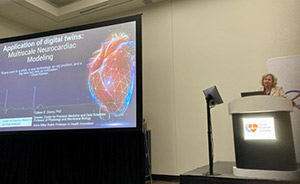
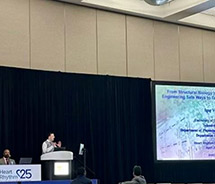
April 2025 — At the 2025 Heart Rhythm Society Scientific Sessions, Colleen Clancy and Igor Vorobyov delivered cutting-edge presentations highlighting advancements in cardiac electrophysiology modeling. Clancy discussed the integration of multiscale digital twin technologies for predictive simulation of arrhythmogenic risk, while Vorobyov showcased novel computational frameworks for ion channel dynamics and membrane interactions. Together, their work emphasized the power of interdisciplinary modeling in driving precision medicine for heart rhythm disorders.
Clancy and Yarov-Yarovoy Present at the April 2025 British Pharmacological Society Meeting
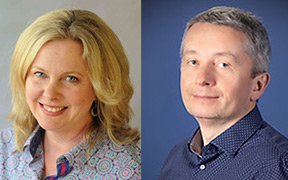
April 2025 — At the 2025 British Pharmacological Society Meeting, Colleen Clancy and Vladimir Yarov-Yarovoy presented their collaborative work in a session entitled “Toward Design of Biologics Targeting Ion Channels.” Their talk highlighted recent advances in computational modeling and rational design strategies aimed at developing next-generation peptide therapeutics that selectively modulate ion channel function. Clancy shared insights into multiscale simulations and digital twin approaches for evaluating drug-channel interactions in silico, while Yarov-Yarovoy focused on structure-based design and optimization of biologics derived from natural toxins. Together, their work represents a major step forward in precision pharmacology targeting excitable tissues.
The Journal of Precision Medicine: Health and Disease

March 2025 — So excited to launch this new journal from the Physiological Society as a venue for precision medicine. We offer free open access publication for the first two years! Reach out to discuss a submission, or take a look at our guide to authors - we likely have an article type to suit your needs. Have a research breakthrough that can be described in one figure? We can guarantee rapid turnaround - and did I mention free open access?
Watch the full video of the conversation with Editor-in-Chief, Colleen Clancy, who introduces the Journal of Precision Medicine: Health and Disease, one of the newest additions to the Physiological Society's family of journals.
Presentations by Clancy and Hernandez-Hernandez at the February 2025 Biophysical Society National Meeting
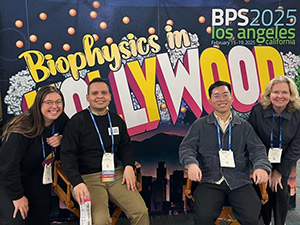
February 2025 — At the 2025 Biophysical Society National Meeting, Colleen Clancy and Gonzalo Hernandez-Hernandez delivered insightful presentations showcasing the intersection of biophysics and computational modeling. Clancy explored state-of-the-art digital twin methodologies applied to cardiac electrophysiology, emphasizing predictive modeling approaches for drug safety and arrhythmia susceptibility. Hernandez-Hernandez presented, "A Computational Model of Angiotensin II Receptor Type 1 Dynamics: Insights into Vascular Regulation". Their contributions underscored the critical role of biophysical modeling in advancing translational research and precision medicine.
Director Clancy co-authored the Cambridge based Public Health Genomics Foundation report to the British Parliament entitled “Physiology Passport: Putting Personalized Prevention at the Heart of Resilient Health Systems” steering group
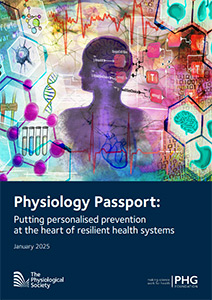
January 2025 — Professor Colleen Clancy has contributed to the “Physiology Passport: Putting Personalized Prevention at the Heart of Resilient Health Systems” steering group. A copy of the report can be found at: physoc.org/PhysiologyPassport.
The project has been a fantastic opportunity to bring Clancy's expertise in the area to understand how physiological research, in concert with genetics, epidemiology, behavioral science and other disciplines, can support a personalized approach to preventative health.
Building digital twins and hearts
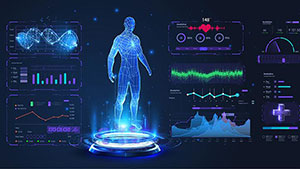
January 2025 — Imagine having a digital carbon copy of yourself that physicians could use to predict long-term risks for disease, assess how your body may respond to treatment, and simulate surgeries in advance. A virtual twin may sound as far-fetched as robotic surgery and self-driving cars once did, but researchers are studying how to turn this vision into a reality.
“I hope I see it in my lifetime,” said Colleen E. Clancy, Ph.D., the director of precision medicine and data sciences at the University of California, Davis Health and School of Medicine. “I think we’re on the cusp of real, personalized medicine.”
Colleen Clancy Presented at the Seventh Annual Reimagine Health Research Symposium
December 2024 — Colleen Clancy, Ph.D., professor and director of Precision Medicine and Data Sciences, was an invited presenter at the Seventh Annual Reimagine Health Research Symposium hosted at The University of Arizona College of Medicine – Phoenix Campus in downtown Phoenix, Arizona and virtually via Zoom. Her presentation title was, "Digital twins from the atom to the neighbor".
The 7th Annual reimagine Health Research Symposium on Artificial Intelligence in Medical Practice and Research concerns the emerging and rapidly growing use of AI and machine learning in medicine, with a focus on how AI can improve medical practice, in terms of diagnoses and medical forecasting, as well as applications, and on how AI can be used to accelerate medical research. It will also be discussed how this new technology will benefit both practitioners and patients and how it will better inform rapid acceleration of research progress, as it has in other fields.
Society welcomes inaugural Editors-in-Chief for The Journal of Precision Medicine: Health and Disease and The Journal of Nutritional Physiology
December 2024 — Following the announcement of The Physiological Society’s partnership with Elsevier to launch a new journal, we are delighted to introduce the Editor-in-Chief (Colleen E. Clancy) and Deputy Editor in Chief (Vladimir Yarov-Yarovoy) of The Journal of Precision Medicine: Health and Disease.
Clancy to present at the Division of Cardiovascular Sciences (DCVS) Strategic Vision Webinar Series
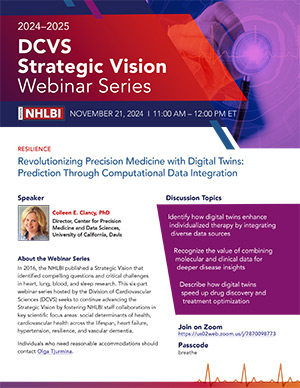
November 2024 — Colleen Clancy, Ph.D., professor and director of Precision Medicine and Data Sciences, has been invited to present in a virtual seminar series, “Strategic Vision Webinar Series”, hosted by the Division of Cardiovascular Sciences (DCVS). Clancy will present at the session dedicated to the Enhancing resilience. The topic of the presentation is "Revolutionizing Precision Medicine with Digital Twins: Prediction Through Computational Data Integration".
Clancy Presented at the Sixth Annual Cedar Sinai Precision Health Research Symposium
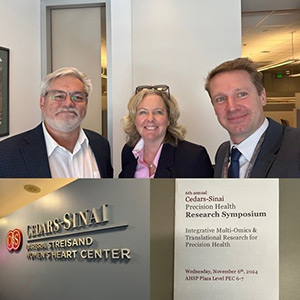
November 2024 — On November 6, 2024, Director Clancy joined other esteemed scientists to present at the sixth annual Cedar Sinai Precision Health Research Symposium. This year’s topic was focused on “Integrative Multi Mix and Translational Research for Precision Health”. It was a lively session with thrilling presentations about the future of precision medicine from Professors Steve Finkbeiner from The Gladstone and UCSF and Megan Hitchins from Cedars-Sinai. Spirited discussion during the moderated session.
2024 Nobel Prize Week Celebration
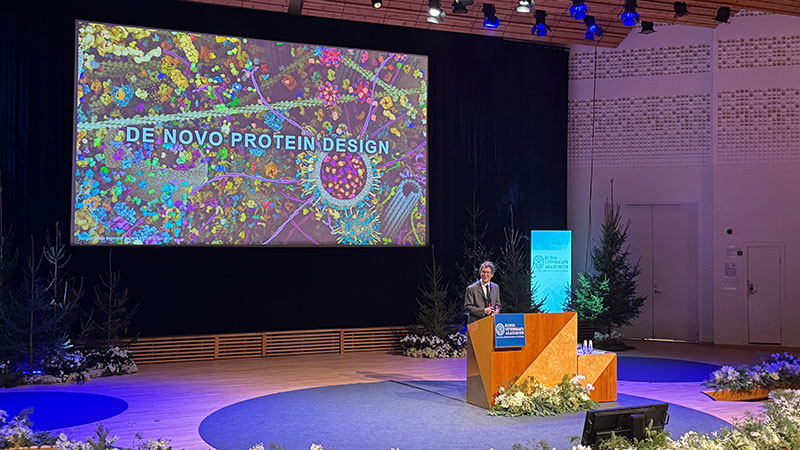
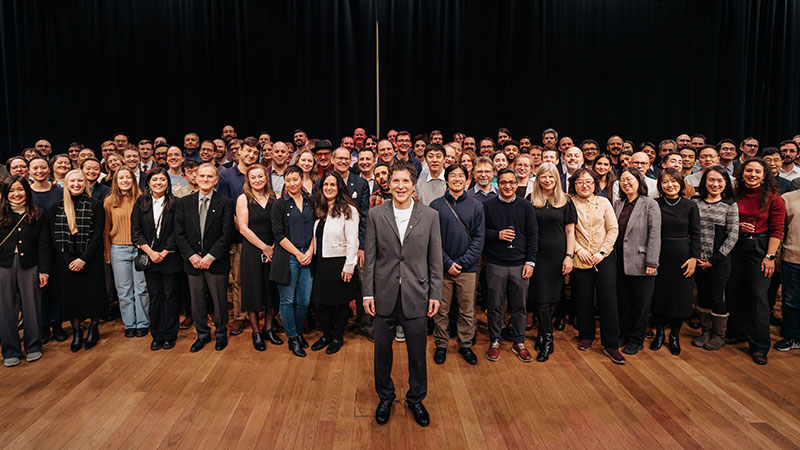
October 2024 — Professor Vladimir Yarov-Yarovoy (Associate Director of the Center for Precision Medicine and Data Sciences) attending the 2024 Nobel Prize Week celebration in Stockholm, Sweden. Professor David Baker (Professor Vladimir Yarov-Yarovoy’s postdoc and NIH Career Development grant mentor) received the 2024 Nobel Prize in Chemistry “for computational protein design”.
See also:
- https://www.nobelprize.org/prizes/chemistry/2024/press-release/
- https://www.nobelprize.org/prizes/chemistry/2024/baker/lecture/
- https://www.nobelprize.org/prizes/chemistry/2024/baker/facts/
Gonzalo Hernandez-Hernandez Recognized at UC Davis Chancellor’s Postdoctoral Reception
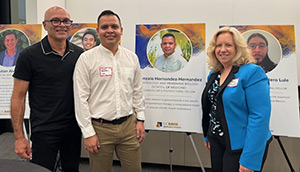
October 2024 — Gonzalo Hernandez-Hernandez has officially begun his UC Davis Chancellor’s Postdoctoral Fellowship through the University of California President’s Postdoctoral Fellowship Program. The fellowship provides scholars with exceptional professional development and faculty mentorship opportunities. Aimed at individuals with unique perspectives shaped by non-traditional educational backgrounds or a deep understanding of the experiences of historically underrepresented groups in higher education, the program works to enhance diversity within the academic community at the University of California.
Hernandez-Hernandez was recognized for his contributions to promoting diversity, including research focused on increasing equitable access in fields where women and minorities remain underrepresented. His project, titled “Predicting the Impact of Sex-Specific Differences in Vascular Smooth Muscle Cells in Mechanisms of Hypertension,” explores the development of tailored antihypertensive treatments based on sex. Guided by mentors Professor Fernando Santana and Professor Colleen Clancy, his work aims to advance precision medicine in hypertension treatment.
Gonzalo was honored during the Chancellor’s Postdoctoral Fellow reception, which kicked off Postdoctoral Appreciation Week, alongside his mentor, Professor Santana, and Provost Mary Croughan.
Colleen Clancy Presented the State of the Art Lecture at the ISHR-NAS Meeting
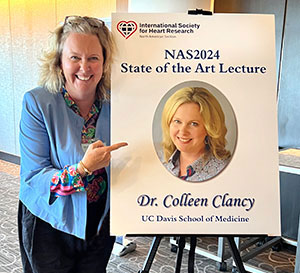
August 2024 — Colleen Clancy, Ph.D., professor and director of Precision Medicine and Data Sciences, presented the state of the art lecture about her recent work on computational digital twins at the International Society for Heart Research (ISHR) - NAS meeting.
Fred Meyers Begins Term as Chair of City Year Sacramento Board
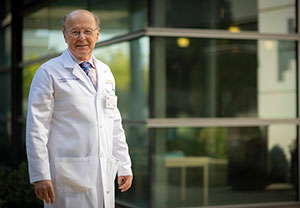
August 2024 — Fred Meyers, M.D., Distinguished Professor Emeritus of Internal Medicine/Hematology-Oncology at UC Davis School of Medicine, has begun his term as Board Chair for City Year Sacramento (CYSac). CYSac, an AmeriCorps education non-profit, recruits young adults for a year of service as Student Success Coaches (SSCs) in under-resourced schools within the Oak Park and South Sacramento areas of the Sacramento City Unified School District.
"My passion for City Year Sacramento stems from its mission to embrace education as the surest path to good health for individuals and our communities," said Fred Meyers.
New Extramural Funding
July 2024 — New extramural funding including NIH grant R01HL128537, “Digital Twins from the Atom to the Rhythm” (R01), and R01HL152681 “Metabolic Control of Cardiac Pacemaking” (R01) from the National Institutes of Health. Heart, Blood and Lung Institute, have been awarded.
UC Davis Health Team Uses AI to Predict Risk of Liver Cancer
New algorithms developed by clinicians and data scientists could help personalize treatment
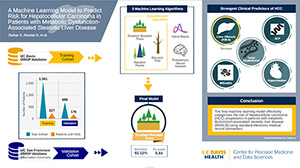
February 2024 — A team of UC Davis Health clinicians and data scientists have developed a machine-learning model to better predict which patients are at greater risk of developing a common type of liver cancer, hepatocellular carcinoma (HCC).
The findings of their research — published in the journal Gastro Hep Advances — describe how predictive-learning can aid physicians in providing early HCC risk assessments for patients diagnosed with metabolic dysfunction-associated steatotic liver disease, or MASLD. The pilot technology may be able to give physicians critical information to screen patients more closely and thus offer more personalized care.