


Departmental Mission
 Our Mission is to develop new approaches for the prevention and treatment of infectious diseases and immunologic disorders. Department programs are integral to the School's new Initiative on Infectious Diseases. Researchers use state-of-the-art technologies of genomics, proteomics and imaging to study the genes and proteins of the pathogens and their hosts to identify novel targets for prevention and therapy.
What’s Happening in Medical Microbiology and Immunology
Food for Thought - Breast Cancer Research at UC Davis Health
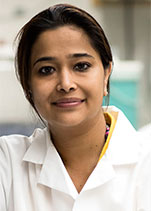 Sanchita Bhatnagar, Ph.D.
Together, we can turn Breast Cancer discoveries into life-saving patient care. Sanchita Bhatnagar, Ph.D., associate professor in the Department of Medical Microbiology and Immunology was one of the presenters in Food for Thought conversation about the future of breast cancer research at UC Davis Comprehensive Cancer Center.
During the program, they shared how their research is helping uncover new possibilities across breast cancer prevention, detection, and treatment.
Sanchita Bhatnagar is investigating genetic factors associated with aggressive triple-negative breast cancer in Black women, with the goal of improving diagnosis, prognosis and treatment.
Toxic PCBs, sex-biased genes and the developing brain
 Janine LaSalle, Ph.D.
In two new studies, researchers at the UC Davis MIND Institute have clarified how a long-banned group of chemicals, called polychlorinated biphenyls (PCBs) affect genetic activity. The research helps explain how biological systems respond to these exposures, including key differences between males and females.
“PCBs were banned in the 1970s but are still around us,” said Janine LaSalle, professor in the Department of Medical Microbiology and Immunology, MIND Institute faculty member and senior author on both studies. “PCB chemicals are decreasing in the environment, but surprisingly, low exposure levels aren’t always less hazardous. Higher chemical levels can trigger the body to turn on DNA repair and other stress-related pathways. However, lower levels can slip under the body’s radar and have long-term effects.”
Inaugural symposium connects UC Davis scientists with biotech leaders

More than 100 students, postdoctoral scholars, faculty members and biotechnology leaders gathered April 3 for the Department of Medical Microbiology and Immunology’s inaugural symposium, Breaking Boundaries — From Discovery to Intervention, marking a successful first step in building deeper connections between academic research and industry innovation at UC Davis.
Held at the Genome and Biomedical Sciences Facility on the UC Davis campus, the daylong event brought together thought leaders from academia and the biotechnology sector to explore how bench discoveries can more effectively translate into real-world interventions. Attendees described the symposium as energetic, engaging and rich with opportunities for meaningful conversation and collaboration.
Regulatory T cells altered in children with autism
 Paul Ashwood, Ph.D.
Two new studies from the UC Davis MIND Institute examined regulatory T cells (Tregs) and their potential role in neuroinflammation and behavioral changes associated with autism.
Tregs act as immune system "brakes," calming inflammation to prevent overreaction. They are often decreased in autistic individuals.
Previous studies have found higher levels of inflammatory immune cells in the blood, brain and gastrointestinal tissues of people with autism. These increased inflammatory responses are often linked to greater behavioral support needs, while higher levels of Tregs are associated with improved behavioral outcomes. Despite this, Tregs have not been well studied in autistic children, and their potential as a therapeutic target remains largely unexplored.
Faculty in the News
Food for Thought - Breast Cancer Research at UC Davis Health

Toxic PCBs, sex-biased genes and the developing brain
Regulatory T cells altered in children with autism
Post-docs, Scientists and Students in the News
Funding Opportunity: Dorothy Ross Graduate Student Research Award
New study by Lauren Radlinski shows how Salmonella tricks gut defenses to cause infection.