

An improved exercise routine is a popular New Year’s resolution. Often, people focus on workouts such as running, walking or cycling. But that’s not the only important type of exercise to perform. Resistance training is also critical for overall health, strength and longevity.
Has it been a while since you were in a gym — or tried to work out at home?
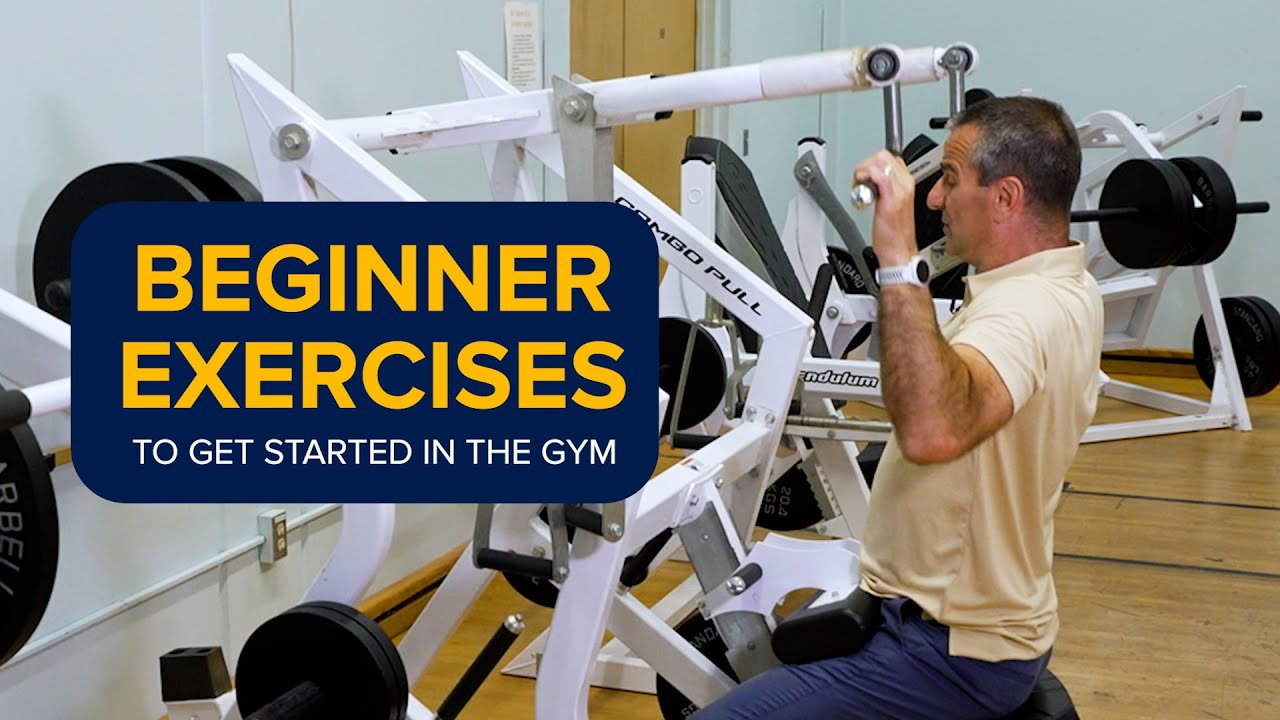
UC Davis Health Professor of molecular exercise physiology Keith Baar has some helpful tips and tools to build your strength and muscle mass. In the video above, he demonstrates three simple exercises to get you started at the gym and allow you to progress with minimal pain and time. He also answers questions about how to get started with a resistance training routine — and why it matters.
What is the best exercise to lead a healthy life?
The number one predictor of longevity in humans is muscle mass and strength. If you're in the strongest third of the population in midlife, you are two and a half times more likely to make it to your 100th birthday.
So, when doctors tell patients they should exercise, people generally interpret that as running, walking or other rhythmic activities. Those endurance exercises are good for health and increase the volume of your heart. What they do not do is increase strength very much or lead to bigger and stronger muscles. To build our muscle mass and strength we need to move against a heavier load. This is resistance exercise.
Do I need to go to a gym to perform resistance exercises?
We can do resistance exercise using whatever available tools we have. A gym usually has free weights, weight machines, and dumbbells. At home, you can replace those with cloth bags used in shopping that you fill with random items. Using bags, cans and water as your weights can save you money and work just as well.
Whatever weights you have, it will be enough to give you a stimulus and make your muscle bigger and stronger. So, it doesn't matter whether I lift a tiny little weight or a big heavy weight. If I go until I cannot or barely can lift anymore, that is all the stimulus I need.
Learn how lunges, squats and holds strengthen your tendons and ligaments
How much do I need to lift or exercise to build my muscles?
If you can get to that point of muscle failure, where you can't quite lift the weight anymore, then that's all you need. You don't have to do another set, and you don't have to do any more repetitions. The key is that you record how much you lifted and how many repetitions you complete. Next time you exercise, either do more repetitions or lift a slightly heavier weight.
This means, no matter what weight you start at, as you hit your goals, you will quickly increase your weight. Within two or three weeks — no matter how light you started — you will be lifting at a weight that's challenging you. That will give you a great stimulus to get bigger and stronger.
Learn how to improve your stretching and flexibility for better health
What is a good strength training exercise routine?
You can create your own exercise routine. If you do a big pressing movement with the legs, a big pressing movement with your upper body and a big pulling movement with your upper body, that is enough to get most of your muscles. As you get good at that routine, you can add more exercises.
I would start with an exercise for leg muscles, like leg press or squatting. For my big upper body push, I would do shoulder or chest press. I will end with a pulling exercise, such as chin up or pulldown.
How can I strengthen my leg muscles?
Once you have mastered the leg press or squat, you can add isolation exercises like leg extensions and leg curls. When using an isolation machine for leg exercises, go up on one count and down on two-count. Going up on a leg extension will shorten the quadricep muscle, whereas going down will lengthen it under load. We spend a little bit more time on the eccentric phase —the lengthening phase of the muscle — to give more of a stimulus for that muscle to get bigger and stronger.
Is ‘no pain, no gain’ valid for building muscles and exercise?
I don’t need pain to make gains. We make the most gains in muscle mass and strength muscles after we get used to the exercise and we don’t feel pain the next day or the day after.
Learn more about flexibility from UC Davis Health Sports Medicine
How many times a week should you exercise?
The number of times to exercise will depend on how quickly you recover and how hard you train. The harder you go on an exercise, the longer it will take you to recover.
If you start with two times a week and you’re seeing progress, you can go for a third time. See how your body responds. If your body continues getting stronger, that is great. If your body starts performing worse, you might be overtraining. Go back to two times a week.
Whether it is endurance exercises or resistance exercises, what matters is to start and stay consistent.
Check out this 8-week exercise plan for heart health
Explore our sports performance program
Related Readings:
Lunges, squats and holds for stronger tendons and ligaments
Study shows that keto diet boosts size and strength of aging muscles, improves brain health
Effects of Different Loading Programs on Finger Strength in Rock Climbers