
The leading cause of vomiting, diarrhea, and foodborne illness in the U.S. – norovirus – is picking up steam during the winter months.
Norovirus is highly contagious. It travels from person to person a bit differently than the respiratory viruses that cause flu, COVID and common colds. That can be both good and bad news.
Our experts give you the facts about norovirus symptoms and behavior – and how you can increase your chances of avoiding this bug.
What is norovirus?
Norovirus is one of several intestinal viruses that cause diarrhea, vomiting and gut cramps. These symptoms can last for multiple days. Sometimes, this can lead to dangerous levels of dehydration.
When you hear about outbreaks of stomach illness in places like cruise ships, day cares and senior facilities, it's likely norovirus. It's sometimes even called "the cruise ship virus." These are all places where people spend time close together. They also usually eat and drink from the same food source.
For many people, those conditions also happen during holiday gatherings.
Learn more about norovirus symptoms, causes and more
How long do norovirus symptoms last?
Norovirus symptoms usually start 12 to 48 hours after contact with the virus, according to the California Department of Public Health (CDPH). A person may vomit and/or have diarrhea many times a day, with symptoms usually lasting 1 to 3 days.
How is norovirus treated?
There's no specific treatment for norovirus, and it usually gets better on its own. There are things you can do to ease symptoms. These include resting and drinking extra liquids to help restore the fluids that lost during diarrhea and vomiting.
When symptoms are severe, health care providers may give intravenous (IV) fluids to treat severe dehydration.
No licensed antiviral therapy (such as Tamiflu) is currently available for norovirus. Some off-label agents are sometimes used for immunocompromised patients with weakened immune systems.
Find out when norovirus symptoms are an emergency
How does norovirus spread?
Norovirus mainly spreads when someone swallows vomit or particles of feces from an infected person. This can happen in several ways:
- Preparing food without proper hygiene:When an infected person doesn't wash their hands before making food, they are more likely to contaminate it.
- Putting contaminated items in your mouth: If your fingers or other objects (like a pen you chew on) go into your mouth, norovirus can go with them.
- Touching infected people: Shaking hands or caring for someone who is sick can spread the virus.
According to CDPH, a person is most contagious from when they start feeling sick until a few days after symptoms stop. However, they may still be contagious for two weeks or longer after feeling better.
Sign up for our Health Highlights e-newsletter
Can you get norovirus by breathing it in?
Breathing in virus particles is not thought to be the primary way that norovirus spreads. It doesn't invade your body by infecting cells inside your nose, mouth or airway like respiratory viruses. Instead, it infects your gut after reaching it with food or saliva.
Generally, it isn't recommended to wear a mask in a crowded indoor place to avoid norovirus. However, it is possible that being near an sick person, or while cleaning up after them, could expose you to tiny droplets that contain the virus. The particles can enter your mouth, so wearing a mask during clean-up can still be a good idea.
Learn when to be concerned about diarrhea in your child
How contagious or spreadable is norovirus?
Norovirus is very contagious. It is more contagious than the flu and COVID-19, but it's not as contagious asmeasles.
Why is norovirus so contagious?
Norovirus has an outer shell of protein that's much tougher than the soft envelope of fat around viruses like the flu or COVID.
This protects the norovirus from many things that could kill a lesser virus, such as:
- Temperature swings: Noroviruses can live through temps as high as 145°F and as low as freezing. This helps it survive food storage and prep.
- Acidic conditions: Norovirus can survive exposure to stomach acid.
- Cleaning products: Hand sanitizer doesn't work well on norovirus. Neither do many common cleaning wipes or products, unless registered for killing norovirus.
- Weather and physical contact: It can survive for days or weeks on doorknobs, countertops, phones and hard surfaces.
The amount of norovirus that it takes to cause illness is also remarkably low – as few as 18 to 1,000 viral particles. A single episode of vomiting contains enough virus to infect 150,000 people.
Check out these steps to clean, disinfect and do laundry during norovirus infection
How can I protect myself from norovirus?
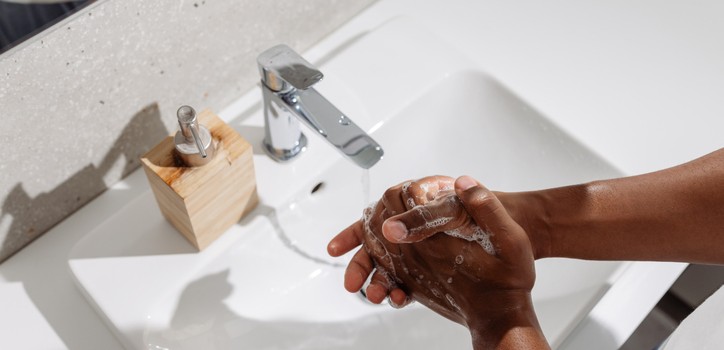
Don't eat food prepared by people who are sick or were sick recently. But that can be hard to control. You can also make sure that you clean your hands at key times, by washing them with soap and water for at least 20 seconds.
A simple rule could be to wash your hands before you put something in your mouth. This is especially important in a group setting or while around someone who's sick.
If you're concerned about norovirus, here are some times you should wash your hands before eating:
- At a shared meal, after serving dishes have made the rounds and you've loaded your plate.
- While snacking, if using shared serving utensils or while pouring drinks from a shared bottle.
- After shaking hands when greeting someone at a gathering with food and drink.
- At a restaurant, after touching shared items like a menu, or the serving utensils in a salad bar or buffet.
- At the workplace, if you're snacking while using a computer or other equipment.
If you can't wash your hands before touching food, you could also stick to eating with utensils only.
How can you best kill norovirus when doing dishes?
Cleaning dishes and utensils in a dishwasher is the most reliable way to prevent norovirus spread. That is because the water typically reaches 140-160°F in the sanitizing cycle.
The blend of hot water and detergents in dishwashers is enough to decontaminate dishware and eating utensils. No special precautions are needed beyond standard dishwashing.
Can I track norovirus levels?
Public health officials look for trends and spikes by watching how much virus shows up at wastewater treatment plants. They use tools such as theWastewaterSCAN program.
See searchable WastewaterSCAN data here
State and local health officials also track outbreaks of norovirus. (An outbreak is when two or more people get sick from a common source.) They may issue alerts through the news media and social media.
Get started with UC Davis Telehealth Express Care
This blog was medically reviewed by Dean Blumberg, M.D.