
Loots Lab
Advancing research of genome elements and regulatory proteins control cell-specific gene networks in health and disease.
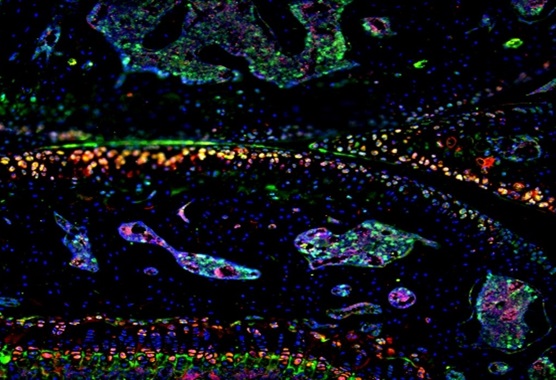
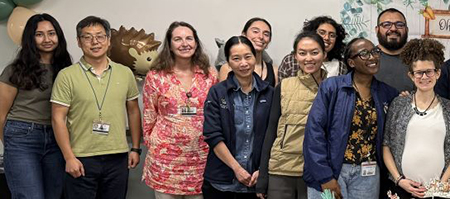
The Loots Lab investigates the molecular pathways that regulate cartilage and bone during development, growth, maintenance, tissue repair and aging. We also study how the bone microenvironment supports the homing and growth of cancer cells during bone metastasis in aggressive cancers, including breast, prostate and bladder cancer.
Using leading-edge genetic, molecular and computational approaches, we explore how disruptions in these pathways contribute to musculoskeletal diseases such as osteoporosis and osteoarthritis. We are also interested in understanding how the immune system can be harnessed to promote tissue regeneration and improve healing.
Our long-term goal is to translate fundamental discoveries into innovative therapeutic strategies that prevent tissue damage, slow age-related degeneration and enhance musculoskeletal resilience throughout life.
The Loots Lab is affiliated with the UC Davis Comprehensive Cancer Center and Lawrence Livermore National Laboratory. We also contribute to graduate education through the Integrative Pathology, Integrative Genetics and Genomics, and Biomedical Engineering graduate groups.
We are committed to fostering an inclusive, collaborative and supportive research environment. We welcome individuals from diverse backgrounds, identities and experiences and believe that a broad range of perspectives strengthens scientific discovery and drives innovation.
We invite you to explore our research, publications and team. If you are interested in joining the lab or collaborating with us, please contact us.
-

Gabriela G. (Gaby) Loots, Ph.D.
Read biographyProfessor
The Doris Ellison Linn Chair in Bone Biology
Director of Research Laboratories
About the Loots Lab
Our projects span from basic to translational research. We use a combination of animal models of disease and models of human cancers in either genetically modified mice or orthotopic allografts in fully immune competent mice to study our skeletal system and understand how it repairs and regenerates. Our research encompasses a wide range of cutting-edge techniques, from flow cytometry to single-cell omics, to gain a comprehensive understanding of the cellular and molecular mechanisms that govern cellular crosstalk during health and disease.
-
Genomics of post traumatic osteoarthritis (PTOA)
For the last 10 years, our research has focused on understanding the cellular diversity and molecular programs that initiate immediately post-knee injury and has utilized a noninvasive animal model of ACL rupture developed by our collaborator, Blaine Christiansen, Ph.D. We aim to gain a comprehensive understanding of the cellular and molecular mechanisms that drive PTOA and employ genetics and molecular tools to develop therapeutic strategies that would either prevent, slow down or reduce the PTOA disease burden. We employ a wide range of cutting-edge techniques, including single-cell sequencing, in vivo imaging, biomechanics, flow cytometry and genetic manipulations. We are also exploring spatial transcriptomics to get a more comprehensive understanding of cellular crosstalk and molecular architecture in the healthy and injured joint. Our long-term goal is to use this knowledge to develop new therapies and interventions that can prevent the development of PTOA and instruct future clinical studies.
-
Understanding the Contribution of Stromal Cells to Cancer Metastasis
We study the tumor and bone microenvironment to understand how it enables the metastatic process through the secretion of paracrine factors that attract, modulate, retain, and promote proliferation of cancer cells in bone. In prior work we found that bone derived Wnt signaling triggers gene expression changes in cancer cells that enhance their attachment and homing to bone as well as promotes bone malignancies. Most striking, we find that osteoblasts isolated from Sost deficient mice (high Wnt signaling) have a potent positive effect on prostate cancer (PC) migration and invasion; an effect that is dramatically blunted by the addition of recombinant SOST protein. By modulating the bone environment we are examining how osteoporosis, normal and high bone mass affect cancer metastasis, and are conducting OMIC surveys to understand cellular and molecular differences between tumors that remain local vs tumors that metastasize. We also survey proteins expressed by cancer associated fibroblast, and through genetic manipulation we explore how targeting specific components of the extracellular matrix could enhance immune infiltration and T-cell activation. The major goal of this work is to discover new therapies that can prevent the emergence of metastatic bone tumors.
-
OMICs of Musculoskeletal Resilience (MSK)
For the past decade, the Loots/Christiansen labs have been studying both osteoporosis and osteoarthritis in mice and established that the superhealer MRL/MpJ (MRL) mice are resistant to developing PTOA after anterior crucial ligament (ACL) rupture while C57Bl/6 (B6) and STR/ort (STR) mice are highly susceptible and rapidly develop PTOA. In addition to having extraordinary high capacity for tissue repair, the MRL strain also (1) achieves a higher peak bone mass at 4 months of age than most other mouse strains, (2) maintains a higher bone mineral (BMD) density as they age, while also being resistant to (4) ovariectomy (OVX) induced bone loss and (5) to fracture-induced post-traumatic bone loss, relative to other strains, suggesting that genetic and molecular drivers in MRL contribute to this MSK resilient phenotype. Through single cell RNA sequencing (scRNA-seq) analysis and exome sequencing of several mouse strains with varying BMD parameters we have uncovered several novel candidates that we are currently exploring in genetically modified mice to evaluate their potential as therapeutic candidate for osteoporosis and osteoarthritis.
-
Interconnection of Musculoskeletal Disease and Neurodegeneration
Alzheimer’s Disease (AD) and osteoarthritis (OA) are two of the most common health conditions affecting the elderly. We are exploring whether there is a causative association between OA and AD, with prevalent OA increasing the risk of developing AD-like cognitive declines. By utilizing animal models of AD we are exploring whether MSK disorders such as OA induced by non-invasive ACL rupture and osteoporosis (OP) accelerate cognitive decline. We find that female mice are more prone to have both diseases accelerate when they co-occur. These results provide insights into the pathoetiology of AD and OA and suggest possible common mechanisms connecting OA-associated inflammation to cognitive function. Identifying novel mechanisms of crosstalk between these two conditions could improve clinical care and quality of life for at-risk patient populations. Similarly, we have found that Sost-dependent overexpression causes OP and these mice as they age, they also develop AD like phenotypes. We are currently examining bone-brain crosstalk to uncover new mechanisms that may link these diseases.
-
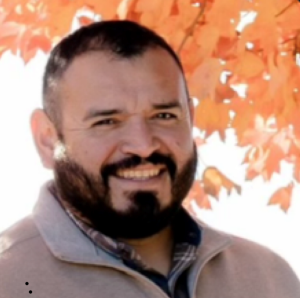
Cesar Morfin, Ph.D.
Cesar's research focuses on identifying causal drivers of disease by uncovering the cellular lineages and regulatory mechanisms underlying both triple-negative breast cancer (TNBC) and prostate cancer progression. He is also interested in understanding how the innate immune system functions during normal bone homeostasis and in metastatic disease.
Outside the lab, Cesar enjoys baseball, Brazilian Jiu-Jitsu, and going on trips and camping with family.
-

Alessia Morato, DVM, Ph.D.
Alessia is a postdoctoral scientist with over 7 years of laboratory experience and a diverse educational background. She is proficient in working various animal models, including mice, and in numerous biology laboratory methods. After training her research skills in the field of mammary gland biology, she is now putting her passion for rigorous scientific methods at the service of human and animal health. Her personal experience and education in Veterinary Medicine triggered a special interest in osteoporosis and hormonal regulation of bone homeostasis. Her current research is primarily focused on investigating sclerostin antibodies’ mechanisms of action, and on finding alternative anabolic strategies. She is also interested in the mechanisms of interactions between bones and the central nervous system, in the context of neurodegenerative disorders.
-

Xin Xing, DDS, Ph.D.
Xin's research interests revolve around bone biology, osteoarthritis, stem cells, bone and dental regeneration, bone-brain cross-talk, and bone-neuron interactions. His hobbies include traveling, hiking, running, and spending time with his family.
-
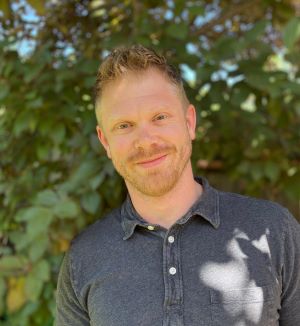
Dovin Kiernan, PhD
Dovin is a biomechanist who has worked in academia and industry to advance the prevention and understanding of musculoskeletal overuse injuries. Dovin employs an interdisciplinary approach, combining traditional laboratory biomechanical measurement, in vivo imaging, computational modeling, and real-world biomechanics measurement with wearable sensors. Currently, his research with the UC Davis Health Department of Orthopaedic Surgery focuses on the mechanisms of bone loss following fractures, identifying risk factors for vertebral compression fractures, and predicting and preventing overuse injuries in athletes.
Dovin is co-mentored by Blaine Christiansen, Ph.D. and Gabriela Loots, Ph.D.
-

Ava Jessen, PhD Student
Ava is currently studying the tumor microenvironment and how it informs immunotherapy efficacy in young/old mice with triple-negative breast cancer (TNBC), as well as TNBC progression, diet, and immunotherapy. Ava's hobbies include playing soccer, going to the gym, and playing the guitar.
-
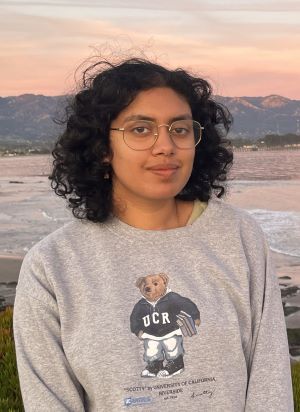
Samhitha Tumkur, PhD Student
Samhitha is interested in immune therapies for early intervention of post-traumatic osteoarthritis (PTOA). Her hobbies include going on hikes, reading, and trying new recipes.
-
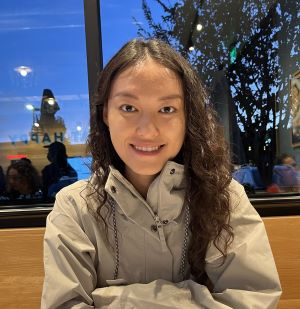
Meiyu Liu, MS Student
Meiyu's research interests revolve around post-traumatic osteoarthritis (PTOA). Her hobbies include cooking, baking, studying nutrition, and working out.
-

Adina Ataran, PhD Student
Adina is working on shared and cancer-specific genetic drivers of bone metastasis with the goal of improving targeted therapies. Outside the lab, she enjoys playing piano, spending time with friends, and learning calligraphy.
-
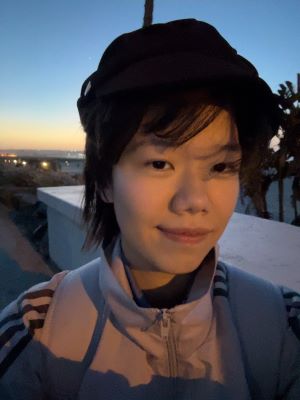
Kaiwen Zhang, PhD Student
Kaiwen is a Ph.D. student in Integrative Genetics and Genomics at UC Davis. Her research interests are in computational biology, functional genomics, and regenerative biology. She's particularly interested in using genomic, single-cell, and bioinformatic approaches to understand the genetic and molecular mechanisms underlying enhanced tissue repair and “superhealer” phenotypes, especially in bone and joint-related tissues.
Outside of research, she enjoys playing video games and board games, hiking, and spending time with friends. She's also a big animal lover!
-
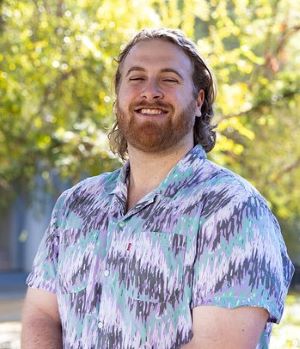
Joseph Morrison, MD/PhD Student
Joe's projects include improving clinical diagnostics using standard-of-care clinical data and imaging. These focus on tibial fracture and fixation complications, including delayed soft tissue coverage and nonunion. Outside of the lab, Joe enjoys playing basketball, running, and baking. Sacramento has many great options for watching sports, and he's been trying to catch most of them!
Joe is co-mentored by Blaine Christiansen, Ph.D. and Gabriela Loots, Ph.D.
-

Mu-Cyun Tseng, PhD Student
Mu-Cyun's current projects focus on the role of circulating factors in systemic bone loss. Outside the lab, Mu-Cyun enjoys street dancing!
Mu-Cyun is co-mentored by Blaine Christiansen, Ph.D. and Gabriela Loots, Ph.D.
-

Natalie Kavya Rajasekaran, MS Student
Natalie is currently investigating the potential benefits of exercise in preventing post-traumatic osteoarthritis (PTOA) in mice. Outside of the lab, Natalie enjoys reading, watching movies, playing board games and trying out new baking recipes.
Natalie is co-mentored by Blaine Christiansen, Ph.D. and Gabriela Loots, Ph.D.
-

Nosisa Ncube, Research Specialist
Nosisa supports the lab with mouse colony management, genotyping, histology, and more. Her hobbies include traveling, reading, kayaking, F1 racing, Korean dramas, and dancing.
-
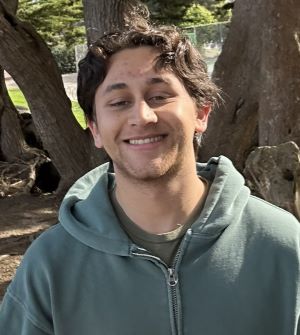
Aalok Atre, Volunteer
Aalok is a is a Neurobiology, Physiology, and Behavior student at UC Davis. He currently assists with various posttraumatic osteoarthritis (PTOA) projects. He's also interested in musculoskeletal and molecular research in cartilage degeneration and repair. Outside of lab, he enjoys watching basketball, volunteering in the community, and playing tennis.
-
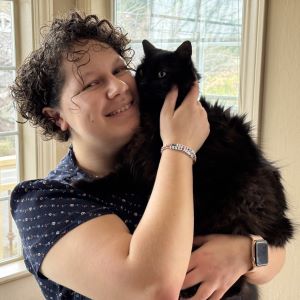
Lindsay Hauf, Volunteer
Lindsay is a UC Davis undergraduate student currently studying post-traumatic osteoarthritis (PTOA) in the lab and is majoring in Global Disease Biology with a minor in Archaeology back on the Davis campus. She's also a pre-med student and hopes to one day be an emergency medicine physician! When not studying or in the lab, you can often find Lindsay rock climbing at the gym, reading a book, cooking, or riding horses through the Hunter Jumper Club at UC Davis.
Lindsay is co-mentored by Blaine Christiansen, Ph.D. and Gabriela Loots, Ph.D.
-
Previous Lab Members
Alireza Nasoori, DVM, PhD
Rohan Shenoy, Undergraduate Student
All papers from the Loots Lab can be found on PubMed through the National Library of Medicine.
Gabriela Loots, Ph.D.
The Doris Ellison Linn Chair in Bone Biology
Director of Research Laboratories
Email: gloots@health.ucdavis.edu
Office Number: 916-734-7143