Onsite Resources
Computational Resource Inventory
The Center for Precision Medicine and Data Science currently has access to several high-performance computational workstations designed to support computational biology, molecular modeling, molecular dynamics simulations, artificial intelligence, machine learning, data science, and other precision medicine research activities.
Computational Resources
| Orbital GPU Pro Workstation | BIZON ZX5500 Deep Learning / AI Workstation | BIZON ZX5500 Deep Learning / AI Workstation | Warpcore (Mercury GPU) | Silicon Mechanics Rackform R485.v6 | |
| Quantity | 2 | 1 | 1 | 1 | 1 |
| CPU | AMD Ryzen Threadripper 7970X, 32 cores / 64 threads, up to 5.3 GHz turbo | AMD Ryzen Threadripper PRO 5995WX, 64 cores / 128 threads, 2.7 GHz base, up to 4.5 GHz boost; 256 MB L3 cache | AMD Ryzen Threadripper PRO 5995WX, 64 cores / 128 threads, 2.7 GHz base, up to 4.5 GHz boost; 256 MB L3 cache | AMD 2xEPCY 9684X, 96 cores 2.55 GHz |
Intel Xeon 8x Platinum 8160, 24-Core 2.1GHz |
| Memory | 256 GB DDR5 ECC RDIMM | 1024 GB DDR4 ECC/REG (8 × 128 GB) 3200 MHz | 1 TB DDR4-3200 ECC RDIMM, 8 × 128 GB Samsung modules | 1536GB DDR5 4800MHz (24x64GB) |
1536GB DDR4-2666 ECC (48x32GB) |
| GPU | 2 × NVIDIA RTX 5090 GPUs, 32 GB GDDR7 each, 21,760 CUDA cores each | Liquid-cooled NVIDIA H100 94 GB NVL | 4 × NVIDIA RTX A6000 GPUs, 48 GB GDDR6 ECC VRAM each; 192 GB aggregate VRAM; 10,752 CUDA cores per GPU | 4xNVIDIA H100 |
8xNVIDIA Tesla P100, 16GB |
| Storage | 4 TB PCIe 5.0 NVMe SSD, up to 14,100 MB/s; 8 TB SATA SSD | 15.36 TB PCIe 4.0 NVMe SSD; 22 TB HDD | 7.68 TB Micron 7450 PCIe 4.0 NVMe SSD | 2x960 GB NVMe; 30.72 TB NVMe |
4 × 2 TB Intel DC P4600 NVMe SSDs |
| Operating System / Software | Ubuntu 24.04 LTS and molecular modeling/simulation software stack, including AMBER, Rosetta, AlphaFold, Boltz-2 | Ubuntu 22.04 with BIZON OS and deep learning software stack, including TensorFlow, PyTorch, CUDA, cuDNN, SLURM, etc. | Ubuntu 22.04.3 LTS; Linux kernel 6.2; NVIDIA driver 575.51.03; CUDA 12.9. Suitable for PyTorch, TensorFlow, CUDA/cuDNN, SLURM, AlphaFold, Boltz-2, Rosetta, molecular dynamics, docking, and ML workflows | Ubuntu server 26.04 deep learning software stack, including TensorFlow, PyTorch, CUDA, cuDNN, SLURM, etc. |
Ubuntu server 26.04 molecular modeling/simulation software stack |
| Primary Use / Purpose | GPU-accelerated molecular dynamics simulations, molecular modeling, docking workflows, machine learning, AI model development, and high-throughput computational analysis | Large-scale AI/deep learning, data science, precision medicine modeling, GPU-accelerated scientific computing, and computationally intensive workflows requiring large memory capacity | Large-scale GPU-accelerated molecular modeling, docking, protein design, deep learning, AI-model development, and high-throughput computational analysis | Large-scale AI/deep learning, data science, precision medicine modeling, GPU-accelerated scientific computing, and computationally intensive workflows requiring large memory capacity | GPU-accelerated molecular dynamics simulations, molecular modeling, docking workflows. |
Summary of Available Capacity
| Category | Approximate Total Across Listed Systems |
|---|---|
| Total systems | 4 workstations and 2 servers |
| Total CPU cores | 576 physical CPU cores |
| Total system memory | 5632 GB RAM |
| Total GPUs | 21 GPUs |
| GPU memory | 128 GB from 4 × RTX 5090 GPUs, 470 GB from 5 × NVIDIA H100 NVL,192 GB from 4 × RTX A6000 GPUs, plus 128GB from NVIDIA P100 |
| High-speed NVMe storage | 71.68 TB total |
| Additional SSD/HDD storage | 16 TB SATA SSD plus 22 TB HDD |
Computing Environment
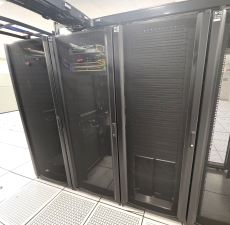
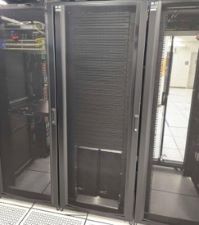
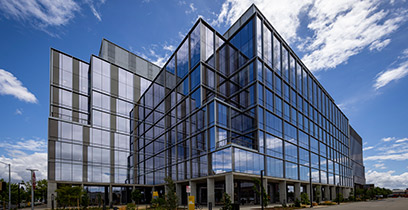
Many CPMDS computing resources, including the Orbital GPU workstations and WarpCore server, are housed in a dedicated server room within the UC Davis Health Administrative Support Building. The facility provides a secure, professionally managed environment with appropriate cooling, power, and network infrastructure to support reliable, high-performance computing operations.