
Children's HealthDecember 10, 2025
Why the hepatitis B vaccine is critical for newborns

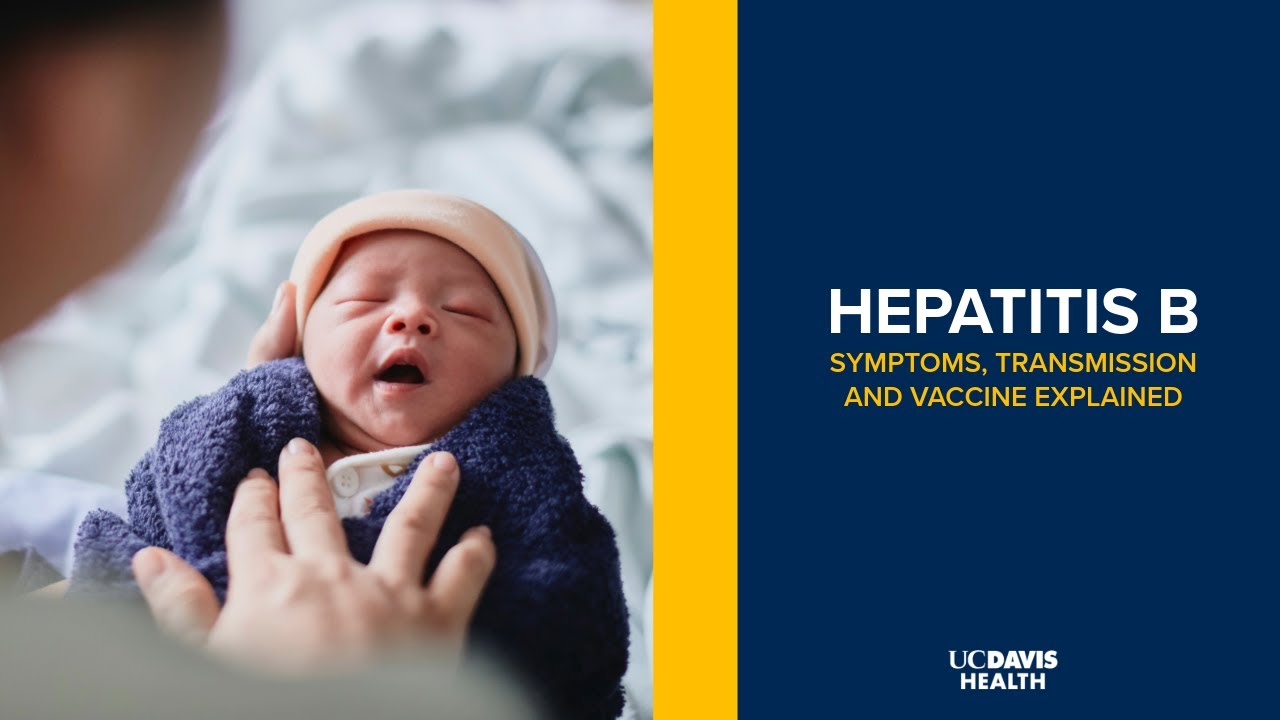
Pediatric expert answers frequently asked questions
(SACRAMENTO)
For decades, the hepatitis B vaccine has been recommended for babies. That’s because the risks of hepatitis B infection for newborns can lead to lifelong disease, including liver failure, liver cancer and death.
The California Department of Public Health and the American Academy of Pediatrics continue to recommend giving newborns a dose of hepatitis B vaccine within 24 hours of birth. Additional doses are recommended at 1-2 months and 6-18 months.
We asked Dean Blumberg, chief of pediatric infectious diseases at UC Davis Children’s Hospital, why it is so important for children to be vaccinated for hepatitis B. He also debunks some common myths about hepatitis B.
Why is it important to vaccinate for hepatitis B?
One of the reasons it is so important for children to be vaccinated for hepatitis B is to prevent chronic hepatitis B infection. There are two stages of disease: the acute stage and the chronic stage. The acute hepatitis B infection causes inflammation of the liver, which can result in nausea, vomiting, diarrhea, stomachaches, fever and loss of appetite. But after they recover from acute hepatitis B, they may be chronically infected. That chronic infection can lead to devastating problems years later like cirrhosis of the liver and liver cancer.
Children who are infected with hepatitis B during the newborn period have a 90% chance of being chronically infected with hepatitis B and a 25% risk of dying prematurely.
By comparison, when older children and adults are infected with hepatitis B, they have a 5-7% risk of chronic infection. That is why there is a big focus on preventing infection in the newborn period and the first year of life.
How effective is the hepatitis B vaccine?
The hepatitis B vaccine is really effective. You get a good immune response after the vaccine series 95% of the time. Immunity is believed to be lifelong. It does protect very well against hepatitis B. Even if you do get a breakthrough infection, it is normally asymptomatic and does not result in chronic infection, so it does prevent those long-term consequences.
How safe is the hepatitis B vaccine?
The hepatitis B vaccine has been around for decades and has been really well studied. Since 1991, the Centers for Disease Control and Prevention’s Advisory Committee on Immunization Practice (ACIP) recommended universal hepatitis B immunization of infants. We have decades of experience with hepatitis B vaccine safety. There are no new safety concerns that have emerged. It is very well tolerated. For adults who have had the vaccine, it can cause pain or soreness at the injection site that goes away within a day or two. That’s the most common side effect of the vaccine.
How common is hepatitis B?
In the United States, 1-2 million people have chronic hepatitis B infection. There are more than 10,000 new hepatitis B infections every year.
How is hepatitis B spread?
It is spread through contact with blood and bodily fluids. Many people have heard that it is transmitted only through IV drug use, sexual activity and the birth process. What a lot of people don’t realize is that it can be spread in casual ways like household contact. Living in a house with someone who has hepatitis B is a risk factor for infection. That is not what we would typically think of as a big exposure to blood and bodily fluids. But it’s clearly transmitted in ways that we don’t fully understand. We know that the virus is quite hardy and can survive on surfaces for up to seven days.
If a mother is a carrier of hepatitis B, which means she has acute or chronic infection, the virus will be in her blood and bodily fluids. During the birth process, there is a lot of exposure to blood and bodily fluids for the baby so the virus can be transmitted that way.
Is there a treatment once babies are exposed to hepatitis B from their mother?
When we know that babies are exposed to mothers who have hepatitis B, then we give the first dose of the hepatitis B vaccine. We also give hepatitis B immunoglobulin, to provide immediate antibodies to bind to the virus. That works quite well to prevent infection.
What are the typical symptoms?
Hepatitis B causes inflammation of the liver, which can lead to nausea, vomiting, diarrhea, stomachache, fever and loss of appetite. The liver doesn’t work as well so bilirubin builds up. That results in jaundice, with the skin and the whites of the eyes being yellow.
What is the treatment for hepatitis B?
There are advances with antiviral treatment for hepatitis B to get rid of the chronic infection. Unfortunately, a lot of people are not aware of those so they aren’t utilized as often as we would like. Many people don’t even know that they have the hepatitis B infection because they don’t have symptoms, so they don’t get access to those treatments.
Sometimes people with chronic hepatitis B infection can have no symptoms until it causes cirrhosis of the liver, liver cancer or liver failure, years down the line. In the meantime, people might be feeling well so they don’t even know that they have hepatitis B infection. During that period, they are still carriers and can be infectious to others, too.
Can adults be vaccinated for hepatitis B if they did not receive the vaccine series as a child?
Yes, older children and adults can be vaccinated for hepatitis B if they haven’t been previously vaccinated.
Are there any hepatitis B myths that you would like to fact check?
One of the most common myths I hear is that the only way you can get hepatitis B is through IV drug use or sexual activity, and that we know everyone who is infected with hepatitis B or at risk for hepatitis B. That’s just not true. We know that from experience that we miss cases and that’s why it’s so important to have this universal hepatitis B infant immunization program. It’s really a safety net for those children whose mothers who may or may not have been screened for hepatitis B to ensure that they are protected, too.
I think about it like driving a car. You don’t have just one safety mechanism. You don’t just have air bags or seat belts or infant car seats. You want to take advantage of every single safety system in your car to make sure you and your family are protected. That’s part of what the universal hepatitis B infant immunization program is.
A child is at higher risk for getting chronically infected the younger they are. That’s why we want to make sure that babies are protected right from birth. That’s why that first dose is so important. If parents do have more questions about hepatitis B vaccine or other vaccines, I’d recommend that they talk to their health care provider.