
Workforce Development
Clinical Research Graduate Group
About Our Program
The Clinical Research Graduate Group (CRGG) is an interdisciplinary group of faculty involved in all aspects of clinical and translational research offered at UC Davis. Our research and interests encompass varied branches of research including basic science, biostatistics, clinical trials, education, epidemiology, ethics, outcomes research, policy/regulation, public health, quality improvement, and translational research. Through the resources available through the Clinical and Translational Science Center and the potential for connections and networking offered by the mentors in the graduate group, our students have broad and impactful research opportunities.
If you are interested in teaching, please contact Michael Schivo.
Explore Our Educational Opportunities
-
Master of Advanced Study Degree
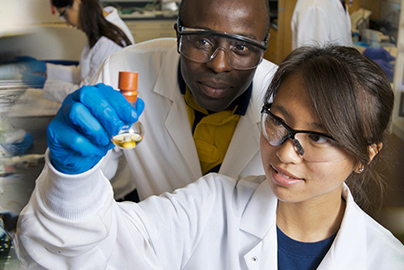
Learn MoreOur Master of Advanced Study in Clinical Research degree program provides a solid clinical/translational research foundation for junior faculty, clinical and postdoctoral fellows, graduate students, medical students, and other health professionals interested in clinical research.
-

Certificate in Clinical Research
Learn MoreOur Certificate in Clinical Research program is an abbreviated version of the Master of Advanced Study (M.A.S.) degree program. This program is intended for working health professionals who would like additional training in clinical research but who may not qualify or have the time to pursue the M.A.S degree.
CRGG Frequently Asked Questions
A graduate group is a group of faculty members who are responsible for overseeing and administering a graduate degree. At UC Davis every graduate degree is overseen by a graduate group. Most graduate groups are based in academic departments (e.g., Ph.D. in chemistry). In contrast, the CRGG includes faculty from a variety of departments and schools. Faculty members are responsible for teaching graduate group courses, serving as advisors and committee members, and participating in group admissions and administration.
The CRGG is an interdisciplinary graduate group that oversees the Master of Advanced Study (M.A.S.) in Clinical Research degree. The M.A.S. degree program provides skills necessary for clinical and translational research geared towards junior faculty, clinical and postdoctoral fellows, graduate students, medical students, and other health professionals interested in clinical research. M.A.S. degree requirements include a core intensive curriculum that provides access to collaborate with researchers across multiple disciplines. The program concludes with a final capstone project comprising an oral presentation at the annual scholar symposium and a written manuscript or grant application.
The CRGG oversees the M.A.S. degree. The MCRTP is a separate School of Medicine program that provides 2-3 years of structured mentorship, support and learning activities related to clinical and translational research. Although one could enroll in the M.A.S. degree without enrolling in the MCRTP, in practice all MCRTP participants complete the M.A.S. degree and most M.A.S. students are in the MCRTP. The SOM Dean has historically agreed to pay M.A.S. tuition for MCRTP participants. Neither the CRGG nor the MCRTP provides salary support or funding for research projects.
Any UCD faculty with an appropriate academic title (for allowed titles see Article II. Membership as outlined in the bylaws) who conducts clinical or translational research can join the CRGG. Faculty from any UCD school or department who meet CRGG requirements are eligible. Current CRGG members vote on all new membership applications.
CRGG members are expected to support graduate students in one or more of the following ways:
- Serve as research or career mentors to students in the M.A.S. degree program.
- Serve on CRGG standing or ad hoc committees. Standing CRGG committees are the executive committee, the admissions committee, and the educational policy committee.
- Serve as an academic advisor.
- Provide graduate level instruction, as appropriate, in addition to research instruction.
Program Contacts
-
Robyn Fujii-Schofield
Program Coordinator
rfujiischofield@ucdavis.eduMichael Schivo, M.D., M.A.S.
CRGG Chair
mschivo@ucdavis.edu