

Basic Sciences
Biochemistry and Molecular Medicine
Protein Structure and Dynamics Core
On this page
Knowing the structural dynamics of the proteins and biological membranes is key to understanding their mechanism of function. Most prominent methods for structural determination are X-ray crystallography and Nuclear Magnetic Resonance Spectroscopy. However crystallized samples select for one static conformation and are difficult to obtain for biomembranes or macromolecular assemblies (such as filaments). NMR methods are difficult for larger biomolecules and membranes, and also carry large sample demands, which may be difficult to obtain.
The Site Directed Spin Labeling Electron Paramagnetic Resonance (SDSL-EPR) spectroscopy offers a unique approach to elucidate the structure and dynamics of biomolecules in solution. The approach combines protein chemistry/molecular genetics to target spin probes into biomolecules (most commonly peptides and proteins) with EPR analysis using modifications that can accommodate small biological samples under a variety of conditions (pure protein, tissue, live cells, etc.).
The Circular Dichroism (CD) spectroscopy is the most common approach for studying the overall conformation of biopolymers, such as proteins and peptides. CD is a spectroscopic method based on the interaction of chiral centers in the polymer with circular polarized light, which is very sensitive to levels of regular order in the polymer backbone. CD offers a convenient method for identifying changes in the structure of proteins and peptides.
The EPR spectroscopy and CD spectroscopy is a unique combination of physical methodology used for determining the structural dynamics and molecular structure of proteins and other biomolecules. Such information is crucial for understanding the mechanism of biomolecules and for identifying drugs and other agents that can modulate the behavior of biomolecules involved in disease. The ability to measure structure and dynamics is also important for bioengineering efforts, such as designing platforms for molecular sensing and drug delivery.
Services
Services include screening of the optimization of samples of specific interest and screening. Both qualitative and quantitative analysis will be provided.
Circular Dichroism
- buffer exchange of sample into compatible buffer and concentration of sample if needed
- loading sample into appropriate quartz cell and collection of CD spectra. Each sample has its own quartz cell specific.
- Recording the CD spectra with optimal parameters and temperatures (if temperature dependent studies needed).
- saving the spectra and plotting of data and computational analysis of secondary structure
- preparing report of results
A single, per sample charge will apply for the CD instrument.
Non-instrument CD services:
- CD Sample Prep. This optional service will provide buffer exchange (into a sodium-free buffer) and protein concentration of user-provided samples.
- CD data analysis. This option will provide data analysis of collected CD spectra. Data will be processed using a multi-component algorithm to estimate the fraction of secondary structural elements within a protein sample.
Electron Paramagnetic Resonance Spectroscopy
- spin-labeling and concentration of samples as needed
- loading samples into capillaries (quartz and TPX)
- Optimizing the Hamiltonian parameters and temperatures (in case of LT studies).
- Recording and collection of spectra
- plotting of spectra and measurement of line widths and determining the spin parameters.
- For power saturation measurements, each sample is examined under three conditions (air, N2, and NiEDDA). Collected spectral data is computationally processed for P1/2 and collisional frequency values.
The EPR instrument services are categorized under three different service types, each with a defined recharge rate:
- Simple room temperature (RT) scan. This is the lowest rate, as scans can be obtained in a matter of minutes with little instrumentation set-up time.
- Simple low temperature (LT) scan. This rate is higher than the RT scan due to the increased time for liquid nitrogen cooling and cryostat operation. Service also includes flash freezing.
- EPR power saturation scanning. This service will provide scanning of samples over successive power levels under three conditions (relaxer-free, hydrophilic relaxer, hydrophobic relaxer). This rate is the highest as it is the most time consuming.
Non-instrument EPR services:
- EPR Sample Prep and Spin-labeling. This optional protein chemistry service will provide spin-labeling and protein concentration of user-provided samples.
- EPR data analysis. This option will provide data analysis of collected EPR spectra. For protein samples, spectra will be fit by for correlation times of mobile components. For membrane samples, line-widths will be measured to estimate correlation times and order parameters. For power saturation samples, collision frequencies will be calculated for each relaxer.
Rates
Service |
Internal rate (per sample) |
External rate (per sample) |
Electron Paramagnetic Resonance (EPR) spectrometers located in 4424, Tupper Hall |
||
| EPR Simple Scan RT | $60 | $75 |
| EPR Simple Scan LT | $90 | $100 |
| EPR Power Saturation | $90 | $110 |
| EPR Sample Prep | $30 | $40 |
| EPR Spin Labeling | $40 | $50 |
| EPR Data Analysis | $75 | $95 |
Jasco J-715 CD spectrometer located in the 4316, Tupper Hall |
||
| CD Scan | $35 | $50 |
| CD Sample Prep | $50 | $75 |
| CD Data Analysis | $80 | $120 |
Frequently Asked Questions
The facility services are available to all the research community both within UC Davis and outside of UC Davis.
It’s purely first-come, first-served and might have some exceptions when working with samples that degrade or denature very quickly.
Training for on campus users may be arranged for ongoing projects.
Yes, the core will advise users on sample preparation and experimental design at no charge.
For EPR, samples should have at least 20 micromolar spin concentration, although a spin concentration of 80 micromolar or higher provides optimal spectra. For CD, peptide and protein samples should be in the 0.3-0.5 mg/ml range.
Depending on needs, EPR configurations utilize either 5 or 30 microliters of sample. Typical CD scans require 250 microliters of sample. More volume needed if wants to perform multiple studies by adding different reagents/compounds.
For EPR sample loading times depend on the configuration. Normal Room Temperature Scans on samples with sufficient spin concentrations are typically completed in 2 minutes after proper tuning. Acquisition times for CD spectra are typically 5-10 minutes. The usual practice for both EPR and CD measurements is taking an average of multiple scans meaning more time than mentioned above. The time will vary based on the sample characteristics and purity.
Our Staff
-
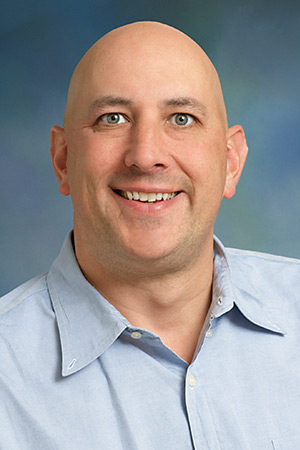
John Voss, Ph.D.
View full bioProfessor
4110 Tupper Hall
530-754-7583
jcvoss@ucdavis.eduRole: Director and chairman of the faculty advisory board
Responsibilities: Supervise the overall activities of the facility and participate in discussion to guide the staff
-

Madhu Budamagunta, Ph.D.
View full bioProject Scientist
4108 Tupper Hall
530-752-3164
msbudamagunta@ucdavis.eduRole: Business Admin Core Facility Personnel
Responsibilities: Key person and in charge of all the activities including instruments of the core facility for their regular maintenance and technical services.
Advisory Board
-
Paul FitzGerald, Ph.D.
View full bioDistinguished Professor and Chair Emeritus
Department of Cell Biology and Human Anatomy
School of Medicine, University of California
pgfitzgerald@ucdavis.edu -
David K. Wilson, Ph.D.
View full bioProfessor Emeritus
Department of Molecular and Cellular Biology
School of Biological Sciences, University of California
dkwilson@ucdavis.edu -
Jeff Walton, Ph.D.
View full bioNMR Facility Manager Emeritus
University of California
jhwalton@ucdavis.edu -
Jon Sack, Ph.D.
View full bioAssociate Professor
Department of Physiology and Membrane Biology
School of Medicine, University of California
jsack@health.ucdavis.edu -
Atul N. Parikh, Ph.D.
View full bioProfessor
Department of Biomedical Engineering
Department of Materials Science and Engineering
University of California
anparikh@ucdavis.edu
Contact Us
Primary Contact E-mail: msbudamagunta@ucdavis.edu
Phone: 530-752-3164
| John Voss, Ph.D. Facility Director |
Madhu Budamagunta, Ph.D. Business Admin Core Facility Personnel |
Address:
School of Medicine
University of California
4108 Tupper Hall
One Shields Avenue
Davis, CA 95616
Core Facilities
Explore all the research core facilities in Department of Biochemistry and Molecular Medicine.