

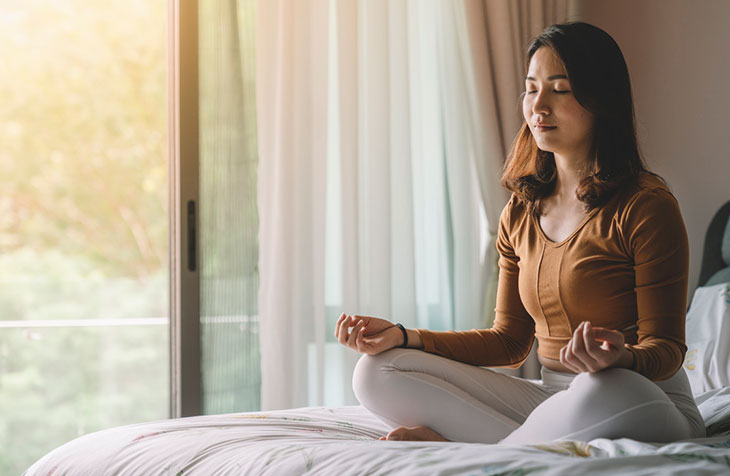
Meditation is often thought of as a path to self-awareness and compassion. But did you know it can also be a path to better health?
What is meditation?
Meditation is a practice that helps promote relaxation, awareness, calmness and focus. Some people find that regular meditation also enhances kindness to themselves and others.
Meditation has been practiced for thousands of years in Hindu, Buddhist, Zen/Chan and Taoist communities. People use meditation today to cope with stress and worry in a busy world. On top of that, research has documented many health benefits of regular meditation practice.
10 health benefits of meditation
- Reduced stress: Meditation may help decrease stress and stress-related conditions including irritable bowel syndrome (IBS), post-traumatic stress disorder (PTSD) and fibromyalgia.
- Improved memory: Better focus through regular meditation can increase memory and mental clarity. These benefits can help fight age-related memory loss and dementia.
- Increased attention: Meditation helps with attention span, allowing you to stay focused longer.
- Enhanced willpower: Meditation develops the mental discipline needed to avoid unhelpful habits.
- Better sleep: Meditation can shorten the time it takes to fall asleep and improve sleep quality.
- Reduced pain: Meditation can reduce pain and boost emotion regulation. Together with medical care, this may help treat chronic pain.
- Lower blood pressure: Blood pressure decreases during meditation, and over time in people who meditate regularly. This can reduce strain on the heart and blood vessels and help prevent heart disease.
- Reduce anxiety: Regular meditation helps reduce anxiety. It can also help with mental health challenges like social anxiety, fears and obsessive-compulsive behaviors.
- Reduce depression: Meditation can help reduce the occurrence of depression.
- Greater compassion: Meditation can help you better understand yourself, find your best self, and increase positive feelings and actions toward others.
Learn about the symptoms of anxiety and how to know when you need help
How to meditate
There are hundreds of different meditation techniques that vary from simple to complex. It's best to start with a simple practice that you can work into your regular routine over time. You can do this daily at the same time, even if it's only a few minutes to start out. Over time, you will build discipline and skill with practice.
Follow these steps for meditation:
- Sit or stand in a calm, quiet place with eyes closed or gaze down.
- Set a time limit. Five or 10 minutes is a good place to start if you are new to meditation.
- Feel your body. Make sure you are in a stable position that you can comfortably stay in the whole time.
- Focus your attention on your breathing in two ways. First, observe your torso expanding and contracting. Second, feel the sensation of breath inside your nostrils with each inhalation and exhalation. When your breath focus is stable, you can shift to noticing thoughts, emotions, sensations, and sounds as they rise and dissolve in your mind.
- Notice when your mind wanders, which will happen. Don't be hard on yourself when your mind goes elsewhere — just note where your mind drifted and then gently return your attention to your breath. It’s normal for this to happen many times during a meditation session, especially when you are new to meditation.
- Close out your session by remembering our common humanity. Think this thought: "May I and all living beings be well, safe, nourished, and healthy."
UC Davis Health offers stress management classes, which include practices in calming breathing and mind-quieting meditation.
Learn more about how to meditate
Meditation resources
Which type of meditation is right for you?