
Key takeaways
- Before moving out of a booster seat, children must pass a five-step fit test.
- The new California law takes effect Jan. 1, 20207.
- The changes affect children ages 8 to 16.
- Drivers can face fines if children are not properly secured.
A new California car seat law takes effect Jan. 1, 2027, that will affect children ages 8 to 16. Before moving from a booster seat to a seat belt alone, children must pass a five-step seat belt fit test.
Nearly half of all car seats are installed incorrectly, according to the National Highway Traffic Safety Administration. The administration estimates that car seats reduce the risk of fatal injury by 71% for babies and by 54% for toddlers in passenger cars.
Learn which car seat is right for your child's age and stage, from rear-facing seats to booster seats. You can also schedule a car seat checkup with our experts to help keep your child safe and ready for the new law.
What is the new car seat law?
Starting Jan. 1, 2027, California will require all children ages 8 to 16 to ride in a car booster seat unless they pass a five-step fit test. Drivers can face fines of nearly $500 for each child who is not properly secured.
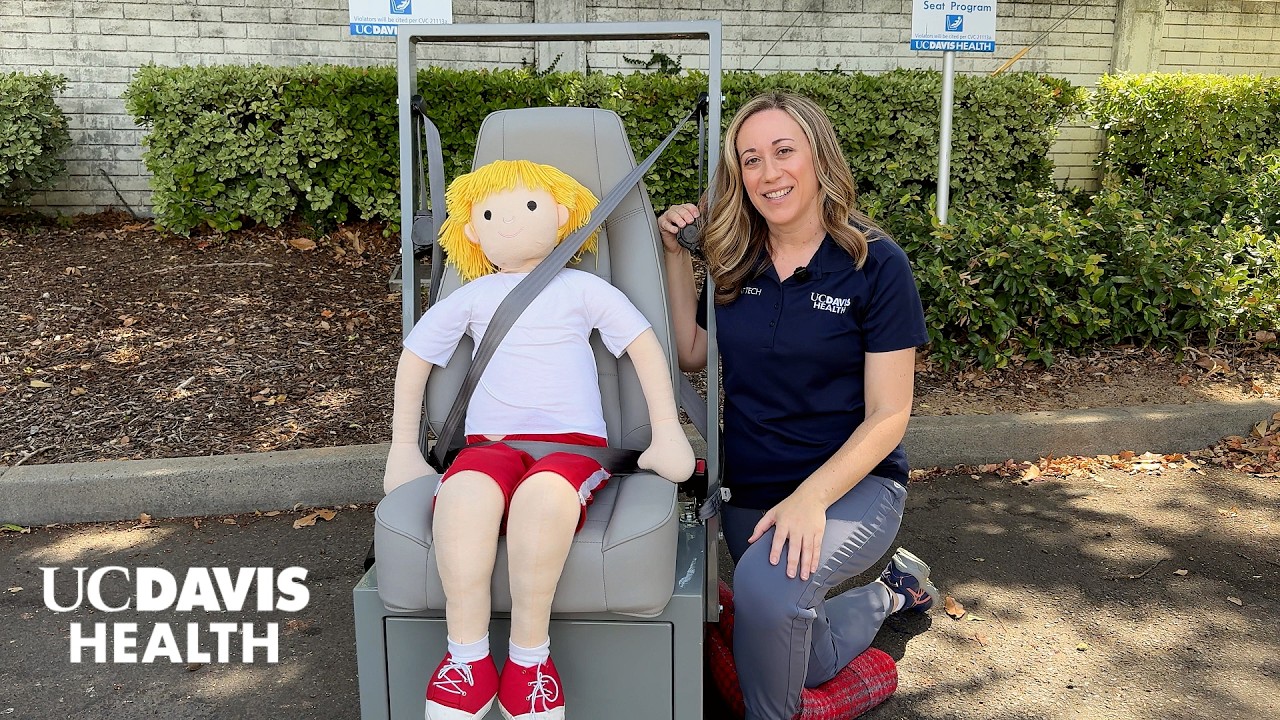
The five-step test includes checking that your child can sit:
- With their back flat against the seat of the car.
- With their knees fully bent over the edge of the seat.
- With the shoulder belt fitting snug across the middle of their chest and shoulder, not their neck.
- With the lap belt low on their hips and must touch their thighs.
- Like this for the whole trip.
Make a free appointment with our car seat experts
Learn about our pediatric primary care services
When can my child sit in the front seat?
In California, children must be at least 8 years old to sit in the front without a car seat or booster seat.
Safety organizations including the National Highway Traffic Safety Administration and the American Academy of Pediatrics recommend that all children under age 13 ride in the back seat. This is to protect them from the force of an airbag release during a crash.
Read updated California car seat rules
Sign up for our Health Highlights e-newsletter
What are the age and weight limits for rear-facing car seats?
It’s recommended that children remain rear facing until they reach the height or weight limit of their car seat. Rear-facing seats better protect a child’s head, neck and spine during a crash.
In California, children under 2 years old must stay rear facing until they weigh 40 pounds or are 40 inches tall or more.
Rear facing car seats include:
- Infant car seat with carrier base: These are infant carriers that attach directly to a secure base in the car.
- Convertible car seat: These start out rear-facing and are eventually used forward-facing. These seats stay in the car.
- 3-in-1 or all-in-one car seat: These can be used in rear-facing, forward-facing and booster positions. Make sure to read the labels and instructions for each stage.
Register your car seat to learn about recalls
See all of our pediatric primary and specialty care clinic locations
When can my child’s car seat turn forward facing?
California law requires children to ride rear-facing until they are at least 2 years old, 40 pounds or 40 inches.
After age 2, the American Academy of Pediatrics recommends that children ride in a rear-facing car seat as long as possible, until they reach the highest rear-facing weight or height allowed by their car seat’s manufacturer.
Once children outgrow their rear-facing car seat, they will ride in a forward-facing car seat and continue to use a 5-point harness.
To be the safest, do not rush to move your child into a booster seat before they’re ready.
How to find the best car seat for your child
When can my child transition to a booster seat?
Once your child outgrows the forward-facing car seat with a harness, it is time to graduate to a booster seat. Children under 8 years old must ride in a car seat or booster seat in the back seat of a car.
Booster seats raise your child so that the shoulder strap fits comfortably across the chest. These seats also ensure that the lap belt stays low over the hips and their knees bend over the seat edge. Positioning the seat belt properly helps distribute extreme crash forces over the strong, bony parts of the body, instead of the vulnerable neck and belly.
Younger kids can use a high back booster to help adjust the shoulder belt. The high back is needed for cars without headrests.
Learn if your child is ready for a booster seat
This blog was reviewed for accuracy by Jennifer Rubin, UC Davis Health certified child passenger safety technician.
Recommendations are based on guidance from the National Highway Traffic Safety Administration, California Highway Patrol, California Department of Public Health, American Academy of Pediatrics, California Department of Motor Vehicles, National Safety Council, and other state and national safety organizations.