

Understanding the stages of menopause can help you manage symptoms and make informed decisions about your health. It can also help you to understand what lifestyle changes and treatments may help reduce some of the symptoms that often come with this change.
Menopause is not a disease or disorder, but rather a natural part of the aging process. It is defined by 12 months in a row without a period. However, ovarian function actually begins to decline long before menopause.
Perimenopause occurs before menopause, yet is less understood. This stage can begin as early as 10 years before menopause.
Most women reach menopause around age 52. However, perimenopause often begins in their 40s. During this stage, the ovaries produce less estrogen and progesterone. This can cause common menopause symptoms such as hot flashes, night sweats and changes in mood.
Each of the three phases of menopause comes with its own set of changes.
Three stages of menopause:
- Perimenopause: Perimenopause is the stage people often mean when they say someone is “in menopause” or “menopausal.” This is because many of the typical menopause symptoms happen during this time. During perimenopause your ovarian production of estrogen gradually declines. This usually begins about eight to 10 years before menopause, typically when you’re in your 40s.
- Menopause: Menopause marks the end of your menstrual cycle. This happens when your ovaries stop releasing eggs and estrogen production drops significantly. Your health care provider will confirm menopause after you have not had a period for 12 months in a row. Unlike the other stages, menopause is a single event rather than an ongoing phase.
- Postmenopause: Postmenopause is the stage following menopause. It can last until the end of life. Although most menopausal symptoms lessen during this stage, mild ones may persist for several years. When you’re in postmenopause, you face a greater risk of osteoporosis and heart disease because of low estrogen levels.
Symptoms
Menopause symptoms can vary and depend on the stage of menopause. Periods are often irregular before menopause while missed or skipped cycles are common during perimenopause. As menopause approaches, periods become less frequent before they stop altogether.
In addition to a change in periods, other common symptoms in perimenopause and menopause include:
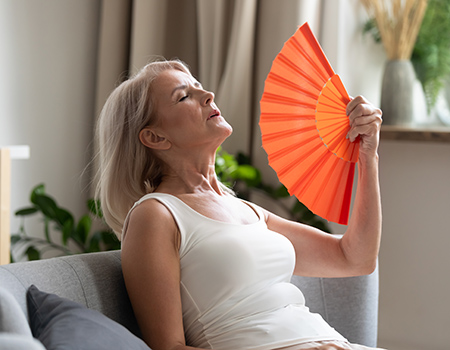
- Hot flashes
- Night sweats
- Vaginal dryness and pain during sex (genitourinary syndrome)
- Mood changes
- Sleep problems
- Brain fog
- Weight gain
- Anxiety
Treatment
Menopause itself needs no treatment. However, there are options available to help manage the symptoms that often come with it.
Maintaining a healthy lifestyle by eating well, exercising and looking after your mental wellbeing can help with symptoms during perimenopause and menopause. A common treatment of menopause symptoms is hormone replacement therapy.
Hormone replacement therapy
Hormone replacement therapy, also called HRT, is a treatment option that uses estrogen or progesterone to help relieve some menopause and perimenopause symptoms. There are two main types of HRT: estrogen therapy and combination therapy with estrogen and progesterone.
If HRT is right for you, a health care provider will recommend what form will work best for you based on symptoms, medical history and personal choice. HRT can be taken in many forms such as pills, patches, IUDs (intrauterine devices), gels, suppositories and more.
There are a variety of steps you can take to help with menopausal symptoms.
To ease hot flashes and night sweats, you can try:
- Wearing light clothing
- Keeping your bedroom cool at night
- Taking a cool shower or using a fan
- Reducing your stress level
- Avoiding or reducing potential triggers, such as spicy food, caffeine, hot drinks, smoking and alcohol
- Losing weight, if recommended by a health care professional
- Talking with your health care provider about hormone replacement therapy or other medications such as antidepressants
For mood swings, you can try:
- Exercising regularly
- Taking part in relaxing activities such as yoga or meditation
- Making an appointment with a mental health provider
- Getting plenty of rest
Learn more about how to practice good sleeping habits
To help with vaginal dryness, you can try:
- Vaginal moisturizers: These are applied inside the vagina or on the vulva daily or every few days to help maintain healthy vaginal tissue.
- Vaginal lubricants: Applied to the vagina, vulva, or penis before sex, these ease intercourse pain and can be used with vaginal moisturizers.
- Low-dose vaginal estrogen cream, tablet or ring: This treatment is used to restore vaginal tissue health. If systemic hormone therapy via pills or patches does not alleviate vaginal dryness and associated symptoms, a health care provider may recommend low-dose vaginal estrogen therapy.
- Dehydroepiandrosterone (DHEA): This vaginal suppository is used nightly and helps relieve pain during intercourse following menopause.
Taking care of your health after menopause:
After menopause, your ovaries make very little estrogen. Low levels of estrogen can raise the risk of heart disease, stroke and osteoporosis. Being active, eating well and maintaining a healthy weight are key to staying healthy after menopause. Supplements such as calcium and B or D vitamins can also support your overall health. Talk to your health care provider about supplements and additional steps you can take to maintain your health after menopause.
It may be difficult for you and your health care provider to tell whether you are in the menopausal transition. If you are having symptoms like hot flashes, irregular periods or trouble sleeping, your health care provider may have questions for you. They may ask about your age, symptoms and family history to determine if the menopausal transition could be the cause. In some cases, they may order a blood test to check hormone levels.
Have questions about specific menopause symptoms or treatment options? Make an appointment with your primary care provider today.
Learn more about primary care providers and how to make an appointment
This blog was medically reviewed by Clara K. Paik, Co-Chief in our Division of General Obstetrics and Gynecology.