
Programs
What is Precision Medicine?
A personalized approach to research and clinical care that results in better health outcomes and targeted treatments.

Precision medicine takes a personalized approach to research and clinical care that results in better health outcomes and targeted treatments. Rather than using a "one-size-fits-all" approach, precision medicine allows doctors and researchers to account for individual differences in genes, environments and lifestyles when developing a treatment plan or drug therapy.
Contact us to create the future of precision medicine through data-driven discovery and patient-centered innovation.
Our Projects
-
 Learn more
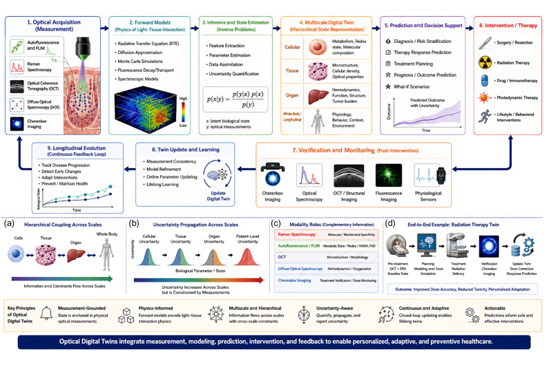
Optical Digital Twins for Disease Prevention, Diagnosis, Therapy, and Intervention
Optical digital twins are opening new possibilities for disease prevention, diagnosis and personalized treatment.
A new perspective article, “Optical Digital Twins for Disease Prevention, Diagnosis, Therapy, and Intervention,” explores how advanced optical technologies, computational modeling and artificial intelligence could help transform the future of health care.
-
 Learn more
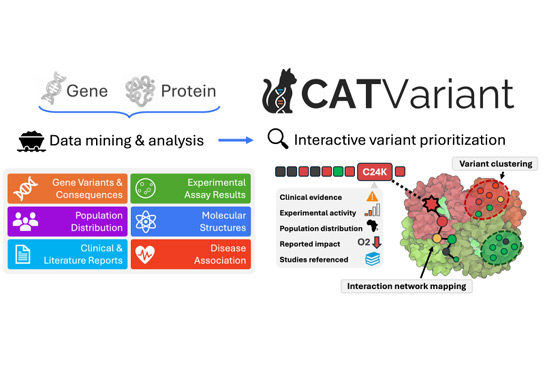
CATVariant (Nucleic Acids Research) for integrated variant interpretation
Every person carries small differences in their DNA. Some of these differences, often called variants, do very little. Others can change the amino-acid sequence of a protein, which may affect how that protein is built, folded, moved inside the cell, or how well it does its job. Because proteins carry out many of the body’s essential functions, even a small change can sometimes have important biological or medical consequences.
-
 Learn more
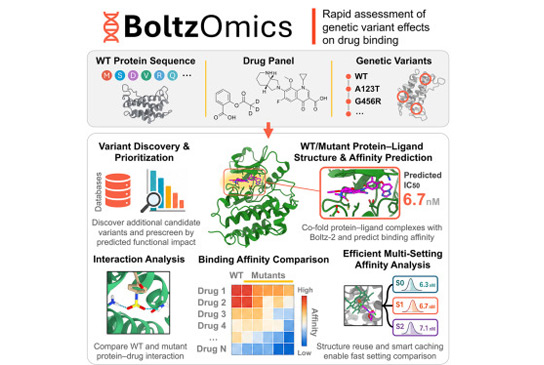
BoltzOmics (iScience) for AI-based drug-binding prediction
A mechanistic understanding of how genetic variants alter drug-receptor binding is central to precision medicine, drug response prediction, and drug development. Yet, experimental mutation-drug profiling remains slow and expensive, while existing computational approaches often trade accuracy for scalability.
Other Programs At a Glance
Computational Biomedicine
Combines cutting-edge computational models and experiments through a unifying digital twin framework.
Learn more

