
Basic Sciences
Pharmacology
Predoctoral Training in Pharmacological Sciences
This Program broadens the research perspectives and skills of trainees interested in pharmacological research. It leverages the multidisciplinary biomedical research environment at UC Davis with its highly successful programs in drug development. One goal is to provide trainees with a detailed “inside look” at and understanding of drug development from target identification into clinic. The second goal is to provide students from Ph.D. programs outside the Pharmacology Ph.D. program training in the core concepts of Pharmacology including Pharmacodynamics and Pharmacokinetics. The Program fosters interactions among investigators and predoctoral fellows from different departments and Ph.D. programs that share an interest in pharmacological sciences. The Program increases understanding of and interest in the concepts, challenges, and opportunities in pharmacological research and therapeutics. It fosters collaborations between established research scientists in pharmacology and their future colleagues in basic and clinical research across academic, government and private sectors.
Students eligible to apply to the Pharmacology Training Program are in their first year of a graduate program listed below and are working on a thesis project related to pharmacology.
Other graduate groups can be considered on a case-by-case basis. The student must be a U.S. citizen or permanent resident, and be in good academic standing. The Training Program is supported by the NIH T32 GM144303 grant and internal funds at UC Davis.
- Pharmacology and Toxicology
- Molecular, Cellular and Integrative Physiology
- Neuroscience
- Biomedical Engineering
Program Statistics
Pre- Ph.D. degree |
Trainees |
| Total trainees 2012-2027 | 88 |
| Currently in program | 15 |
| Graduated w/ PhD | 50 |
| Still in graduate school | 29 |
| Average Time to degree | 5.3 years |
Post-graduation |
|
| Academic | 40% |
| Industry | 24% |
| Other | 10% |
Program Directors
Johannes W. Hell, Ph.D.
Professor
Department of Pharmacology
Tupper Hall Building
Room 2419D
Davis, CA 95616-8636
Phone: 530-752-6540
Email: jwhell@ucdavis.edu
Manuel Navedo, Ph.D.
Professor
Department of Pharmacology
Tupper Hall Building
Room 2419A
Davis, CA 95616-8636
Phone: 530-752-6880
Email: mfnavedo@health.ucdavis.edu
Eamonn Dickson, Ph.D.
Professor
Department of Physiology & Membrane
Tupper Hall Building
Room 4446
Davis, CA 95616-8636
Phone: 530-752-6195
Email: ejdickson@health.ucdavis.edu
School of Medicine
Biochemistry and Molecular Medicine
- Carraway, Kermit
- Ghosh, Paramita M.
- Lam, Kit
- Segal, David J.
- Yu, Aiming
Institute for Regenerative Cures
- Nolta, Jan
Internal Medicine
- Chiamvimonvat, Nipavan
Molecular Biosciences
- Cortopassi, Gino
Neurology
- Rogawski, Mike
Neurology, Center for Neuroscience
- Gray, John
Orthopedic Surgery
- Christiansen, Blaine
Pediatrics
- Pinkerton, Kent E.
- Tarantal, Alice
Pharmacology
- Bers, Donald M.
- Bossuyt, Julie
- Chen-Izu, Ye
- Diaz, Elva
- Gelli, Angie
- Hell, Johannes W.
- Navedo, Manuel
- Ripplinger, Crystal M
- Wulff, Heike
- Xiang, Kevin
Physiology and Membrane Biology
- Dickson, Eamonn
- Sack, Jon
- Santana, Fernando
- Vorobyov, Igor
- Zheng, Jie
Psychiatry
- Noctor, Stephen
Psychology
- Trainor, Brian C.
School of Veterinary Medicine
Anatomy - Physiology
- Raybould, Helen
- Van Winkle, Laura
Molecular Biosciences
- Angelastro, James
- Havel, Peter J.
- Knych, Heather
- Lein, Pamela J.
- Pessah, Isaac N.
Surgery/Radiology
- Chen, Xinbin
Veterinary Medicine - Epidemiology
- Griffiths, Leigh
College of Engineering
Biomedical Engineering
- Panitch, Alyssa
- Simon, Scott
College of Letters and Sciences
Chemistry
- Ames, James
- Olson, David
College of Agricultural and Environmental Sciences
Entomology
- Hammock, Bruce
College of Biological Sciences
Neurology/Physiology
- Bodine, Sue C.
- Goldman, Mark S.
- Huising, Mark
- Zito, Karen
School of Medicine
Biochemistry and Molecular Medicine
Neurology
Pharmacology
School of Veterinary Medicine
Molecular Biosciences
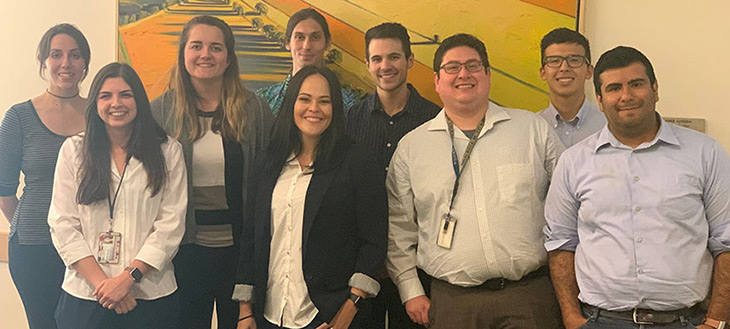
Ruben Berumen
Ph.D., Pharmacology and Toxicology, Year Entered 2022, Projected 2027
Research Project Title: "Role of Norepinephrine-induced Phosphorylation of GluA1 in Learning and Attention"
Trainer: Johannes Hell
Trey Brasher
Ph.D., Pharmacology and Toxicology, Year Entered 2022, Projected 2027
Research Project Title: "Synthesis and Evaluation of Putative Anti-Parkinson’s 5HT-2A Partial Agonists: Conformationally Constrained Derivatization of Phenethylamine Ariadne"
Trainer: Mark Mascal
Nathan Cook
Ph.D., Biochemistry, Molecular, Cellular and Developmental Biology, Year Entered 2022, Projected 2027
Research Project Title: "Functional Beta Cell heterogeneity and Diabetes"
Trainer: Mark Huising
Geir Hareland
Ph.D., Biophysics, Year Entered 2022, Projected 2027
Research Project Title: "Genetically-encoded Sodium Channel Modulators for Treatment of Neuropathic Pain"
Trainer: Jon Sack and Vladamir Yarov-Yarovoy
Sophia Salbato
Ph.D., Molecular, Cellular, and Integrative Physiology, Year Entered 2022, Projected 2027
Research Project Title: “Impact of e-cigarette vapor on vascular cAMP signaling and its functional consequences"
Trainer: Madeline Nieves-Cintron
Anais Saunders
Ph.D., Pharmacology and Toxicology, Year Entered 2021, Projected 2026
Research Project Title: "A Functional Genetic Screen to Identify APR-246 Rescuable TP53 Mutants"
Trainer: Jeremy Chien
Rahaf Shishani
Ph.D., Molecular, Cellular, and Integrative Physiology, Year Entered 2021, Projected 2026
Research Project Title: "A Novel Role for 14-3-3-ζ in Regulating Islet Cell Crosstalk"
Trainer: Bethany Cummings
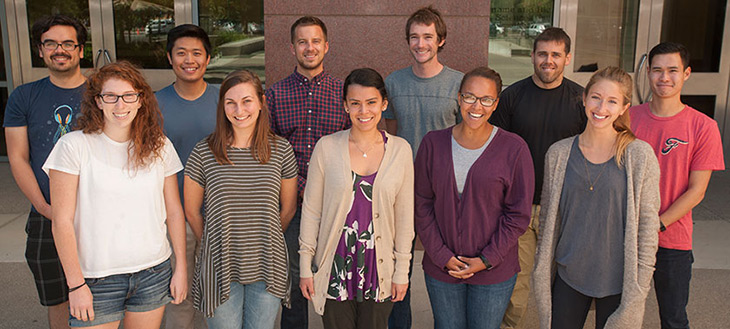


Leif Anderson
Ph.D., Biomedical Engineering, Year entered 2012, Graduated Fall 2018
Research Project Title: “Engineering the innate immune response to combat Staphaureus infection”
Trainer: Scott Simon
Eden Barragan
Ph.D., Neuroscience, Year entered 2015, Graduated Fall 2021
Research Project Title: “Genetic Manipulation of the NMDA receptor Co-agonist Site”
Trainer: John Gray
Anastasia Berg
Ph.D., Biochemistry, Molecular, Cellular and Developmental Biology, Year entered 2014, Graduated Summer 2020
Research Project Title: “Targeting apoptosis-resistant breast cancer stem cells with an amiloride derivative”
Trainer: Kermit Carraway
Brandon Brown
Ph.D., Pharmacology and Toxicology, Year entered 2011, Graduated Winter 2015
Research Project Title: “The Design of Anti-Hypertensive KCa3.1 Activators Modulating the EDH Pathway and Their Effects on the Immune System”
Trainer: Heike Wulff
Alejandro Castaneda
Ph.D., Immunology, Year entered 2011, Graduated Fall 2016
Research Project Title: ”Assessing the use of Dendritic Cell Inhibitors to Reduce Allergic Sensitization and Particulate Matter Toxicity”
Trainer: Kent Pinkerton
Noemi Castro
Ph.D., Biochemistry, Molecular, Cellular and Developmental Biology 2020, Projected 2026
Research Project Title: "Engaging lysosome-dependent cell death to target therapy-resistant breast cancer cells"
Trainer: Kermit Carraway
Joseph Cronin
Ph.D., Pharmacology and Toxicology 2021, Projected 2026
Research Project Title: "Bioengineering Novel Humanized RNA-let-7 Prodrugs to Modulate ADME Gene Expression, Anticancer Drug Exposure, and Therapeutic Outcomes"
Trainer: Aiming Yu
John Dawson
Ph.D., Biophysics, Year Entered 2017, Graduated Spring 2022
Research Project Title: "In search of molecular mechanisms for drug-induced cardiac arrhythmias via atomistic simulations"
Trainer: Igor Vorobyov
Nicole De Jesus
Ph.D., Biomedical Engineering, Year entered 2010, Graduated Fall 2015
Research Project Title: “The Role of Inflammation in Electrophysiological Remodeling and Arrhythmogenesis Following Myocardial Infarction”
Trainer: Crystal Ripplinger
Peter Deng
Ph.D., Pharmacology and Toxicology, Year entered 2014, Graduated Fall 2020
Research Project Title: “Nanoparticle delivery of TALEs in a transgenic mouse model of Huntington’s disease”
Trainer: David Segal
Tory Edwards
Ph.D., Molecular, Cellular, and Integrative Physiology 2021, Projected 2026
Research Project Title: "Molecular targets of empagliflozin in diabetic and failing cardiomyocytes"
Trainer: Don Bers
Cyrrus Espino
Ph.D., Molecular Cellular and Integrative Physiology 2020, Projected 2025
Research Project Title: “The role of NaVβ4 in proprioceptor excitability and behavior”
Trainer: Theanne Griffth
Juan Flores
Ph.D., Molecular, Cellular and Integrative Physiology, Year Entered 2017, Graduated Spring 2024
Research Project Title: "Mechanisms of Saturation of LTP at Single Dendritic Spines."
Trainer: Karen Zito
Samantha Francis Stuart
Ph.D., Pharmacology and Toxicology, Year entered 2014, Graduated Summer 2019
Research Project Title: “The Role of TSPO and Myocardial Inflammation in Incidence of Cardiac Arrhythmia”
Trainer: Crystal Ripplinger
Chase Garcia
Ph.D., Molecular Cellular and Integrative Physiology 2019, Projected 2023
Research Project Title: "Testing the Efficacy of Pharmacologic Shc Inhibitors as Insulin Sensitizers for Treating Alzheimer's Disease"
Trainer: Gino Cortopassi
Amanda Guevara
Ph.D., Molecular, Cell and Integrative Physiology, Year entered 2018, Graduated Fall 2023
Research Project Title: "Nicotine Exposure and Cardiac Arrhythmia"
Trainer: Crystal Ripplinger
Michelle Guignet
Ph.D., Pharmacology and Toxicology, Year entered 2014, Graduated Fall 2019
Research Project Title: “The effect of the small anti-apoptotic molecule P7C3-A20 on neurodegeneration following acute organophosphate intoxication with DFP”
Trainer: Pamela Lein
Peter Henderson
Ph.D., Pharmacology and Toxicology, Year entered 2011, Graduated Winter 2017
Research Project Title: “How the Tyrosine Kinases Pyk2 and Src are Involved in the Regulation of Cav1.2 Activity by PKC”
Trainer: Johannes Hell
Anthony Herren
Ph.D., Molecular, Cellular and Integrative Physiology, Year entered 2009, Graduated Winter 2015
Research Project Title: “CaMKII Based Regulation of the Cardiac Voltage Gated Na+ Channel”
Trainer: Donald Bers
Brad Hobson
Ph.D., Pharmacology and Toxicology, Year entered 2011, Graduated Fall 2018
Research Project Title: “Investigating the Anti-Inflammatory Compound TRAM-34 as Neuroprotective in Acute Organophosphate Intoxication”
Trainer: Pamela Lein
Ryan Hogans
Ph.D., Molecular Cellular and Integrative Physiology 2020, Projected 2025
Research Project Title: “The role of senescent endothelial cell extracellular vesicles in blood-brain barrier dysfunction and Alzheimer's disease”
Trainer: Pam Lein
Jessica Huang
Ph.D., Biochemistry, Molecular, Cellular and Developmental Biology, Year entered 2016, Graduated Spring 2022
Research Project Title: “The role of somatostatin in maintaining beta cell identity and function”
Trainer: Mark Huising
Ariel Jacobi
Ph.D., Neuroscience, Year Entered 2019, Projected 2023
Research Project Title: "Functional Characterization of the AMPAR-Cav1.2 Interaction"
Trainer: Johannes Hell
Joseph Jilek
Ph.D., Pharmacology and Toxicology, Year entered 2014, Graduated Summer 2018
Research Project Title: “Harnessing microRNA for Hepatocellular Carcinoma Therapy: Elucidating Pharmacokinetics and Pharmacodynamics of Novel Bioengineered miRNA Prodrugs”
Trainer: Aiming Yu
Ian Kimball
Ph.D., Molecular, Cellular and Integrative Physiology, Year entered 2013, Graduated Spring 2021
Research Project Title: “Structure-function relationship of an endogenous modulator of sodium channel pharmacology”
Trainer: Jon Sack
Sean Kodani
Ph.D., Pharmacology and Toxicology, Year entered 2012, Graduated Winter 2018
Research Project Title: “Dual sEH/FAAH Inhibition as a Therapeutic Approach for Targeting Hepatic Fibrosis”
Trainer: Bruce Hammock
Anna Kreutz
Ph.D., Neuroscience, Year entered 2012, Graduated Spring 2018
Research Project Title: ”Pharmacological attenuation of maternal immune activation mediated via microglia in the developing neocortex”
Trainer: Stephen Noctor
Garreck H. Lenz
Ph.D., Neuroscience, Year Entered 2019, Projected 2024
Research Project Title: "Pharmacological characterization of kappa/mu opioid receptor heterodimer activity using a novel kappa-opioid receptor activity sensor"
Trainer: Jennifer Whistler
Joseph Martinez
Ph.D., Neuroscience, Year Entered 2016, Graduated Summer 2022
Research Project Title: "The Role of β2-Adrenergic Receptors in the Regulation of α-synuclein expression in Parkinson’s disease"
Trainer: Yang Kevin Xiang
Emily Misnick
Ph.D., Biomedical Engineering, Year entered 2016, Awarded Masters of Science Degree Spring 2019
Research Project Title: “Vascular regeneration after vessel injury by endothelial cell recruitment with antiplatelet and antithrombotic collagen-binding molecule LXW7-DS-SILY”
Trainer: Alyssa Panitch
Ulrik Mjaaseth
Ph.D., Nutritional Biology, Year Entered 2021, Projected 2026
Research Project Title: "Src Homology 2 Containing Protein Tyrosine Phosphatase 2’s (SHP2) Expression in Alzheimer’s Disease and its Potential as a Therapeutic Target"
Trainer: Fawaz Haj
Lily Mott
Ph.D., Molecular, Cellular, Integrative Physiology
Research Project Title: "Illuminating cellular signaling in the intact heart"
Trainer: Crystal Ripplinger
Sucheta Mukherjee
Ph.D., Pharmacology and Toxicology, Year entered 2009, Graduated Fall 2015
Research Project Title: “Evaluating MUS81-EME1 as a Novel Anti-Cancer Therapeutic Target”
Trainer: Wolf-Dietrich Heyer
Kaitlin Murray
Ph.D., Molecular, Cellular, and Integrative Physiology, Year entered 2018, Graduated Fall 2023
Research Project Title: “Deciphering the functional afferent signaling pathways in neuro-immune communication and evaluating the therapeutic potential compared to efferent pathway stimulation"
Trainer: Colin Reardon
Joshua Nasburg
Ph.D., Pharmacology and Toxicology, Year Entered 2019, Year Projected 2024
Research Project Title: "Pharmacological Modulation of the Calcium-activated K+ Channel KCa3.1 via Small Molecules and Biologics"
Trainer: Heike Wulff
Bryan Nguyen
Ph.D., Biomedical Engineering 2021, Projected 2026
Research Project Title: "Engineered Blood-Brain Barrier on a Chip Model to Study Extracellular Vesicle Transport Mechanisms for Treating Glioblastoma"
Trainer: Randy Carney
Chuong Nguyen
Ph.D., Pharmacology and Toxicology, Year entered 2012, Graduated Fall 2018
Research Project Title: “Effects of Serotonin Transporter Inhibition on Regenerative Ability of Mesenchymal Stem Cells in Wound Healing”
Trainer: Rivkah Isseroff
Glyn Noguchi
Ph.D., Biochemistry, Molecular, Cellular and Developmental Biology, Year entered 2015, Graduated Fall 2021
Research Project Title: “Evaluating the pancreatic delta cell as a diabetic control center”
Trainer: Mark Huising
Samantha O’Dwyer
Ph.D., Pharmacology and Toxicology, Year entered 2015, Graduated Spring 2020
Research Project Title: “The physiological implications of BIN1 clustering L-type CaV1.2 channels in vascular smooth muscle”
Trainer: Luis Santana
Noah Pacifici
Ph.D., Biomedical Engineering, Year Entered 2017, Graduated Summer 2022
Research Project Title: "Unraveling the mysteries of vomocytosis for development of a lymph node-targeting microparticle vaccine"
Trainer: Jamal Lewis
Maria Paz Prada
Ph.D., Pharmacology and Toxicology, Year entered 2013, Graduated Fall 2018
Research Project Title: ”P2Y11-dependent mechanisms of diabetic vascular dysfunction”
Trainer: Manuel Navedo
Brandon Pressly
Ph.D., Pharmacology and Toxicology, Year entered 2015, Graduated Spring 2020
Research Project Title: “Design of a K2P1 Channel Inhibitor for Hypokalemia-associated Arrhythmia”
Trainer: Heike Wulff
Sunil Sahdeo
Ph.D., Pharmacology and Toxicology, Year entered 2012, Graduated Spring 2014
Research Project Title: “Discovery and characterization of compounds that rescue Friedreich’s Ataxia biochemical defects in vitro and in vivo”
Trainer: Gino Cortopassi
Sierra Schreiber
Ph.D., Molecular Cellular and Integrative Physiology 2020, Projected 2025
Research Project Title: “Establishing a Pulmonary Neuroimmune Pathway”
Trainer: Colin Reardon
Brandon Selz
Ph.D., Molecular Cellular and Integrative Physiology 2020, Projected 2025
Research Project Title: “GPCR Endocytosis Mediates Shuttling of Phosphodiesterase to Modulate Nuclear cAMP Signaling and Gene Expression”
Trainer: Kevin Xiang
Diana Sernas
Ph.D., Integrative Genetics and Genomics, Year Entered 2019, Projected 2024
Research Project Title: "Harnessing two-component signaling systems for targeted therapeutics and diagnostics in mammalian cells"
Trainer: Sean Collin
Shahin Shams
Ph.D., Biomedical Engineering, Year entered 2018, Graduated Winter 2023
Research Project Title: "Localized activation of a robust proangiogenic cascade via Cas9 encapsulating lentivectors"
Trainer: Eduardo Silva
Landon Sims
Ph.D., Molecular Cellular and Integrative Physiology 2020, Projected 2025
Research Project Title: “Pharmacologic FGF21 in the Treatment of Atherosclerosis Pathogenesis”
Trainer: Karen Ryan
Heather Spooner
Ph.D., Molecular, Cellular and Integrative Physiology, Year Entered 2019, Projected 2024
Research Project Title: "BIN1 upregulation disrupts CaV1.2 trafficking and underlies adrenergic hypo-responsivity in the aging heart"
Trainer: Rose Dixon
Scott Tiscione
Ph.D., Pharmacology and Toxicology, Year entered 2016, Graduated Spring 2020
Research Project Title: “Misregulation of store-operated calcium entry in a human neurodegenerative disorder”
Trainer: Eamonn Dickson
Nikki Tjahjono
Ph.D., Biomedical Engineering, Year Entered 2019, Projected 2024
Research Project Title: "A Novel Imaging Platform for Monitoring Drug-Modulated Synaptic Plasticity"
Trainer: Lin Tian
Gavin Traber
Ph.D., Biochemistry, Molecular, Cellular and Developmental Biology 2020, Projected 2025
Research Project Title: “Assessment of Novel Bioengineered MiR-7-5p Prodrug for the Treatment of Non-Small Cell Lung Cancer”
Trainer: Aiming Yu
Kim Truong
Ph.D., Pharmacology and Toxicology, Year entered 2012, Graduated Winter 2019
Research Project Title: ”Do astrocytes mitigate or promote tetramethylenedisulfotetramine-triggered excitotoxicity and neuropathology?”
Trainer: Isaac Pessah
Allen Tu
Ph.D., Immunology, Entered 2019, Graduated Fall 2024
Research Project Title: "Microparticle-mediated generation of tolerogenic dendritic cells to induce antigen-specific tolerance in Rheumatoid Arthritis"
Trainer: Jamal Lewis
Samantha Tucci
Ph.D., Biomedical Engineering, Year entered 2014, Graduated Fall 2018
Research Project Title: “Locally activated novel nanotherapeutics in the treatment of pancreatic cancer”
Trainer: Katherine Ferrara
Max Vargas
Ph.D., Neuroscience, Year Entered 2017, Graduated Spring 2023
Research Project Title: "How steroid hormones influence neural plasticity"
Trainer: David Olson
Stephen Vito
Ph.D., Pharmacology and Toxicology, Year entered 2009, Awarded Masters of Science Degree Fall 2014
Research Project Title: “Investigation of Potential Therapeutic Strategies to Mitigate Toxicity Induced by the Convulsant Poison Tetramethylenedisulfotetramine”
Trainer: Bruce Hammock
Taylor Voelker
Ph.D., Pharmacology and Toxicology, Year entered 2018, Graduated Winter 2023
Research Project Title: "Phosphoinositide regulation of Cav1.2 L-type calcium channel and EC-coupling in the heart"
Trainer: Rose Dixon
Gillian Wright
Ph.D., Microbiology 2020, Projected 2026
Research Project Title: “Butyrate supplementation prevents microbiota-gut-brain axis deficits in pediatric IBD”
Trainer: Melanie Gareau
Trainees will participate in the following courses and activities:
- Students that have not taken PTX 201 or an equivalent basic graduate level pharmacology course covering pharmacokinetics/dynamics will be offered custom-tailored four two-hour modules on this topic;
- Enrollment in the graduate-level course Drug Discovery and Development (PHA 207, 3 credits), unless trainee can show evidence of completion of an analogous course;
- Participation in the interactive course Problem Solving in Pharmacology (PHA205, 1 credit; each Fall, Winter, and Spring Quarter for two years);
- Attendance of the monthly seminar series Frontiers in Pharmacology and the monthly PTX Seminars series;
- Participation in a monthly chalk talk during which trainees discuss their research advances and challenges;
- Participation in two clinical case study discussions (each summer quarter);
- Participation in one luncheon meeting in Winter and two meetings in Summer to discuss T32-related issues and to continue training in Responsible Conduct in Research;
- Participation in the annual retreat;
- Students that have not taken the general UC Davis Responsible Conduct in Research or an equivalent course when admitted to the program must do so within their first year in this Training Program.
Students and their faculty trainers need to commit to participate in this program for 2 years (including participation in Problem Solving in Drug Development, the once-a-month seminar, monthly chalk talks, and the yearly retreats).
The Pharmacology Training Program Predoctoral trainee positions will be available for one year periods, from July 1 to June 30. This fellowship includes a yearly stipend, a small allowance for trainee-related expenses, and partial student fees. The appointment will be renewed for a second year if the student has made good progress during the first year and if sufficient funds are available.
Applications will be reviewed on an annual basis by a committee appointed by the Program Director. The committee typically consists of members of the Pharmacology Training Grant Executive Committee. Selection is based on academic performance in undergraduate and graduate school, GRE scores, the relevance of the trainee’s proposed research and career goals to pharmacology, and the trainee’s potential to benefit from and contribute to the pharmacology training program.
We anticipate that predoctoral trainee positions will be available starting July 1, 2026, through June 30, 2027. This predoctoral fellowship includes a yearly stipend, anticipated to be around $28,000, a small allowance for trainee-related expenses, and covers most of the tuition and fees. Contingent on the competitive renewal of the current T32, whose 5-year period ends June 30, 2027, fellowships will be renewed for a second year if progress during the first year is appropriate. The number of slots awarded will be subject to NIH funding received for 2026-2027, but we anticipate having 6 new trainee slots based on our previously approved NIH Notice of Award. Top priority will be given to students, who are currently in their first year of a graduate program affiliated with the Pharmacology T32 (Pharmacology and Toxicology; Molecular, Cellular and Integrative Physiology; Neuroscience; Biomedical Engineering) at the time of application. Student should be working on a thesis project related to pharmacology. Applicants from other graduate groups will be fully considered if their thesis project is broadly related to pharmacology. Students in their currently second year will be considered on a case-by-case basis. The student must be a U.S. citizen or permanent resident, and in good academic standing. The student must dedicate all if his or her time to the academic training supported by this T32. Trainee appointments require 12 months full-time effort.
Requirements for students selected for this position include:
- Participation in the graduate course PHA207: Drug Discovery and Development (3 credits, 1 quarter). Students that have not taken PTX 201 or an equivalent course covering principles of pharmacokinetics/dynamics as a prerequisite to PHA207 will be offered a supplementary 8-hour module on this topic in the Fall Quarter;
- Participation in the interactive course PHA205: Problem Solving in Pharmacology (Fall, Winter and Spring quarters; 1 credit each quarter);
- Participation in a once-a-month Frontiers in Pharmacology seminar;
- Participation in a monthly chalk talk during which trainees discuss their research advances and challenges;
- Participation in 3 luncheon meetings to discuss programmatic aspects, rigor and reproducibility and responsible conduct in research;
- Participation in an annual retreat;
- Annual review of an Individual Development Plan (IDP) with the thesis advisor and the T32 mentor;
- After rotating off the funded period, trainees need to continue to participate in the program by attending annual retreats and the monthly seminars in Pharmacology until their graduation to create a program community and follow NIH/NIGMS guidelines for T32 programs.
Students should also expect to be contacted on a yearly basis after their time on the program has ended. The training program administrator will request updates on their status of their degree, responsible conduct in research training and potentially other details, as mandated by NIH. After graduation, the administrator will stay in contact for several more years to document the career paths of the previous trainees.
Requirements for the Ph.D. advisors of students selected for this position:
- Financial support for the selected trainee to cover any remaining stipend, tuition and fees not covered by the training grant. These cannot be another NIH or federal grant
- Participation in 3-4 training sessions on mentoring, at least two in year 1 (e.g., see attached; this is typically on line)
- Participation in the 3 summer luncheons with trainees on programmatic aspects, rigor and reproducibility and responsible conduct in research
- Participation in once-a-month seminars
- Participate in the annual retreat – usually half day in September
A complete application consists of all the following uploaded as one PDF file to the following Application Portal, saved as: “Last Name, First Name-PT32 2026”.
Pharmacology T32 Application Portal-2026
- The applicant's biographical sketch or CV.
- A concise plan (2-3 pages) describing the proposed doctoral dissertation research, its relevance to pharmacology and the applicant's career goals.
- A copy of the applicant's graduate and undergraduate academic records.
- A nomination letter from the training faculty that includes a statement indicating that both the trainee and the PhD advisor agree to comply with the requirements of the pharmacology training program including a full time 12 months effort commitment, regular participation in the seminars, chalk talks and retreat not only during but also after the period of active funding support while the trainee is matriculated as full-time graduate student at UC Davis.
- Three letters of recommendation, one of which must be from a/the PhD advisor who has agreed to mentor the applicant's thesis research. The other two are preferably also from UC Davis faculty.*
- SciENcv of training faculty
*Please provide your referees with the following link to upload their Letter of Recommendation. Referees: please save file as: “Your Last Name-Applicant Last Name-PT32 2026”.
Faculty Letter of Recommendation Link
To assure full consideration, applications should be received by Thursday, April 30 before Midnight.
Applications will be reviewed by the Pharmacology Training Grant Selection and Evaluation Committee. Selection is based on academic performance in graduate school, the relevance of the applicant's proposed research and career goals to pharmacology, the potential of the applicant to benefit from and contribute to the pharmacology training program, and the quality the research environment of the trainee, including qualification and dedication of the PhD advisor and his or her commitment to this training program. If you have any questions, please do not hesitate to contact me or the acting program administrator, Brittany C Kolb: bckolb@health.ucdavis.edu.
UC Davis has a strong multidisciplinary and collaborative environment in research and training related to this Pharmacology Training Program (PTP). The 59 Training Faculty are from 22 departments in 6 colleges, where extensive collaborative interaction exist (e.g. many are members of the Pharmacology-Toxicology (PTX) Graduate Group, now in its 37th year). The PTP includes faculty trainers that smoothly span colleges, academic departments and centers.
The PTP objective is to provide predoctoral trainees with the core educational and research training required for translating pre-clinical mechanistic therapeutic discoveries into clinical trials. All of the educational components necessary for this translation PTP are provided by collaborative teaching and training. The training faculty are well-funded with ongoing disease-oriented and therapeutic discovery projects at UC Davis and some have pharmaceutical industry partners. Their foci range from identifying novel therapeutic molecular targets, making or identifying therapeutic molecules, novel developing cell targeting strategies, immune-mediated, and stem cell pre-clinical therapeutics, to clinical trials being conducted at the UC Davis NIH-funded Clinical and Translational Science Center (CTSC), NIH-designated Cancer Center, and within the UC Davis Health.
The very rich and collaborative overall science environment at UC Davis, powerful and numerous state-of-the-art core facilities and centers will provide trainees with outstanding research opportunities (e.g. spanning from Chemistry’s emphasis on pharmaceutical chemistry, imaging molecules (from single molecule to in vivo), genomics, molecular/system modeling, stem cell center, unique animal models (nationally recognized mouse center, Veterinary School and Primate Center) and CTSC.
The disease targets of the training faculty cover a broad spectrum, but include strength in cardiovascular, neurosciences, cancer, and inflammatory diseases. All PTP trainees will develop a solid foundation in both modern physiology and pharmacology, including pharmacokinetics, pharmacodynamics, pharmacotoxicology, drug metabolism, drug discovery and translation, biostatistics and responsible conduct of research. The PTP also provides training in skills that promote professional development. Previous trainees of the training faculty have had highly successful careers in both academia and industry. This PTP will provide an exciting training opportunity for motivated students and fellows in translational pre-clinical therapeutics.
Professional Development and Publications Links for Graduate Students
- My IDP Science Careers
- Grad Pathways
- PubMed.gov - (Publications from Trainees on this training grant)
- Training Program’s Linkedin Group