


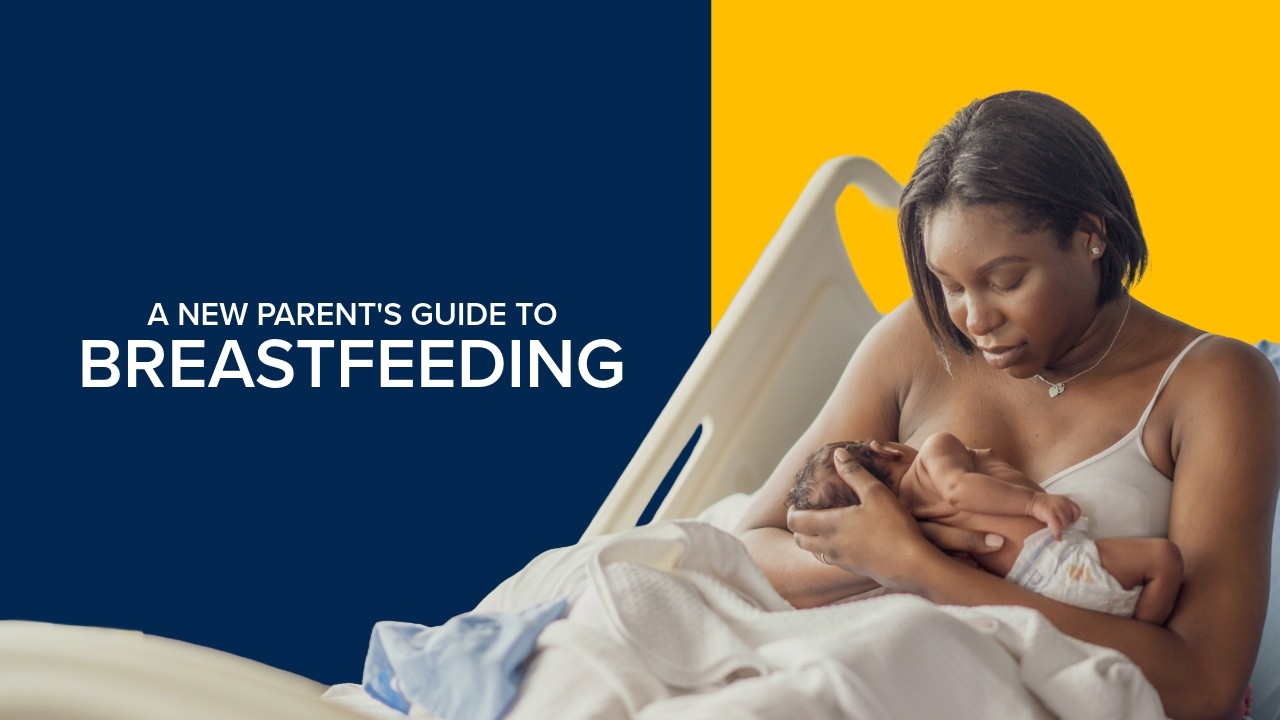
Breastfeeding can be a challenging time for new parents. But there are a lot of great benefits for everyone if you're able to stick with it.
Below are answers to some of your breastfeeding questions from our lactation experts at UC Davis Children's Hospital:
What are the benefits of breastfeeding for mom and for baby?
Breastfeeding is great for both infant and maternal health. Breast milk is a living substance that carries immune information from mom to baby. It helps prevent babies from catching infections that lead to things like pneumonias, ear infections, vomiting and diarrhea. Breastfeeding helps prevent chronic diseases like allergies, diabetes, and certain leukemias in infants.
For mothers, it decreases their risks of heart disease, diabetes, and breast and ovarian cancers.
Check out our in-person or virtual breastfeeding classes
How soon should moms breastfeed after their baby is born?
The sooner breastfeeding begins, the better. If mom and baby are both healthy and able, then breastfeeding in the first hour can be very helpful to establish milk production. Infants are often alert during this time and can have a great feed before falling asleep for several hours.
Learn more about our maternity services and support resources
How can I tell if my baby is getting enough breast milk?
In the first day, babies only need a teaspoon at a time of colostrum, which is the first form of breastmilk. At UC Davis Medical Center, nurses, lactation consultants or doctors watch the baby feed, assess the infant latching on and ensure the baby can swallow. The birthing care team tracks how often the baby urinates and has a bowel movement.
In the first few weeks, babies should breastfeed a minimum of 8-12 times per day. Parents should follow their baby’s cues for feedings, not a schedule. At first, breastfeeding will take most of your time every day. As you get used to breastfeeding, your milk comes in more, and your infant gets bigger and stronger, most people find that feeds become much shorter.
Don't be surprised if there are times when your infant wants to feed for a long time or many times right in a row. This is usually due to a growth spurt, developmental leap, or your baby not feeling well.
You are the best source of comfort for your baby, so any time things are changing for them, they are going to ask to breastfeed more often and for longer.
After the first week, families should expect to see four to six wet, heavy diapers every day, with several of them with yellow, seedy poop.
Sign up for our Health Highlights e-newsletter
How do I know if my baby has a good latch?
Some signs that your baby has a good latch:
- You and your baby are comfortable.
- Your baby has a wide-open mouth, taking a lot of breast into their mouth, not just the nipple.
If you are having trouble latching, you can work with a lactation consultant. If you do not have direct access to a lactation consultant, talk with your baby's pediatrician or your provider.
Is pain normal during breastfeeding?
During the first few days after birth when new moms are trying to get a good latch, there can be some pain from damage to the nipples. You want to make sure that breastfeeding pain isn’t getting worse with every feed and that your nipple comes out of the baby’s mouth, looking nice and round and not ridged or creased or getting increasing damage.
Ongoing breastfeeding is not generally painful. If you have pain, it could be several things:
- When the breasts are overfull (engorged), that fullness can be uncomfortable.
- If your breasts are red, that could be an infection (mastitis).
- If the baby has too shallow of a latch due to positioning, a tongue tie, or other factors, this can lead to pain during feeding.
- Underlying breast disease can also lead to pain.
If you're having pain during breastfeeding, you should see your provider and/or a lactation consultant.
Learn about our pregnancy and postpartum care services
What are some helpful tips for breastfeeding moms?
Nothing beats good positioning. Get yourself a good couch, chair, or spot on the bed to breastfeed. You want a place where you can position yourself with pillows to support the baby and your arms, so you are not hunched over.
Talking with family members, colleagues, or friends who have breastfed for several months or longer can be helpful. You can check with them on the logistics of feeding, returning to work and pumping if that's part of your plan. Find out what they've done that worked for them.
Explore more about maternal mental health
How do I know when to switch breasts while feeding?
Ideally, wait for your infant to completely finish feeding on one breast before switching. Your baby should self detach (usually a little push up and a tongue thrust to push the nipple out of their mouth). When they detach themselves, offer the second breast. It is the infant's choice whether to take one or both breasts but always allow your infant to self-complete a feed on one side and always offer both.
How do I keep my baby awake during feeding?
Use your hand to gently compress the breast tissue to stimulate faster flow of milk from that area of the breast. This can often stimulate the baby to begin sucking again. Gently touching the baby's back or feet can help. Keeping baby unbundled and skin-to-skin contact can help keep them stay more alert.
How many months should I breastfeed my baby?
The World Health Organization (WHO) and the American Academy of Pediatrics recommend breastfeeding only (no food or drink other than breast milk) for 6 months. Breastfeeding should continue for at least two years, if possible.
Can I take over-the-counter medications while breastfeeding? Are vitamins OK to take while breastfeeding?
Most medications and prenatal vitamins are safe during breastfeeding. When in doubt, ask your doctor. In addition, Lactmed® is a free database kept by the U.S. National Library of Medicine. You can search any medication or herbal remedy and read its effects during lactation. The results are written for a medical audience, though, and can be a bit dense to read.
We recommend eating a healthy, varied diet while breastfeeding because babies are introduced to new flavors through breast milk. There are no specific vitamins, foods or supplements that will help you make more breast milk or make your baby less gassy.
How much water should you drink while breastfeeding?
We recommend that you hydrate to thirst. You will probably be extra thirsty and will want to drink more, especially right when you latch your baby so have water nearby. But there is no need to hit a certain number of ounces of water a day.
Can beer help my milk supply? Is it ok to drink alcohol while breastfeeding?
While a beer every now and then is not harmful for you as the parent, it doesn't improve milk supply like people once thought. Alcohol can be dehydrating, so it shouldn't be used with the goal of increasing milk production.
You should limit alcohol if you're breastfeeding. If you do have one drink, you shouldn't breastfeed for about two hours. There's no need to "pump and dump" unless it's for comfort.
Alcohol in the milk will leave through the bloodstream as it clears your system. Alcohol levels peak about 30-60 minutes after a drink. If you drink more than one standard drink, then this takes longer. If the mother is under the influence of alcohol, a designated parent or caregiver should provide care for the infant.
What lactation support is available at UC Davis Health?
For families who deliver at UC Davis Medical Center, the labor and delivery and postpartum nurses are all trained in supporting breastfeeding. Lactation consultants in labor and delivery and postpartum are available every day of the week. You can also check out our support groups, our online breastfeeding classes or talk to your child’s pediatrician.
Families who are eligible for Special Supplemental Nutrition Program for Women, Infants, and Children (WIC) can get lactation support through WIC.
Learn about our labor, delivery and postpartum services
This blog was medically reviewed by Carina Bassin, our inpatient lactation consultant.