
Academic Programs
Clinical Curriculum
UC Davis offers an Integrated Internship for ophthalmology residents at UC Davis Health. During this year, our interns spend three non-contiguous months on the ophthalmology service where they are introduced to our comprehensive service, spend time on select subspecialties, and participate on our inpatient consult service. Interns also attend ophthalmology didactics during their ophthalmology blocks. Our interns also have rotations in facial plastics and neuro-radiology – services that overlap with ophthalmology and add an important dimension to the ophthalmology training. The remainder of the year is spent on the inpatient and ambulatory medicine services at UC Davis and its affiliated institutions.
Comprehensive Ophthalmology
PGY-2 residents spend 18 weeks on the comprehensive service, working one-on-one with our outstanding faculty in comprehensive ophthalmology. In addition to extensive clinical experience, the residents also participate in cataract surgery, often performing several surgeries as a primary surgeon before the end of the PGY-2 year. Early surgical experience is a cornerstone of the UC Davis training program, allowing our residents to learn excellent techniques early on and build on their skill set throughout their training.
Consult service
PGY-2 residents spend three months on the inpatient consult service. Under the supervision of the chief resident and clinical faculty, the consult resident performs independent examinations and develops treatment plans for both urgent and emergent patients in the emergency room and on the inpatient units. As UC Davis is a Level 1 trauma center, our consult residents see a wide range of pathology and are well trained to manage a variety of ocular emergencies.
Neuro-ophthalmology
Three months of the PGY-2 year are spent on the Neuro-Ophthalmology Service. As part of the neuro-ophthalmology service the resident will learn how to thoroughly work up, diagnose and manage patients with routine and complex neuro-ophthalmic disorders.
Oculoplastics
PGY-2 residents spend six weeks on the oculoplastics service during which they participate in the clinical and surgical management of disease processes of the orbit, lacrimal system and eyelids. Residents on this service also rotate with our affiliated volunteer clinical faculty at the Kaiser Folsom site. Through these experiences, residents gain significant operative and clinical experience on which they build in their final year.
Veterans Administration Medical Center, Mather
This three-month rotation at one of our two VA hospitals provides second year residents with a solid foundation in medical and surgical ophthalmology with an emphasis on cataracts and glaucoma. VA faculty provide direct one-on-one instruction in the OR, allowing the residents to deepen their understanding and experience of cataract surgery. Residents on this rotation learn to work independently, managing their own clinics with close faculty supervision.
Cornea and External Disease
Three months of the PGY-3 year are spent on the cornea and external disease service, during which the residents are exposed to a wide range of complex clinical and surgical pathology. The residents are vital members of the team, participating in clinical work, surgical cases and minor procedures.
Glaucoma
Three months of the PGY-3 year are spent on the glaucoma service, working in the clinics and operating rooms with the three full time glaucoma faculty. During this rotation, residents learn the workup, medical management and surgical approaches to various forms of glaucoma in both children and adults.
Pediatric Ophthalmology and Adult Strabismus
Three months of the PGY-3 year are spent on the pediatric ophthalmology and adult strabismus service. Residents participate in the diagnosis, medical management and surgical treatment of a wide range of pediatric ocular disorders including strabismus, nasolacrimal duct obstruction and congenital or developmental cataracts and retinopathy of prematurity. Residents also participate in the management of adult patients with strabismus.
Chief Resident Rotation
Senior residents spend three months on the Chief Resident rotation. This rotation provides residents with the opportunity to serve as autonomous comprehensive ophthalmologists, to refine their leadership and management skills and to develop surgical maturity before completing the residency. Residents manage their own clinic workflow, schedule patients for cataract surgery with faculty oversight, and perform cataract surgery with supervision by our anterior segment faculty.
Veterans Administration Medical Center, Martinez
UC Davis is unique in having two VA experiences for its residents, and the Martinez VA is the site of the second of these experiences. This three-month rotation offers residents an excellent opportunity to expand their knowledge and expertise in a broad spectrum of medical and surgical ophthalmologic areas. Under direct faculty supervision of the Chief of Ophthalmology at the Martinez VA, the resident runs his/her own service with a focus on anterior segment and cataract surgery.
Vitreoretinal Service
Three months of the third year are spent on the Vitreoretinal Service. The resident will participate in the diagnosis and management of patients with a wide variety of vitreoretinal disease and ocular tumors. Residents become adept at performing laser treatments and intravitreal injections and participate in the surgical treatment of patients with retinal disease as well.
Advanced Comprehensive Ophthalmology
Senior residents return to the comprehensive service for six weeks to consolidate their clinical and surgical skills in cataract and refractive surgery. This is an opportunity to build on their foundational skill set and learn more complex techniques in cataract surgery, including use of the ORA system, LenSx, and the management of post-refractive patients. Residents also participate in refractive surgery at the David Grant Medical Center in Fairfield.
Advanced Oculoplastics
Senior residents return to the oculoplastics service for six weeks to consolidate their training in the medical and surgical management of orbit, eyelid and lacrimal disorders.
Residency Program Leaders and Staff
-

Residency Program Director
Nandini Gandhi, M.D.
Byron Demorest Endowed Chair in Pediatric Ophthalmology
Professor and Director, Pediatric Ophthalmology -
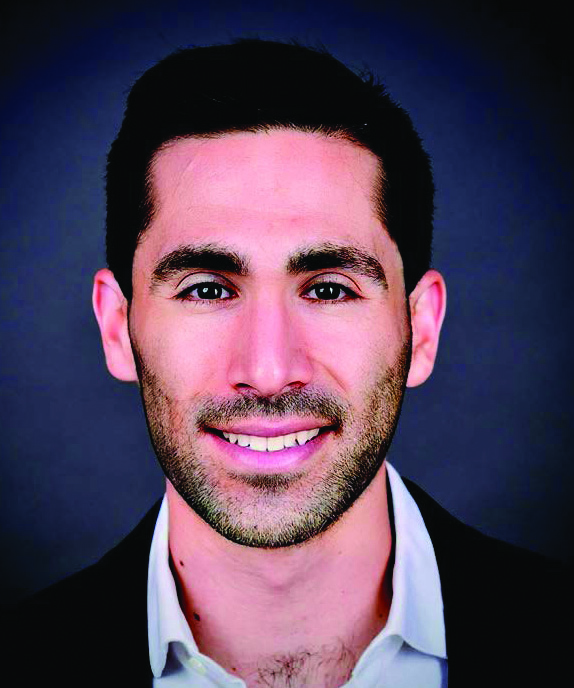
Residency Program Associate Director
Mathew Margolis, M.D.
Assistant Professor, Corneal and External Disease
-
Residency Program Coordinator
Email Deanna FritzDeanna Fritz
Department of Ophthalmology & Vision Science
UC Davis Eye Center
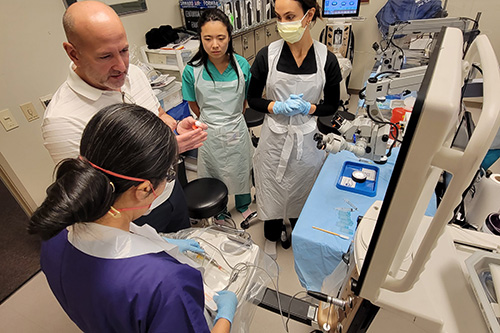
Beyond the Textbook: Advanced Residency Training
At UC Davis Eye Center, we combine world-class mentorship with revolutionary technology. As one of the first programs in the U.S. to utilize high-tech surgical simulators, our residents gain precision skills before ever stepping into the OR. Explore a residency experience that includes rare clinical cases and unique access to the nation’s top primate and veterinary resources.
Our academic health center includes

UC Davis Medical Center and Rehabilitation Hospital


Betty Irene Moore School of Nursing
What to Expect


Events
Our continuing education provides top-tier learning opportunities that improve clinical skills and professional performance to optimize patient eye care.
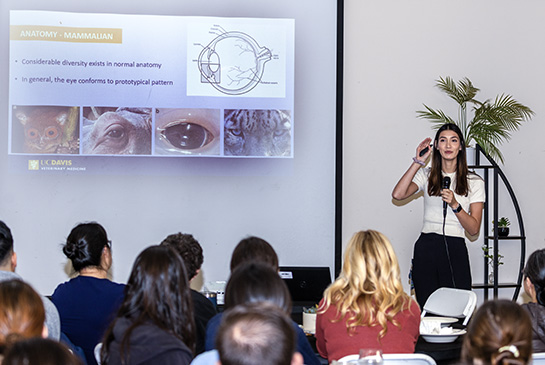
Grand Rounds
Each year, the UC Davis Eye Center provides a series of Grand Rounds designed to provide the community and our region with high-quality continuing medical education in each subspecialty of ophthalmology.
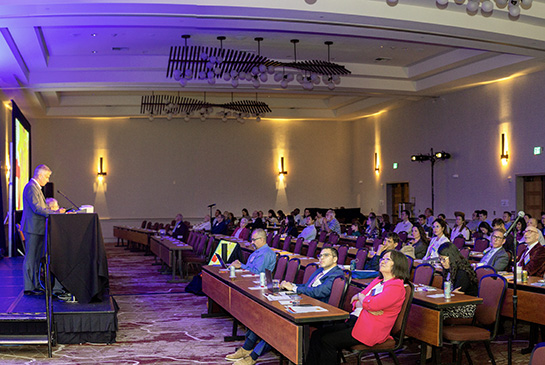
Napa Eye Symposium
Earn continuing medical education credit at the annual Napa Eye Symposium which showcases a clinically oriented update for all ophthalmology specialties.
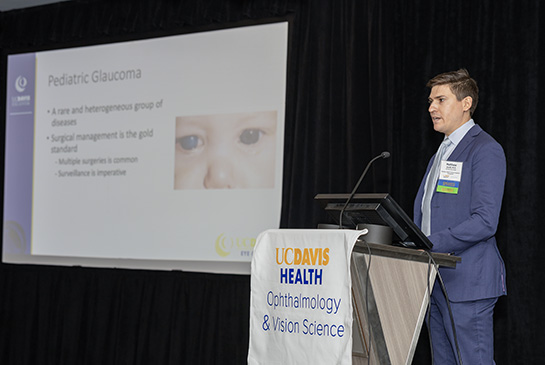
Resident, Fellow and Alumni Research Symposium
Earn continuing medical education credit at the annual Resident, Fellow and Alumni Research Symposium, where residents and fellows present their ophthalmology research projects to alumni, volunteer clinical faculty, ophthalmologists and the community.
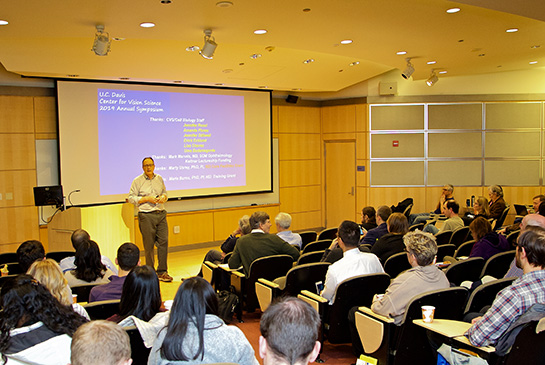
Center for Vision Science Symposium
Each year, the Center for Vision Science hosts a one-day symposium dedicated to basic and translational science in vision at UC Davis.

