

Research Team - (T-PAL)
-
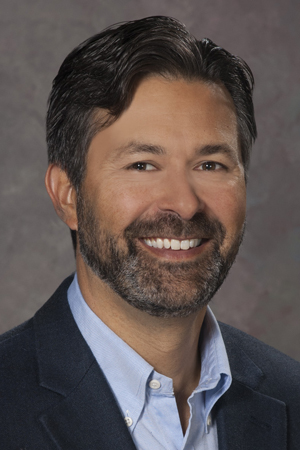 Principal Investigator
David Hessl, Ph.D.
David Hessl, Ph.D., professor of Psychiatry and Behavioral Sciences, is currently the director of the Translational Psychophysiology and Assessment Laboratory (T-PAL). One important focus of the work in T-PAL is to develop and evaluate novel behavioral, cognitive and psychophysiological outcome measures of individuals with neurodevelopmental disabilities. These measures are designed to be used to detect improvement in functioning within controlled treatment trials. Psychophysiological studies have examined abnormalities in social gaze, sensorimotor gating, sympathetic nervous system activity, hypothalamic-pituitary-adrenal axis function, and potentiated startle responses. Other recent studies have been aimed at improving challenging behavior and cognitive measurements in individuals with fragile X syndrome, Down syndrome, autism, intellectual disabilities, and other neurodevelopmental disabilities. A second major focus of his work is the study of fragile X premutation carriers. Individuals with this change in the FMR1 gene are at increased risk for a neurodegenerative disease involving tremor, ataxia, and dementia (the fragile X-associated tremor/ataxia syndrome, FXTAS). Along with Susan Rivera, Ph.D. and Flora Tassone, Ph.D., he directs an NIMH-funded project examining the trajectory of changes over time in brain structure, neuropsychology, and neurological/motor functioning in these carriers. He and Deborah Hall, M.D., Ph.D. (Rush University) and Peter Todd, M.D., Ph.D. (University of Michigan) direct an NINDS-funded rare disease clinical trial readiness project for FXTAS.
Hessl earned his Ph.D. in clinical psychology from the University of Washington where his work focused on emotional and brain development in children of mothers with postpartum depression under the supervision of Geraldine Dawson, Ph.D. He went on to a clinical internship at the Department of Psychiatry and Behavioral Sciences and the Lucile Packard Children's Hospital at Stanford University. He completed a MacArthur postdoctoral fellowship in psychophysiology under the supervision of W. Thomas Boyce, M.D. at the Institute of Human Development at UC Berkeley. His training continued at the Behavioral Neurogenetics Research Center at Stanford where he began his work on gene-brain-behavior studies in fragile X syndrome with Allan Reiss, M.D. After arriving at UC Davis, he obtained an NIMH Career Development Award (K23) to examine the association between anxiety and autism symptoms in children with fragile X syndrome and the physiology underlying social anxiety problems such as gaze avoidance in these individuals. He is a licensed psychologist and his clinical interests involve cognitive, emotional, and behavioral evaluation of children, adolescents and adults with neurodevelopmental conditions, including fragile X syndrome, Down syndrome, autism, ADHD, learning disabilities, and Tourette syndrome.
-
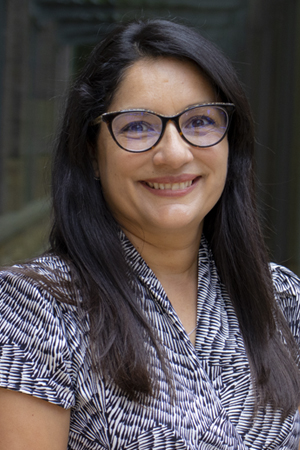 Clinical Research Coordinator
Glenda M Espinal, B.S. CCRC
Glenda Espinal is the clinical research coordinator for the Longitudinal Study of Brain and Cognition in Fragile X Premutation Carriers and also manages the International Fragile X Premutation Registry. She has worked in the fragile X-related research field for the past 11 years focusing on the pathogenic mechanisms that cause fragile X syndrome and fragile X-associated tremor/ataxia syndrome (FXTAS). Her research interests include the effects of intellectual function, motor function, executive function, memory, dexterity, and balance on neurodevelopment in premutation carriers.
-
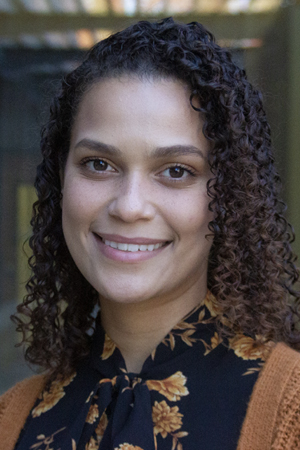 Assistant Clinical Research Coordinator
Shy Maqbool, B.S.
Shy Maqbool began volunteering in the Infant Sibling Lab under Sally Ozonoff, Ph.D., as an undergraduate research assistant due to her interest in child development. After completing a B.S. in psychology from UC Davis, she worked in a residential clinical treatment program with victims of trauma and CSEC youth. In 2019, she rejoined the Infant Sibling Lab as full-time staff and worked on several NIH funded studies as a research coordinator. In addition to her job duties, she has also volunteered as a co-leader with the MIND Institute social skills program and Incredible Years program, and currently as a program coordinator for the NeuroTeens social support program. On the T-PAL team, Shy will be coordinating two clinical trials, one focused on the sensitivity of the NIH Toolbox Cognition Battery, and one focused on treatment of severe aggression in men with fragile X syndrome.
-
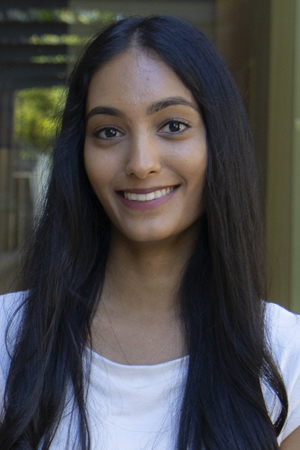 Assistant Clinical Research Coordinator
Pari Mungalpara, B.S.
Pari Mungalpara is the clinical research coordinator for the Longitudinal Study of Brain and Cognition in Fragile X Premutation Carriers. She brings a strong foundation in neurodevelopmental research from her time at the University of Washington, where she explored sleep and brain structure in autistic children. Her research interests include neuroimaging techniques and psychological assessments to investigate how brain function relates to behavior in individuals with neurodevelopmental disabilities.
-
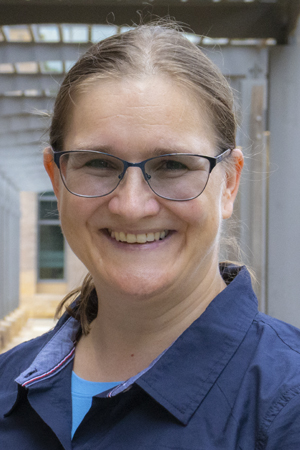 Assistant Researcher
Andrea Schneider, Ph.D.
Andrea Schneider, Ph.D., is an Assistant Researcher at the University of California at Davis, MIND Institute. From very early on in her academic career, she focused on interdisciplinary research with brain-behavior interactions and acquired broad knowledge in clinical psychology and medical neuroscience, with specific training and expertise in ADHD, learning disabilities, and fragile X. As a graduate student, she studied the neurophysiological bases of ADHD (attention-deficit and hyperactivity-disorder) and dyslexia. Being also a clinical psychologist, her other area of interest is intervention research. She completed a pilot study of a phytopharmacological intervention (Ginkgo biloba) in dyslexia, and a study about the efficacy of neurofeedback in ADHD. Currently, her main research interest is the association between genetic and brain abnormalities underlying the neuropsychopathology, behavioral, and psychiatric symptoms in individuals with the fragile X mutations and the development of EEG as an outcome measure for targeted treatment trials. She is an active member of the Social Skills Program at the MIND Institute since 2008. She is an affiliate of the ARTP (Autism Research and Treatment) program at the MIND Institute, a member of the FENS (Federation of European Neuroscience Society), and the Center for Cognitive Studies, University Potsdam, Germany.