
The lab is based in the Department of Neurology at UC Davis Health, where Dr. Pedersen serves as a Professor and Vice Chair of Research and is a key part of the active epilepsy surgery and stereoelectroencephalography (SEEG) program. Dr. Pedersen also serves as an assistant editor for Annals of Neurology. Dr. Pedersen has been continuously funded by the NIH since 2017 and has two current R01 projects; graduate scholars in the laboratory have NIH and NSF funding.
Epilepsy and Systems Neuroscience Laboratory
From patient to molecule, we are devoted to understanding and curing epilepsy
-
Our Research Goals
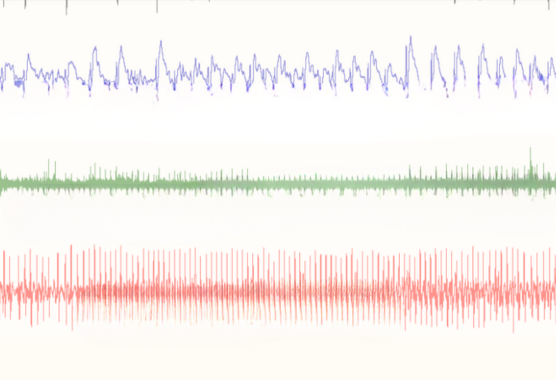
We study large-scale brain networks in epilepsy, sleep, and cognition using both human and mouse models. Our work bridges clinical neuroscience and basic research, combining invasive electrophysiology in human surgical patients with cutting-edge approaches in animal models to understand how the brain generates memory, regulates sleep, and gives rise to seizures. The laboratory has four related research areas.
-
Current Projects
-
Memory & Cognition: How the brain generates the subjective experience of familiarity and recollection during spatial recognition memory, studied through invasive SEEG recordings in human subjects (funded by NIH R01NS144894).
-
Sleep, Epilepsy, & Cognition: How enhancing sleep through targeted manipulation of brainstem sleep circuits can improve seizure control and cognitive function in epilepsy. We hypothesize that normalizing sleep in epilepsy will help treat seizures and improve cognitive function (funded by R01NS147124). We are also investigating the precise neural circuits that control and create sleep.
-
Epilepsy Surgery: Advancing techniques for identifying and treating epileptogenic networks, including temporal interference stimulation and novel approaches to surgical planning.
-
Non-Invasive Brain Stimulation: We are studying the effects and use of a newer non-invasive brain stimulation method: temporally interfering electric fields.
-
-
Our Team
- Nigel P. Pedersen, M.D., F.A.N.A., F.A.E.S. (PI)
- Katherine “Kat” McNeely-White, Ph.D. (postdoctoral scholar)
- Eleanora Napoli, Ph.D. (research scientist)
- Danny Lasky, B.S. (neuroscience graduate student)
- Raul Castillo-Astorga, M.D. (biomedical engineering graduate student)
- Mayuko Arai, B.S. (neuroscience graduate student)
- Soraya Fattahi (graduate volunteer)
- Bao Nguyen (undergraduate scholar)
- Greta Pilkauskaite (undergraduate scholar)
- Lauryn Lee (undergraduate scholar)
- Prutha Patel (undergraduate scholar)
- Michelle Ohajekwe (undergraduate scholar)
Clinical Trials
Learn about the different clinical trials we offer.
Giving
Join us to advance neurological health for all.
Fellowship Programs and Training Opportunities
Learn, grow and collaborate with our renowned researchers.