
Our Research Labs
-

Attention, Impulsivity and Regulation (AIR) Lab
Explore the AIR LabThis program aims to improve the lives of children, teens and adults with attention, impulsivity, or cognitive and emotional regulation challenges. Research includes brain development in ADHD, virtual reality treatments for attention, and the link between fidgeting and focus.
-

Autism Phenome Project Lab
Explore the Autism Phenome Project LabThe Autism Phenome Project, launched in 2006, is the largest and most comprehensive long-term study of children with autism. Children were enrolled at ages 2-3, and we have followed them through middle childhood and into adolescence to better understand how brain development differs over time.
-

Collaborative START Lab
Explore the Collaborative Start LabThe Collaborative START lab is dedicated to enhancing the quality of life for autistic individuals and their families. Our goal is to bridge the gap between research and practice, ensuring that cutting-edge interventions benefit all members of the autistic community.
-
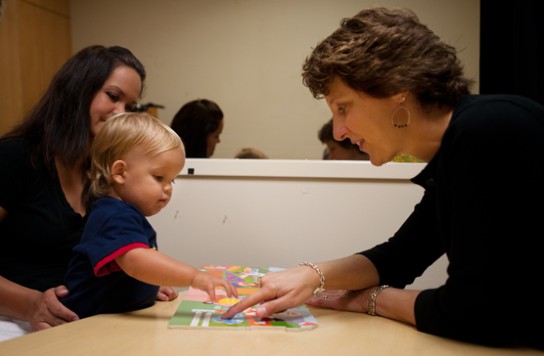
Early Detection Lab
Explore the Early Detection LabWe study how to identify autism early in childhood to ensure children get helpful services. Our research uses at-home methods like online forms and video visits to see if telehealth can effectively detect autism.
-

Language Development Research Lab
Explore the Language Development Research LabOur research lab is trying to understand how language develops in children who have certain developmental disabilities like fragile X syndrome, Down syndrome, and autism.
-

Mood Disorders Research Program
Explore the Mood Disorders Research LabOur program focuses on understanding and treating depression, mood spectrum disorders, and related conditions in youth, young adults and adults.
-

Silverman Lab
Explore the Silverman LabWe are a lab focused on preclinical research in multiple species to study and treat rare neurodevelopmental disorders (NDDs), including intellectual disability (ID), autism spectrum disorder (ASD), and pediatric epilepsy. Our goal is to use insights from rodent models to develop effective treatments for these conditions.
-

Solomon Lab
Explore the Solomon LabThe Solomon Lab uses cognitive neuroscience methods to advance the study of higher cognition in autism.
-

Translational Psychophysiology and Assessment (T-PAL) Lab
Explore the T-PAL LabOur lab focuses on understanding how genes, the brain, and behavior are connected in neurodevelopmental disabilities, particularly in conditions related to fragile X syndrome.