October 27, 2026 | Sacramento, CA
UC Davis Rural Health Summit: From Evidence to Impact
Turning research into action for healthier rural communities.
Join us at the UC Davis Rural Health Summit on October 27 for a day of dialogue between researchers, policymakers and community leaders on California's most pressing rural health challenges. The summit will highlight proven strategies in collaboration, resource allocation/funding, innovation and advocacy, drawing on real-world lessons from the field. Attendees will leave with concrete next steps for building new partnerships and driving lasting impact in rural communities.
October 27, 2026
8:30 a.m.–5 p.m. PT
Select sessions available via webinar
Aggie Square
4480 2nd Ave.
2nd Floor
Sacramento, CA 95817
Questions?
Contact us at wdaehler@health.ucdavis.edu.
Reserve your seat
Register for select sessions available via webinar or join the waitlist to attend in person.
Register to attendAgenda
Attendees are encouraged to attend all session from 9 a.m.–4 p.m. Light breakfast will be served at 8:30 a.m.
-
8:30-9 a.m.
Breakfast
A light breakfast will be served on the second floor of Aggie Square.
-
9–9:15 a.m.
Welcome and introductions
Courtney Lyles, Ph.D. | Director, UC Davis Center for Healthcare Policy and Research
Mark Rosenblatt, M.D., Ph.D., M.B.A., M.H.A. | Vice Chancellor of Human Health Sciences, UC Davis Health
-
9:15–10 a.m.
Keynote: Marguerite Peterseim, M.P.H.
Senior Government Affairs and Policy Coordinator, National Rural Health Association
-
10-11 a.m.
Community voices in California rural health
Courtney Lyles, Ph.D. (Moderator) | Director, UC Davis Center for Healthcare Policy and Research
Anahi-Marcella Sandoval Araiza | Policy and Research Manager, Imperial Valley Equity and Justice
Laura Fierce | President, California Association of Rural Health Clinics
Isai Garnica-Palma | Assistant Director, Valley Onward
Perfecto Muñoz, Ph.D., M.P.H. | CEO, West Modesto Community Collaborative
-
11-11:15 a.m.
Break
Adjourn for a 15-minute break.
-
Breakout 1A: 11:15 a.m.-12:15 p.m.
Workforce needs in rural settings
Melody L. Tran-Reina, M.D. (Moderator) | Associate Dean, Workforce Pathways and Collaboratives, UC Davis
Deb Bakerjian, Ph.D., A.P.R.N., F.A.A.N., F.A.A.N.P., F.G.S.A. | Associate Dean for Practice and Clinical Professor, UC Davis Betty Irene Moore School of Nursing
Emmie (Emily) Johnson, M.P.P. | CEO, Healthy Rural California
Alex Zhornitskiy, M.D., M.P.H. | Assistant Professor, UC Davis Department of Internal Medicine
-
Breakout 1B: 11:15 a.m.-12:15 p.m.
Revamping funding for rural health programs and collaborations
Brad Pollock, Ph.D., M.P.H. (Moderator) | Distinguished Professor and Chair, UC Davis Department of Public Health Sciences
Megan Burke, M.S.W | Director, California Health and Aging Policy, The SCAN Foundation
Evi Hernandez | Senior Director of Programs, California Health Collaborative
Holly Laird, M.P.H. | Rural and Disability Health Equity Specialist, Office of Health Equity, California Department of Public Health
Heather Riden, M.A. | Director of Outreach, UC Davis Western Center for Agricultural Health and Safety
-
12:15-1:30 p.m.
Lunch
Lunch will be served on the first floor of Aggie Square.
-
Breakout 2A: 1:30-2:30 p.m.
Rethinking rural health policy and advocacy
Paul Dodd, Ph.D. (Moderator) | Associate Vice Chancellor – Grand Challenges, UC Davis
Cesar G. Garcia, M.A. | Health Policy Analyst, California Rural Indian Health Board
Sydney Lyons, M.Ed. | Program Coordinator, California Center for Rural Policy, Cal Poly Humboldt
Pauline Martinez, Ph.D. | Research and Community Engagement Manager, UC Davis Betty Irene Moore School of Nursing
Darrell Muniz | CEO, California Farmworker Foundation
Amira Resnick, M.P.A. | Statewide Director, Community Nutrition and Health, UC Agriculture and Natural Resources
-
Breakout 2B: 1:30-2:30 p.m.
Innovations in rural health
Abigail Arons, M.D., MPAff (Moderator) | Assistant Professor, UC Davis Department of Internal Medicine
Lemeneh Tefera, M.D., M.Sc. | Chief Medical Officer and Deputy Director for Clinical Innovation, California Department of Health Care Access and Information
Shah Khan, M.D., M.S. | CEO, EnlightenMed
Matthew Morris, M.D. | Regional Medical Director, Partnership HealthPlan of California
James Marcin, M.D., M.P.H. | Professor and Director, UC Davis Center for Health and Technology and Department of Pediatrics
-
2:30-2:45 p.m.
Break
Adjourn for a 15-minute break.
-
2:45-3:45 p.m.
Keynote: Janessa Graves, Ph.D., M.P.H.
Associate Professor, Department of Family Medicine, University of Washington
Director of the Washington, Wyoming, Alaska, Montana, and Idaho (WWAMI) Rural Health Research Center -
3:45–4 p.m.
Closing remarks
The Summit will conclude with report outs on lessons learned from the day's sessions and remarks from UC Davis leadership.
-
4–5 p.m.
Reception and networking
A reception will be held on the second floor of Aggie Square.
Speakers
-
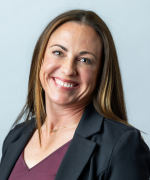 Keynote Speaker
Janessa Graves, Ph.D., M.P.H.
Associate Professor, Department of Family Medicine, University of Washington
Director for the WWAMI Rural Health Research CenterJanessa M. Graves is an associate professor in the Department of Family Medicine at the University of Washington (UW) School of Medicine and Director of the WWAMI Rural Health Research Center. She also holds appointments in the UW School of Public Health and at Washington State University College of Nursing.
Graves is a health services researcher whose work examines rural healthcare access, workforce, and policy using large-scale administrative data and community-engaged methods. Her research focuses on how healthcare workforce shortages and changes in health policy shape access to care, healthcare spending, and health outcomes in rural communities. Her work has informed state and federal policy discussions related to rural workforce development, mental health services, Medicare reimbursement, and rural healthcare spending.Graves earned her M.P.H. and Ph.D. from the UW School of Public Health, completed a postdoctoral fellowship at the Harborview Injury Prevention and Research Center, and holds a BA from Columbia University. She was a 2021-22 National Rural Health Association Fellow and lives with her family in rural northeastern Washington.
-
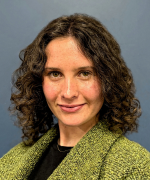 Keynote Speaker
Marguerite Peterseim, M.P.H.
Senior Government Affairs and Policy Coordinator, National Rural Health Association
As senior government affairs and policy coordinator at the National Rural Health Association, Marguerite Peterseim is responsible for working with NRHA program staff to support policy development; supporting legislative advocacy efforts; providing policy analysis and technical assistance; and drafting regulatory responses on behalf of the association.
Peterseim earned a Master of Public Health with a concentration in global health policy from George Washington University. She holds a Bachelor of Science in Spanish and International Health from Clemson University, graduating with a minor in Nonprofit Leadership.
Her professional journey includes roles in diabetes care, health literacy education, and rural health programming, where she works to bridge gaps in underserved communities and communities facing language barriers in South Carolina with the Clemson Rural Health Extension team.
-
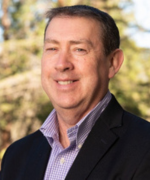 Host/Moderator
Paul Dodd, Ph.D., Ms.C.
Associate Vice Chancellor – Grand Challenges, UC Davis
Paul Dodd rejoined UC Davis full time in January 2024 in a new role of Associate Vice Chancellor, Grand Challenges. His focus in this role is to ensure UC Davis’ research is making the greatest positive impact on global problems. We bring together experts from across disciplines – connecting the community around solution-oriented work, ensuring the participation of underrepresented people and disciplines, organizing product-centered strategic convenings including company and government partners, and we facilitate the creation of new campus-wide teams and ventures. He leads efforts in the Emerging Health Threats and Climate Solutions challenges, and actively supports the Sustainable Food Systems and Reimagining the Public Land-Grant University challenges. He holds B.A. and M.Sc. degrees in science of materials from Trinity College Dublin and a Ph.D. in physics from Queen’s University Belfast.
-
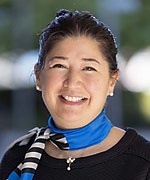 Host
HostTonya Fancher, M.D., M.P.H., F.A.C.P.
Vice Chair, Workforce Diversity
Associate Dean, Workforce Innovation and Education Quality ImprovementTonya Fancher completed a primary care general internal medicine residency at NYU and Bellevue Hospital and then spent four years in the U.S. Air Force stationed at Travis Air Force Base. A professor of general internal medicine, Fancher is currently vice chair for Workforce Diversity and associate dean of Workforce Innovation and Education Quality Improvement. Since joining UC Davis in 2002 as a health services research fellow, she has worked in undergraduate medical education and graduate medical education to address workforce shortages in medically underserved communities.
-
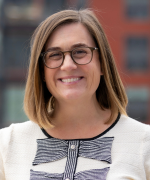 Host/Moderator
Courtney Lyles, Ph.D.
Director, Center for Healthcare Policy and Research
Professor, Department of Public Health SciencesCourtney Lyles is the Director of the Center for Healthcare Policy and Research (CHPR) and a professor in the UC Davis Department of Public Health Sciences. She joined CHPR and UC Davis in July 2023 after serving as an associate professor in the UCSF Division of General Internal Medicine at Zuckerberg San Francisco General Hospital, the UCSF Center for Vulnerable Populations and the UCSF Department of Epidemiology and Biostatistics. While at UCSF, Lyles served as Co-Director of the Innovation in Research and Informatics core for the UCSF Clinical & Translational Science Institute (CTSI) and co-directed the UCSF Population Health Data Initiative.
-
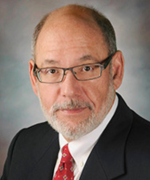 Host/Moderator
Brad H. Pollock, Ph.D., M.P.H.
Rolkin Chair in Public Health Sciences
Chair, Department of Public Health Sciences
Distinguished Professor and ChairBrad Pollock is a distinguished professor of epidemiology and chair of the Department of Public Health Sciences at UC Davis School of Medicine. He is a Fellow of the American College of Epidemiology. Previously he was the Founding Chair of the Department of Epidemiology and Biostatistics at the University of Texas Health Science Center at San Antonio and was previously on the faculty of the University of Florida. He received his B.S. in biological sciences from UC Irvine, and his M.P.H. and Ph.D. degrees in epidemiology from the UCLA School of Public Health.
-
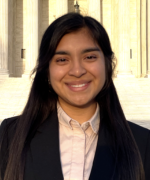 Panelist
Anahi-Marcella Sandoval Araiza
Policy and Research Manager, Imperial Valley Equity and Justice
Anahi-Marcella Sandoval Araiza (she/her/ella) is policy researcher and community advocate, committed to advancing equity at the intersection of public health, human rights, and economic justice. She currently serves as a Policy and Research Manager with Imperial Valley Equity and Justice, where she leads community-based research and policy advocacy on healthcare access, environmental justice, and immigrant rights in the Imperial Valley. Her experience spans human rights documentation with UC Berkeley Law’s Human Rights Center, legal services at East Bay Community Law Center, and international solidarity work in Honduras. A graduate of UC Berkeley with a degree in Global Studies and minors in Human Rights and Arabic, Anahí is passionate about building community power to challenge structural inequity.
-
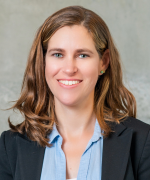 Moderator
Abigail Arons, M.D., MPAff
Assistant Professor, UC Davis Department of Internal Medicine
Abigail Arons is a faculty member in the Divisions of General Medicine and Bioethics and Division of General Pediatrics at the UC Davis School of Medicine. Her research focuses on health policy design over the life course, with an emphasis on young adulthood and cardiometabolic disease prevention. She came to medicine having spent time working in state and national health policy, including several years at the National Academy for State Health Policy. Arons is a dual-boarded primary care physician in Internal Medicine and Pediatrics, and currently cares for patients at both UC Davis and Sacramento County Health Center. A native of Winters, CA, she holds a B.A. in Mathematics from Smith College, a Master of Public Affairs from the LBJ School at the University of Texas at Austin, and an M.D. from UCSF. She completed residency at UCLA, and fellowship in the National Clinician Scholars Program at UCSF.
-
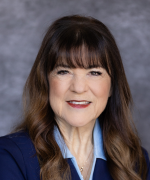 Panelist
Deb Bakerjian, Ph.D., A.P.R.N., F.A.A.N., F.A.A.N.P., F.G.S.A.
Associate Dean for Practice and Clinical Professor
Deb Bakerjian is professor of clinical nursing and Associate Dean for Practice at the Betty Irene Moore School of Nursing, where she directs the APP Primary Care Fellowship and co-directs the UC Davis Healthy Aging Initiative. Her work centers on building the rural and underserved health workforce in Northern California. She leads EMPOWERS, a CAPP-accredited APP fellowship; BRIDGE, a community outreach and referral program expanding access to substance use treatment; and co-leads SAGE, a rural geriatric workforce initiative, alongside a HRSA-funded nurse-led mobile clinic and RETAIN, a DOL–funded faculty residency. Drawing on two decades leading a geriatric NP–physician nursing home practice, she has shaped health policy through the American Academy of Nursing, including its Expert Panel on Aging and Edge Runners NAC, authoring position papers that advanced care for older adults in nursing homes. She is Editor-in-Chief of Geriatric Nursing and a Fellow of American Academy of Nursing, American Association of Nurse Practitioners, and Gerontological Society of America.
-
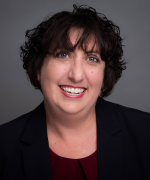 Panelist
Megan Burke, M.S.W
Director, California Health and Aging Policy, The SCAN Foundation
Megan Burke is Director of California health and aging policy at The SCAN Foundation, where she advances California policy and grantmaking strategies to improve the lives of older adults, people with complex care needs, and family caregivers. Primary areas of impact include advancing California’s Master Plan for Aging, strengthening long-term services and supports, and rural aging. Megan brings experience in research, policy development, and direct service across aging, caregiving, health, and disability systems. Previously, she served as senior analyst at The SCAN Foundation and held policy roles with Paraquad (a Center for Independent Living in Missouri) and the Missouri Developmental Disabilities Council.
-
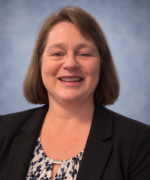 Panelist
Laura Fierce
President, California Association of Rural Health Clinics
Laura Fierce is a rural healthcare leader and advocate with more than 20 years of experience working in California’s rural healthcare system. She currently serves as President of the California Association of Rural Health Clinics (CARHC), where she works to elevate the voice of Rural Health Clinics and the communities they serve across California.
Throughout her career, Fierce has developed extensive expertise in the federal and state policies that shape rural healthcare delivery, including Rural Health Clinic regulations, Medicare and Medi-Cal reimbursement, California healthcare requirements, telehealth, coding and billing policy, and the Prospective Payment System. Her experience has given her a unique perspective on the intersection between healthcare policy and the realities of delivering care in rural communities.
As CARHC President, Fierce brings the experiences and concerns of rural clinics into broader discussions surrounding healthcare access, reimbursement, workforce challenges, regulatory requirements, and the sustainability of rural healthcare. She is particularly interested in ensuring that policymakers and healthcare leaders understand how decisions made at the federal and state levels translate into real-world consequences for small clinics, healthcare professionals, and the patients who depend on them.
Fierce’s policy advocacy is informed by substantial hands-on experience implementing healthcare regulations at the clinic level. She has spent much of her career interpreting requirements from agencies including CMS, the California Department of Health Care Services, the California Department of Public Health, and Medi-Cal and helping healthcare organizations translate those requirements into workable policies and systems.
Her work has also included Rural Health Clinic certification and accreditation, telemedicine, reimbursement and revenue policy, healthcare quality, service-line development, and improving access to specialty and primary care in underserved communities. She has helped organizations navigate the complexities of rural healthcare regulation while remaining focused on the fundamental question of whether policies ultimately help rural patients receive the care they need.
Fierce holds a Bachelor of Science in Healthcare Management and is a Certified Rural Health Clinic professional. Her perspective combines policy knowledge with the voice of someone who has spent her career working directly within rural healthcare, giving her a practical understanding of both the opportunities and the unintended challenges that healthcare policy can create for rural communities.
-
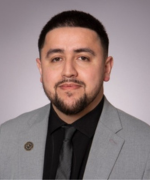 Panelist
Cesar G. Garcia, M.A.
Health Policy Analyst, California Rural Indian Health Board
Cesar G. Garcia is a health policy analyst at the California Rural Indian Health Board (CRIHB), a Tribal health organization whose membership of 21 Tribal Health Programs serves 76 of California's 109 federally recognized Tribes. His work spans state and federal Tribal health policy, including Indian Health Service funding, Purchased/Referred Care, 340B, and Medi-Cal and CalAIM, with a focus on how these systems reach rural Tribal communities. He works with state and federal lawmakers and agencies to advance Tribal health priorities. Before moving into policy, Cesar served as Project Coordinator for CRIHB's Tribal Medication Assisted Treatment program and worked with the California Tribal Epidemiology Center. Earlier, he worked in case management at a Federally Qualified Health Center in Sacramento. He holds a Master of Arts in History with a focus on Public History and is pursuing a second graduate degree, a Master of Public Health.
-
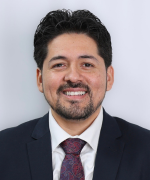 Panelist
Isai Garnica-Palma
Assistant Director, Valley Onward
Isai Garnica-Palma is the Assistant Director and a co-founder of Valley Onward, a Merced County nonprofit that develops community leadership and expands access to health resources across the Central Valley. He works with community health workers/promotoras on health education, care navigation, substance use prevention, and partnerships with public agencies and health providers. He also co-chairs a substance use and suicide prevention coalition with Merced County Public Health. Through a newly awarded California Workplace Outreach Project grant, Valley Onward will expand its work with rural workers on workplace health, safety, and access to state resources. Isai brings a community-based perspective to health policy, with a focus on how trusted local workers can make programs more accessible and responsive to residents’ needs.
-
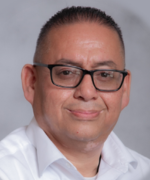 Panelist
Evi Hernandez
Senior Director of Programs, California Health Collaborative
Evi Hernandez has worked in public health for nearly three decades, with 25 of those years working in the non-profit sector at the California Health Collaborative (CHC) where he currently serves as a Senior Director of Programs. He holds a Bachelor of Science degree in Health Science and a Bachelor of Arts in Chicano/Latino Studies, both from California State University-Fresno.
Since joining CHC, Evi has provided leadership and oversight for grant-funded programs supported by the California Department of Public Health, California Department of Health Care Services, regional and local foundations, and county government agencies throughout California.
Evi has helped expand the organization’s funding portfolio to encompass new and innovative program areas and funders; extending CHC’s presence and services into outlying regions of the state; developing protocols and policies that have enhanced the workplace environment and organizational culture; and establishing systems and processes that have improved operational efficiency and program effectiveness.
-
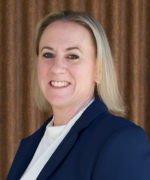 Panelist
Emmie (Emily) Johnson, M.P.P.
CEO, Healthy Rural California
Emmie Johnson is the Chief Executive Officer of Healthy Rural California (HRC), a Chico-based nonprofit addressing the physician shortage across 22 counties in rural Northern California. HRC sponsors Family Medicine and Psychiatry residencies and runs pathway programs reaching students from elementary school through medical school. Before joining HRC in 2026, Emmie was Chief Strategy Officer for Physicians for a Healthy California, the nonprofit arm of the California Medical Association. She previously ran a public affairs consultancy, leading ballot initiative, legislative advocacy, and candidate campaigns, including serving as deputy campaign manager for Yes on Prop 56, which created the funding behind PHC’s CalMedForce residency grants. As a Vice President at APCO Worldwide, she represented physicians, dentists, hospitals, academic medical centers, pharmaceutical and medical device manufacturers, and health insurers. Emmie holds a master’s in health and regulatory policy from Georgetown University and a bachelor’s from Rutgers University.
-
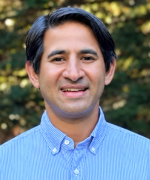 Panelist
Shah Khan, M.D., M.S.
CEO, EnlightenMed
Shah Khan is an internal medicine physician and CEO of EnlightenMed, an innovative, technology-enabled medical group serving rural and underserved communities in Northern California. Since founding EnlightenMed in 2022, Khan has built partnerships with rural hospitals and community health centers, combining virtual and in-person care to expand access where clinicians are scarce.
His work grew out of years spent caring for patients in rural Northern California, where he saw firsthand how geographic distance and provider shortages affect health outcomes. In 2025, he founded Health Telematix and began building a digital health platform designed to connect patients, clinicians, and health data across care settings. The platform extends care beyond individual visits through remote monitoring, continuous patient engagement, and proactive chronic disease management, with the goal of scaling these capabilities across rural communities. At the center of his work is a clear conviction: technology should extend the reach of medicine without diminishing the human relationships that define it.
-
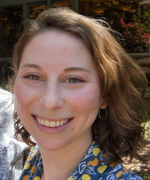 Panelist
Holly Laird, M.P.H.
Rural and Disability Health Equity Specialist, Office of Health Equity, California Department of Public Health
Holly Laird serves as the Rural and Disability Health Equity Lead in the Office of Health Equity at the California Department of Public Health (CDPH), where she works to strengthen internal policies and cross program coordination to improve CDPH’s responsiveness to the inequities experienced by rural communities and people with disabilities. She works across the department to embed rural and disability equity into programs and policy conversations, guided by ongoing partnership with community organizations. Laird has over ten years of experience collaborating with rural communities to advance health equity and community driven policy. Holly also serves as Vice Chair of CDPH’s Disability Advisory Committee and as a member of the California State Rural Health Association Board. She holds a Master of Public Health from UC Davis.
-
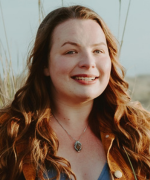 Panelist
Sydney Lyons, M.Ed.
Program Coordinator, California Center for Rural Policy, Cal Poly Humboldt
Sydney Lyons is a program coordinator at the California Center for Rural Policy at Cal Poly Humboldt, where she works on initiatives focused on healthcare workforce development, rural education, and community equity. Originally from rural Appalachian Georgia, Sydney brings both personal and professional experience navigating rural educational barriers and is deeply passionate about creating community-rooted pathways that expand opportunity for rural youth. Sydney holds a master’s degree in education with an emphasis on educational policy and primarily works on the Health Career Pathways Initiative in Del Norte and Tribal Lands, a collaborative effort aimed at addressing rural healthcare workforce shortages through a "grow our own" approach of supporting local youth pursue healthcare careers. Her recent graduate research explores how belonging, mentorship, and community connection shape rural students’ healthcare career aspirations and intent to return home to serve their communities. Her work emphasizes relational, culturally responsive, and place-based approaches to rural workforce development.
-
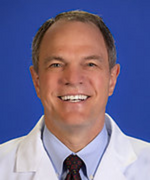 Panelist
James Marcin, M.D., M.P.H.
Professor and Director, UC Davis Center for Health and Technology and Department of Pediatrics
James Marcin is Director of the Center for Health and Technology at the UC Davis School of Medicine and the Vice Chair for Research in the Department of Pediatrics. In addition to his work in the Pediatric Intensive Care Unit, he conducts research and advocacy related to access and quality of care for under-resourced populations, particularly as it relates to telehealth and children with special healthcare needs.
-
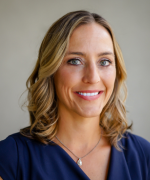 Panelist
Pauline Martinez, Ph.D.
Research and Community Engagement Manager, UC Davis Betty Irene Moore School of Nursing
Pauline DeLange Martinez is a public health researcher and gerontologist with the Family Caregiving Institute at the UC Davis Betty Irene Moore School of Nursing. She brings nearly two decades of experience translating research and community priorities into policies and programs that support older adults and family caregivers. Her expertise spans community-engaged research, program and policy evaluation, and rural health equity. She led the statewide evaluation of California’s Local Aging and Disability Action Planning grant program, supported Multisector Plans for Aging in three rural California regions, developed a toolkit used nationally for rural action planning, and authored the Aging in Rural California policy brief series. She serves on the board of the California State Rural Health Association. She holds an M.A. in Gerontology from San Francisco State University and a Ph.D. in Public Health Sciences from UC Davis.
-
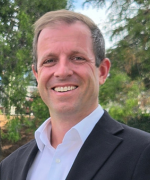 Panelist
Matthew Morris, M.D.
Regional Medical Director, Partnership HealthPlan of California
As a mission driven, board-certified, Family Medicine physician, I have a passion and enthusiasm for bringing high-quality, patient-centered care to the often-underserved communities in which I have had the privilege to serve. As Regional Medical Director for Partnership HealthPlan of California, a non-profit community-based health care organization, I am part of a leadership team working to ensure the delivery of high-quality healthcare to greater than ninety thousand Medi-Cal members within our region, and over eight hundred thousand Medi-Cal members throughout Northern California. Prior to joining Partnership HealthPlan of California, I was Chief Medical Officer for Western Sierra Medical Clinic, a federally qualified health center (FQHC), where I helped develop, implement, and lead processes to improve access and quality of care delivered to approximately twenty thousand patients throughout Nevada, Placer, and Sierra counties.
-
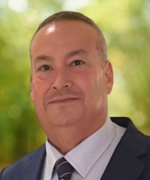 Panelist
Darrell Muniz
CEO, California Farmworker Foundation
Darrell Muniz is a seasoned executive with an impressive career spanning over three decades at Macy’s Inc., where he advanced from the Executive Training Program to influential leadership roles. He attended UC Berkeley. As Vice President General Manager at Macy’s, he successfully managed multiple locations with annual revenues between $25 million and $90 million. His strategic acumen and leadership expertise earned him a promotion to Senior Vice President Director of Stores for the Pacific Northwest, overseeing 50 stores and driving $700 million in volume. In 2020, Darrell brought his expertise to the California Farmworker Foundation, initially helping to strengthen its financial and infrastructural framework. His commitment and vision led to his appointment as Chief Operating Officer in 2023, following the Executive Director’s departure. By August 2024, Darrell assumed the role of Chief Executive Officer, where he continues to lead with impact and dedication.
-
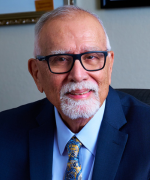 Panelist
Perfecto Muñoz, Ph.D., M.P.H.
CEO, West Modesto Community Collaborative
Perfecto Muñoz serves as Chief Executive Officer of West Modesto Community Collaborative (WMCC), where he provides executive leadership, strategic direction, and policy advocacy focused on advancing health equity and community well-being in Stanislaus County. With over four decades of experience in public health, healthcare access, and community engagement, Muñoz has worked extensively at the intersection of policy, education, and underserved communities. His work has centered on social determinants of health, access to care for immigrant and agricultural worker populations, workforce development, and culturally responsive systems change. He is widely recognized as a trusted leader and advocate in both community and policy spaces.
-
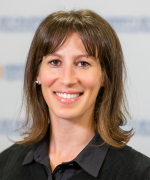 Panelist
Amira Resnick, M.P.A.
Statewide Director, Community Nutrition and Health, UC Agriculture and Natural Resources
Amira Resnick has served as Statewide Director, Community Nutrition and Health with the University of California Agriculture and Natural Resources since February 2022. In this role, she oversees development and administration of public health programming across California, including the Expanded Food and Nutrition Education Program (EFNEP), Extension Collaborative on Immunization Teaching and Engagement (EXCITE), and MediCal Champions Collaborative. She leads a network of approximately 20 CNH Advisors/Specialists and 45 Community Educators to build a shared vision and direction to advance health equity and respond to public health priorities facing all Californians. Throughout her 25-year career in human/social services and community engagement, Resnick has worked within institutions of higher education and non-profit organizations across the U.S. and abroad. Resnick holds a master's degree in public administration from the University of Southern California and a bachelor's degree in cultural anthropology and Spanish from the University of Michigan.
-
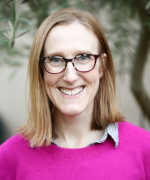 Panelist
Heather Riden, M.A.
Director of Outreach, UC Davis Western Center for Agricultural Health and Safety
Heather Riden is the Director of Outreach for the Western Center for Agricultural Health and Safety (WCAHS) at the University of California, Davis. In this role, she leads outreach, education, and partnership initiatives designed to advance occupational health and safety in agriculture. Her work focuses on translating research into practical resources, training programs, and communication strategies that support farmworkers, community-based organizations, and agricultural employers. She recently led the California Farmworker Housing Study and oversees the Statewide Agriculture and Farmworker Education (SAFE) Program, which delivers health, safety, and labor rights education to agricultural communities across California. Under her leadership, WCAHS launched Campo Seguro, the first-ever multilingual website designed with and for farmworkers.
-
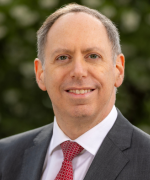 Opening Remarks
Mark Rosenblatt, M.D., Ph.D., M.B.A., M.H.A.
Vice Chancellor of Human Health Sciences, UC Davis Health
Mark Rosenblatt is the Vice Chancellor of Human Health Sciences at UC Davis Health, overseeing its patient care, research and education missions. An internationally recognized clinician-scientist and ophthalmologist, he has published more than 225 manuscripts, reviews, book chapters and abstracts, while conducting research on corneal nerve regeneration and nanoengineered biomaterials for ocular stem cell delivery. Rosenblatt is personally engaged in the clinical and research aspects of UC Davis Health through seeing patients and leading his own research laboratory. He began his academic career at UC Davis in 2005 as an assistant professor of ophthalmology and vision science. Before returning to UC Davis in 2026, he served as executive dean of the University of Illinois College of Medicine and CEO of the University of Illinois Hospital and Clinics. Rosenblatt’s leadership emphasizes collaboration and integration across UC Davis Health’s missions.
-
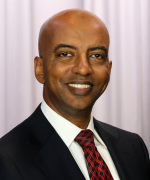 Panelist
Lemeneh Tefera, M.D., M.Sc.
Chief Medical Officer and Deputy Director for Clinical Innovation, California Department of Health Care Access and Information
Lemeneh Tefera is the inaugural Chief Medical Officer and Deputy Director for Clinical Innovation at the California Department of Health Care Access and Information (HCAI). In this role, he provides clinical, policy, and strategic planning expertise for the Director’s Office and across the department’s multiple programs. Previously, he served as a fellow in the United States Senate, policy advisor for the Centers for Medicare and Medicaid Services, and policy advisor for the California Public Employees’ Retirement System (CalPERS). Tefera is a practicing emergency medicine physician with over 27 years of clinical experience, has held multiple faculty appointments, and has worked extensively overseas, including volunteering with Doctors Without Borders. -
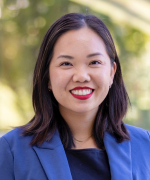 Moderator
Melody L. Tran-Reina, M.D.
Associate Dean, Workforce Pathways and Collaboratives
Melody Tran-Reina is the Associate Dean of Workforce Pathways and Collaboratives at UC Davis School of Medicine and Founding Co-Director of the COMET Collaborative. She oversees seven UME physician workforce pathway programs and leads a 50-plus partner network spanning California and Oregon focused on strengthening the training pathway for physicians who serve rural, underserved, and tribal communities. She continues to practice primary care at a Sacramento County FQHC. Tran-Reina is herself a UC Davis School of Medicine graduate and a graduate of the TEACH-MS program she now leads, giving her a rare inside view of the pathway from student to resident to physician leader.
-
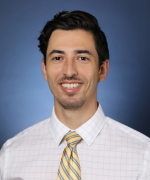 Panelist
Alex Zhornitskiy, M.D., M.P.H.
Assistant Professor, UC Davis Department of Internal Medicine
Alex Zhornitskiy is a gastroenterologist at UC Davis whose work focuses on health policy, health equity, and improving access to gastroenterology care for underserved communities. His research and community-based initiatives address disparities in colorectal cancer screening, barriers to specialty care, and strategies to improve preventive health services among rural, low-income, and culturally/linguistically diverse populations. Zhornitskiy is also engaged in health policy and advocacy through his service on the nonprofit boards of the California Colorectal Cancer Coalition and GI Rising, as well as a member of the American Gastroenterology Association Government Affairs Committee. His work seeks to translate research and community needs into practical health-system and policy solutions.