

When Associate Professor Charleen Singh learned she had been selected as a Fulbright Scholar, the news did not land all at once.
“It still hasn’t settled in,” she said. “It’s too big.”
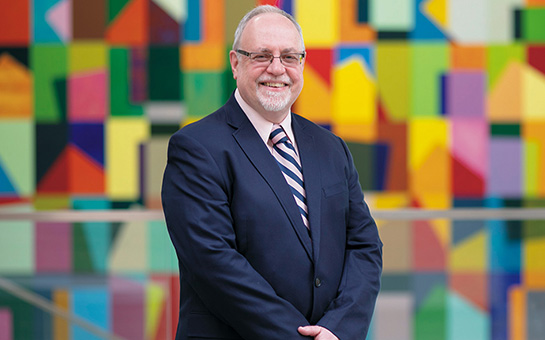
Singh, Ph.D., M.B.A., F.N.P.-B.C., C.W.O.C.N., R.N., is the director of the Doctor of Nursing Practice — Family Nurse Practitioner (DNP-FNP) Program at the Betty Irene Moore School of Nursing at UC Davis. Her selection marks the first time a faculty member from the school has earned a Fulbright — one of the most competitive international exchange awards in the world.
The selection carries a deeply personal weight. It is not only recognition of her work, Singh said, but confirmation that the work had mattered.
For years, Singh questioned whether she was even worthy of applying to the prestigious program. Those doubts followed her despite nearly two decades in academia, years of clinical practice and a career shaped by developing an expertise in pediatrics, maternal and infant health.
She had spent much of her nursing career at Lucile Packard Children’s Hospital Stanford, helping develop best practices in pediatric wound and ostomy care. Her doctoral research focused on pediatric nursing interventions and pressure injuries. Her clinical experience stretches from Canada down the West Coast, across hospitals and clinics in Seattle, the Bay Area and Southern California.
Still, it took time before she felt ready to apply.
“These were things I wanted to do anyway,” she said. “Teaching. Research. Engaging with people.”
When a panel of reviewers she had never met said yes, the meaning was immediate.
“It was the first time I thought, ‘Everything I’ve done really did matter.’”
What a Fulbright represents
The Fulbright Program is one of the most selective international exchange programs in the world. Each year, a limited number of scholars are chosen for specific countries and disciplines, based on where academic and cultural exchange is expected to have the greatest impact.
Fulbright Scholars are selected not only for their credentials, but for trust. The program chooses people who can work independently, translate ideas across cultures and engage meaningfully with host communities, then bringing that knowledge back home.
“This Fulbright represents more than an individual honor. It signals the growing international reach of our school and the strength of faculty like Dr. Singh, whose work advances nursing education and health scholarship across borders,” said Dean Stephen Cavanagh, Ph.D., R.N., F.A.A.N. “We are proud of her leadership and the example she sets for global engagement.”
For Singh, the selection reflected the full arc of her work: teaching across nursing programs, remaining active in clinical practice until recently, publishing with international collaborators and presenting globally on pediatric wound care.
“Someone looked at the whole picture,” she said. “And said it all counted.”
That recognition still feels unreal. “I didn’t expect to be selected,” she said. “Even now, I’m still processing it.”
Five months of immersion in Indonesia
Singh’s Fulbright took her to Indonesia for five months earlier this year. From her base at the University of Indonesia, she taught across undergraduate, graduate and Ph.D. nursing programs, working closely with faculty in pediatrics, maternal health and family care.
Unlike her previous short-term international visits, this experience was designed for immersion.
“This wasn’t two weeks and then leaving,” she said. “It was being part of one community for months.”
Although Singh completed intensive language training, she taught in English, with course materials translated into Indonesian. As the only nursing Fulbright Scholar in Indonesia this cycle, she engaged in clinical outreach, developed educational and health programs and participated in international conferences. She also reserved time for scholarship and writing.
Throughout the experience, Singh continued serving as director of the Sacramento-based DNP-FNP program, leading preceptorship efforts and clinical operations remotely. Arriving home in June, she brought back new partnerships to create new opportunities for faculty and students and forge deeper global connections.
What she continues to carry with her is something quieter.
“For a long time, I wasn’t sure if I was good enough,” she said. “And especially now with the profession of nursing facing challenges across the country, being accepted for the Fulbright reaffirms the value of nursing.”