
Spring/Summer 2026
UC Davis Medical Center
Noteworthy

Clinical highlights

A sampling of recent major clinical achievements and developments from UC Davis Health. For more listings and news, please visit our newsroom and follow us on social media.

Study: First-ever in-utero stem cell therapy for fetal spina bifida repair is safe
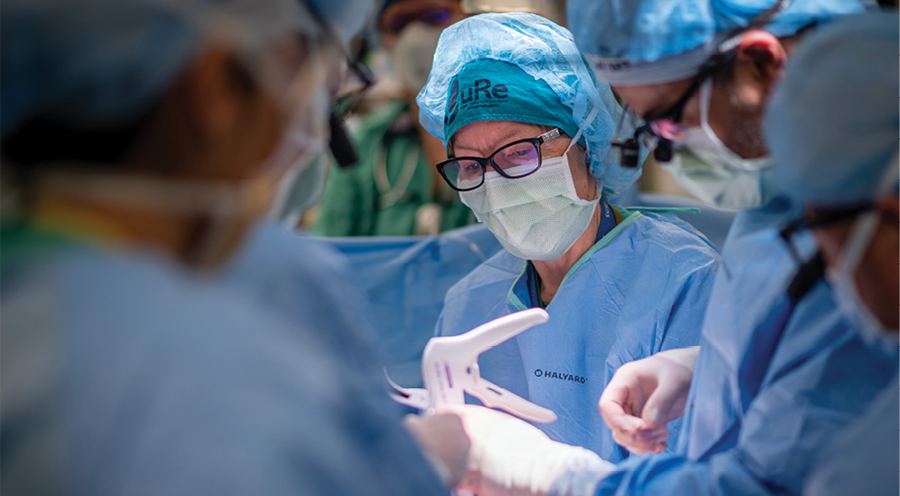
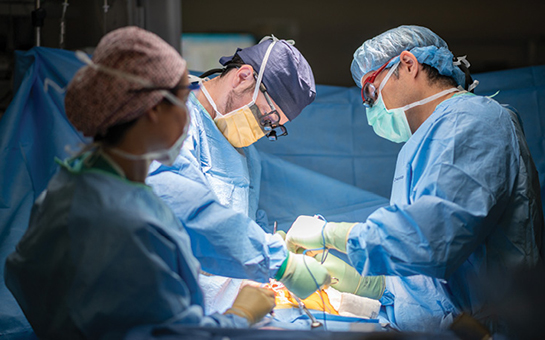
Diana Farmer, chair of the UC Davis Department of Surgery, and team performing fetal surgery.

A UC Davis Health team has safely performed the world’s first spina bifida treatment combining fetal surgery with stem cells, according to results from Phase 1 of an ongoing clinical trial. These results were published in The Lancet in February. “Feasibility and Safety of Cellular Therapy for In-Utero Repair of Myelomeningocele (CuRe Trial): a First-In-Human, Phase 1, Single-Arm Study,” tested whether adding a layer of human placenta-derived stem cells to standard fetal surgery could be done safely. The cells, taken from donated placentas, are designed to protect the developing spinal cord from further damage before birth.

The first six babies in the trial were monitored closely from surgery through birth.

“It paves the way for new treatment options for children with birth defects. The future is exciting for cell and gene therapy before birth.”Diana Farmer, CuRe trial principal investigator and chair of the UC Davis Department of Surgery

Because early safety results were strong, the Food and Drug Administration and an independent monitoring board approved moving forward with the next phase. The CuRe trial is now enrolling up to 35 patients in its Phase 1/2a study; children will be followed through age 6 to evaluate long-term safety and early signs of improved movement, bladder and bowel function.

The first phase was funded by a $9 million grant from the state’s stem cell agency, the California Institute for Regenerative Medicine (CIRM). Phase 1/2a is funded by CIRM and Shriners Children’s. Co-principal investigators are Diana Farmer, chair of the UC Davis Department of Surgery, and Aijun Wang, co-director of the UC Davis Center for Surgical Bioengineering.
Clinical milestones
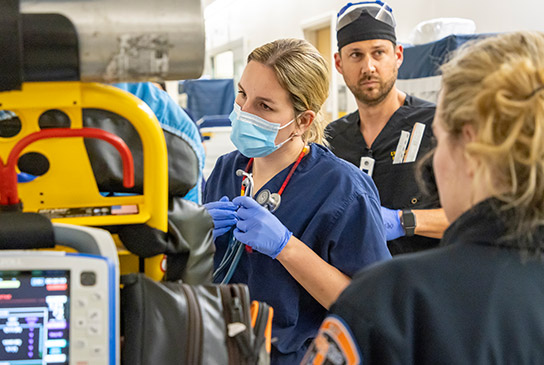
  • A doctor wearing gloves and a mask in the emergency department

    Record 100,000 ER patients in 2025

    UC Davis Health’s Department of Emergency Medicine reached a major milestone in 2025, caring for more than 100,000 patient visits in a single year for their first time. The increase is a result of several factors, including the Sacramento region’s continued population growth and exceptional care provided by the department.

    As the only level I trauma center north of San Francisco, and one of just three in California that serve both adults and children, UC Davis Health cares for many patients with serious and complex medical needs from a 33-county area. In the most critical cases, patients arrive at the emergency room by helicopter from remote parts of Northern California.

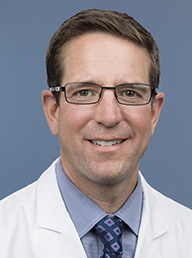
  • UC Davis Health Urologic Surgery Chair Marc Dall’Era

    100th prostate cancer procedure using high-intensity ultrasound

    UC Davis Comprehensive Cancer Center reached a major milestone by completing its 100th robotic high-intensity focused ultrasound (HIFU) procedure for men with prostate cancer. The center was first in the region to offer HIFU and now handles one of the highest volumes of HIFU procedures in California, according to UC Davis Health Urologic Surgery Chair Marc Dall’Era, M.D.

    Performed using the Focal One system, the procedure offers a non-invasive alternative to traditional surgery. Because the focused ultrasound waves heat and destroy only part of the prostate while sparing surrounding healthy tissue, there are numerous benefits, including no incisions, no radiation, fewer side effects and faster recovery.

    The outpatient procedure is now available at the new 48X Complex on the UC Davis Health Sacramento campus. Patients are discharged the same day and return home shortly after the hour-long procedure. They can get back to work within a few days and resume physical activities within a matter of weeks.

Clinical programs
  • Researchers in a medical lab

    Designated a NORD Rare Disease Center of Excellence

    The National Organization for Rare Disorders (NORD®) designated UC Davis Health as a NORD Rare Disease Center of Excellence for leadership in providing expert, multidisciplinary care and advancing research. UC Davis scientists and clinicians are at the forefront of research to help prevent, diagnose and treat rare diseases, and pioneers in developing and testing gene and stem cell therapies for rare and inherited disorders such as Angelman syndrome, Dup15q syndrome, and ADNP syndrome.

    UC Davis Health is also home to nationally recognized programs and centers that study and treat rare and ultra-rare diseases. For instance the Gene Therapy Center, part of UC Davis Institute for Regenerative Cures, is one of the few treatment centers nationwide delivering gene therapy for patients with Duchenne muscular dystrophy. A recent UC Davis Health patient received an infusion of the first-ever gene therapy for treating pediatric Duchenne muscular dystrophy.

  • Pediatric Bone Marrow Transplant Program now CCS-approved

    The Pediatric Bone Marrow Transplant Program at UC Davis Health is now a fully approved California Children’s Services (CCS) Pediatric Bone Marrow Transplant Center. The California Department of Health Care Services (DHCS) stated the transplant program and its providers meet advanced education, training and/or experience requirements to deliver services through the CCS state care and services program. The UC Davis program has also received accreditation from the Foundation for the Accreditation of Cellular Therapy (FACT).

    UC Davis Health is the only provider of pediatric stem cell transplantation in the Sacramento area, offering advanced therapies for high-risk leukemia, hemoglobin disorders, metabolic diseases, bone marrow failure disorders and immune deficiencies. The pediatric program is part of UC Davis Health’s Stem Cell Transplant and Institute for Regenerative Cures programs, which enhance care for patients of all ages.

  • Center for Lymphatic Disease director Ara Salibian

    Lymphatic Center named a Comprehensive Center of Excellence

    UC Davis Health’s Center for Lymphatic Disease has joined an elite group of 20 centers worldwide recognized as a Comprehensive Center of Excellence by the Lymphatic Education and Research Network (LE&RN), and the only campus in the UC Health system to earn the designation. After earning designation as an LE&RN Surgery Center of Excellence, UC Davis was also granted a broader comprehensive designation, reflecting the program’s growth, expansion and success. Center director Ara Salibian, M.D., said the institution sees roughly 400 people with vascular and lymphatic-related disorders each year.

    The designation signifies the center meets best-practice international standards and offers leading-edge diagnosis, treatment and care. It also affirms the center is engaged in education, community outreach and research efforts. LE&RN set a high bar of standards for comprehensive designation beyond surgical care to include all ancillary services, medical therapies, genetic counseling, advanced imaging, on-site therapy and research infrastructure.

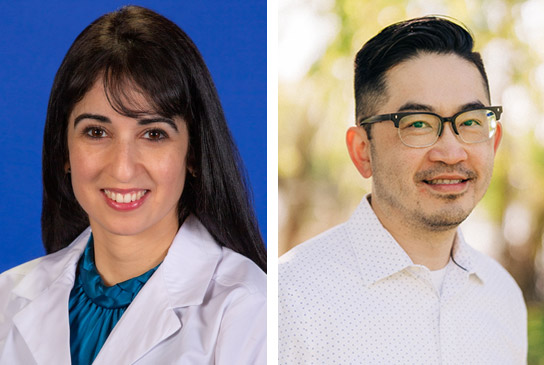
  • Cardiovascular medicine researchers Shirin Jimenez and Tai Pham

    Clinical trial offers first-of-its-kind heart failure treatment

    UC Davis Health cardiovascular medicine researchers are hosting a new clinical trial testing the Alleviant System, an investigational, non-surgical treatment that aims to improve heart failure symptoms without a permanent implant in the heart. UC Davis Health is the only hospital in the Sacramento region enrolling patients in this study. A cardiologist uses a catheter to create a seven‑millimeter opening between the left and right atria, helping to move extra blood from the high‑pressure left side. The goal is to reduce congestion and improve symptoms. Co-investigators include Tai Pham, M.D., and Shirin Jimenez, M.D.

Clinical technology
  • Region’s first photon-counting CT scanner

    The new 48X Complex outpatient surgery center is home to the region’s first photon-counting computed tomography (PCCT), the latest diagnostic tool deployed by UC Davis Health’s Department of Radiology. Instead of blending all X-ray energy together like traditional CT, the technology counts each photon and measures its energy. This more precise approach allows doctors to see more detail and even separate materials — like calcium and iodine — in the same scan. It also produces clearer scans around difficult areas, such as metal implants or dense bone. Another benefit is greater efficiency, which means less radiation exposure for children and patients who need multiple scans. PCCT has already been adopted at UC Davis Health for detecting cardiac arterial plaque, and its use is also being explored for cancer detection.

  • Gagan Singh

    World’s first transcatheter procedure with new valve repair system

    UC Davis Health is the first medical center to treat patients with mitral and tricuspid regurgitation by using an innovative transcatheter valve repair device. The Abbott MitraClip and TriClip G5 system provides advanced leaflet grasping control, optimized device orientation and streamlined deployment mechanics to enhance precision and efficiency. Supported by extensive clinical evidence, the platforms demonstrate consistent safety, durable efficacy and significant improvements in patient-reported quality-of-life outcomes. Gagan Singh, M.D., M.S., structural heart program director, performed the procedure. UC Davis Health was also recently first in the U.S. to treat tricuspid regurgitation using a previous Abbott TriClip system.

  • NorCal’s first procedure with new hypoglossal nerve stimulation device

    UC Davis Medical Center is the first hospital in Northern California to treat patients with moderate to severe obstructive sleep apnea (OSA) using an innovative hypoglossal nerve stimulation (HGNS) device. The Genio system, recently approved by the FDA, offers a unique approach by stimulating the hypoglossal nerve bilaterally to maintain open airway during sleep. It is the only HGNS device clinically proven to work in the supine position, when OSA symptoms are often most severe. Otolaryngology Professor Scott Fuller, M.D., and team performed the treatment.

  • First atrial leadless pacemaker implant in Fontan patients

    Daniel Cortez, M.D., Ph.D., an adult congenital cardiologist and director of pediatric electrophysiology, successfully implanted the first known atrial leadless pacemaker in a patient with a lateral tunnel Fontan circulation and a patient with an extracardiac Fontan. Fontan circulation is a surgically created heart pathway for children born with complex congenital heart disease and only one functioning ventricle.

    The recent breakthrough cases demonstrate that atrial leadless pacing is possible and can be implanted in the upper chamber of a patient’s heart — something that had never been done in someone with a lateral tunnel Fontan. These procedures may offer a safer, more durable solution for patients who commonly experience slow heart rates, pauses or irregular heart rhythms following Fontan. Instead of surgically replacing the leads with a traditional pacemaker, the UC Davis Health team implanted a leadless pacemaker, Abbott’s Aveir VR device, a capsule-sized device placed inside the heart through a vein in the leg.

  • Radiation oncology manager Andrew Harrell shows UC Davis Comprehensive Cancer Center Physician-in-Chief David Tom Cooke the new Radixact system.

    New radiation treatment technology

    UC Davis Comprehensive Cancer Center is the first in the region to offer the Accuray Radixact System, marking a major advance in delivering precise, efficient and personalized radiation therapy. Radixact delivers radiation in a continuous 360 degree pattern and uses CT imaging to guide treatment, enabling clinicians to shape beams to tumors with great accuracy while reducing risk to nearby healthy tissue. The platform supports a wide range of cancers, including those in the brain, head and neck, lung, prostate and female reproductive areas.

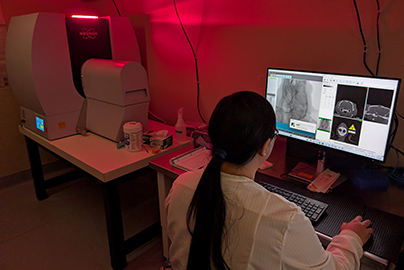
  • A woman sitting at a computer looking at imaging scans.

    New orthopaedic surgery Preclinical Imaging Center

    The Musculoskeletal Research Center expanded its research capabilities with the launch of a new Preclinical Imaging Center with the only in vivo micro-computed tomography (microCT) scanner in the Sacramento region. With this pioneering system, researchers can perform repeated, non-invasive imaging of living animal subjects, enabling them to monitor crucial biological processes such as bone remodeling, healing and disease progression with remarkable precision, while also minimizing radiation exposure and reducing computing requirements.

    Scientists across the Department of Orthopaedic Surgery are leveraging the technology to advance a wide range of studies, including mechanisms of post-traumatic osteoarthritis, bone adaptation to mechanical stimuli, bone repair quality with novel therapies and implants, cancer metastasis to bone and development of new imaging methods for musculoskeletal disorders.