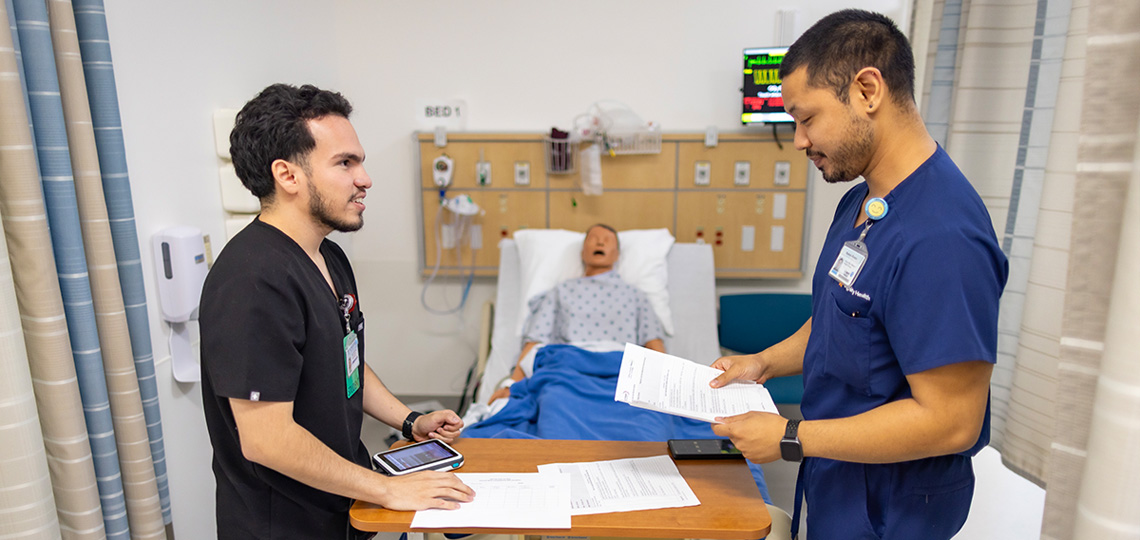
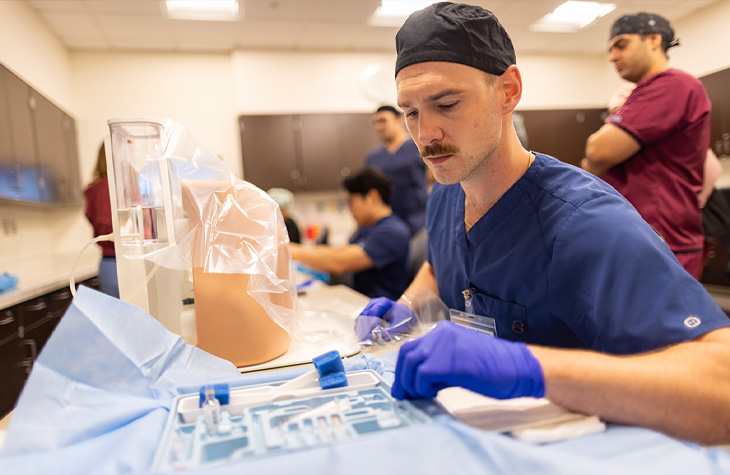
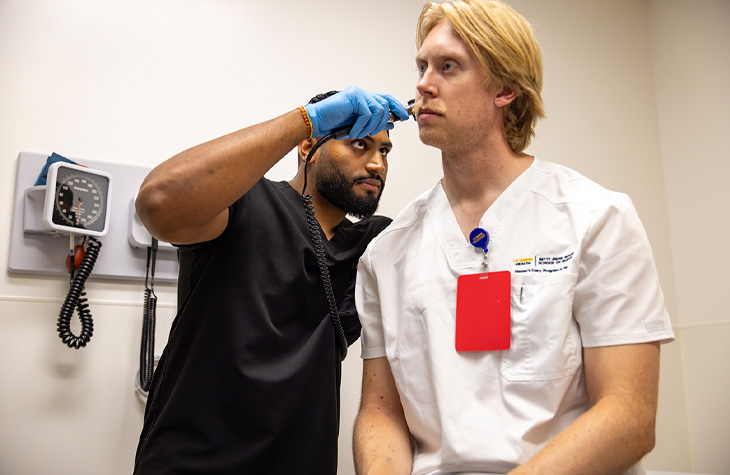
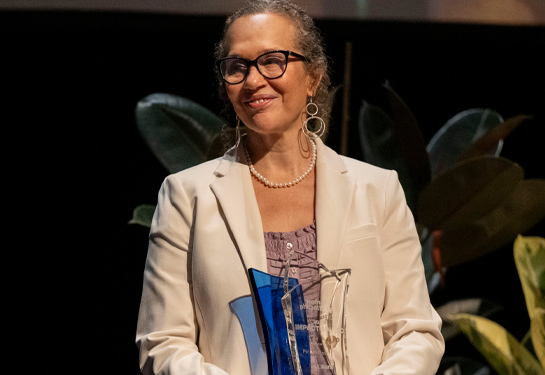
The national award honors schools that recruit men into nursing and help them succeed.
The recognition comes as men's share of the profession has slipped to 10.4%. In addition, men have represented only 11.8% of students in master’s nursing programs across the country in recent years — yet the school’s number of male students has increased.
“This award belongs to our students and faculty, who show every day that nursing is a career for anyone with the skill and heart to do it well,” said Stephen Cavanagh, dean of the school. “Our communities are diverse and the nurses caring for them should be too. When more men see nursing as a real option, patients benefit.”
At the School of Nursing, men made up 19% of admitted students over the past four years, nearly twice the national rate.
So, what changed? The school looked closely at how it reviewed applications. Faculty built a scoring rubric they believe ensures every applicant is judged the same way, no matter who reads the application file.
Role models in the classroom and the clinic
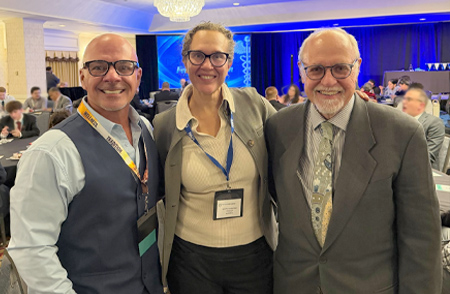
From left, Bryan Tune, Piri Ackerman and Stephen Cavanagh attend the AAMN conference in Las Vegas.
Men in the school’s programs don’t have to look far to see who has walked their path. A man leads the school as dean, and men hold one in five leadership roles and 14% of faculty and staff positions. Every clinical course in the nurse practitioner program pairs students with male faculty or preceptors. The coursework reflects men’s health, too.
“Seeing someone with a similar background who has successfully navigated the profession can be incredibly empowering,” explained Bryan Tune, an associate professor in the DNP-NA program. “What I hope to communicate to every student is that your place in nursing is not determined by your gender, but by your commitment to learning, your compassion for others and the contributions you are willing to make to the profession.”
In the school’s graduation exit survey the past three years, 71% of male students said they felt valued, included and respected. Alumnus Aron King graduated from the both the master’s-degree leadership and the Ph.D. programs at the School of Nursing.
A total of 71% of graduating male students, when surveyed, said they felt valued, included and respected at the School of Nursing.
“Belonging isn’t simply about being welcomed into a space but being able to see yourself in that space without feeling like you have to prove why you deserve to be there. Nursing needs Black men, Latino men, Asian men and men from all backgrounds,” explained King, who advocates for underserved populations and participates in the Capitol City Black Nurses Association.
At the recent AAMN conference where UC Davis was honored, King received recognition of his own: He was named a Distinguished Fellow for his work to diversity the healthcare workforce and advance men’s health.
“I hope this recognition inspires others to reach back and create opportunities for those coming behind them.”
King puts that philosophy into practice as a leader in the UC Davis SHINES program designed to introduce students to nursing careers and help them see themselves in the profession.
The pathway has welcomed 141 participants since it started four years ago. Of those, 22% were young men — more than double the number of men in the nurse/nursing? workforce. A number of male nurses are mentors and speakers.
“We hope every young man who walks in leaves able to picture himself as a nurse,” said Piri Ackerman, who created SHINES.