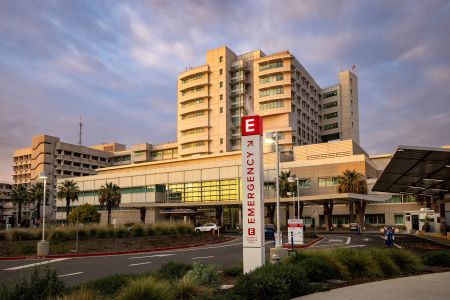
Now, we are entering one of the busiest periods for the ED, as the peak of flu and respiratory illnesses typically occurs in February or March. To prepare for the expected surge of more urgent patients, teams across UC Davis Health have continued assessing conditions and implementing measures to help manage ED overload.
What’s happening?
ED volumes remain high across the region, state, and UC system. At UC Davis Health, demand still surpasses typical levels for this time of year, although a slight decrease was observed last week.
To help manage demand, a short-term emergency overflow area with 11 beds is being prepared for patients likely to be admitted.
The space will be located in the Medical Center’s main Pavilion corridor, connecting the ED and ED Gold areas, enclosed between existing double doors to create a secure patient care area. This will affect the employee entrance near the ED, and staff may need to find alternative routes because the main hallway on the first floor will be closed.
This new dedicated overflow area will support ongoing clinical care while patients wait for inpatient placement, reducing congestion in the ED.
The space is expected to open in the next few weeks and stay open for about 30-45 days, or sooner if ED capacity stabilizes after flu season.
What do I need to know?
The employee ED entrance will remain open, but with temporary rerouting as needed to prevent entry into the patient care area and maintain safety. Employees entering the ED employee entrance will only be able to access the service elevators to reach upper floors, as the first-floor hallway to other parts of the hospital will be closed.
These short-term actions will help to manage space for emergency care, support patient flow, and reduce pressure on care teams during sustained high demand.
Why are we seeing such high volumes?
We are in a historically busy period, with respiratory illness and flu activity already affecting hospitals elsewhere and expected to increase locally in the coming weeks.
Regional population growth and increased demand for our services mean these pressures are not solely short-term.
Last year was the busiest year ever for the UC Davis Emergency Department.
Thanks and gratitude This effort demonstrates quick teamwork across the health system. Thanks to Facilities, PO&M, IT, the Fire Marshal, Emergency Preparedness, and all team members who collaborated to make this possible for our patients.