Hand Hygiene Workshop gives pediatric residents hands-on training to improve patient safety
(SACRAMENTO)
A new interactive educational program is helping UC Davis Health pediatric residents strengthen hand hygiene practices, reduce unnecessary glove use, and better understand their role in preventing healthcare-associated infections (HAIs).
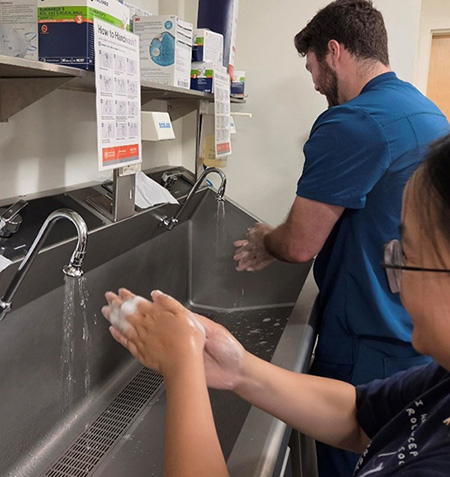
Residents rotate through interactive learning stations focused on hand hygiene, glove use, and infection prevention practices.
In July, pediatric residents participated in a hands-on Hand Hygiene and Glove Use Workshop at the UC Davis Health Simulation Center. Developed through a collaboration between Graduate Medical Education, Infection Prevention, Quality and Safety, and Pediatric Infectious Diseases, the workshop combined practical demonstrations, skills stations, and interactive learning activities designed to move beyond traditional online education.
The workshop was created in response to a recognized need for experiential learning opportunities that allow residents to practice infection prevention techniques in realistic settings. While all participating residents reported previous hand hygiene training, pre-workshop assessments revealed important opportunities to improve awareness of glove overuse, hand hygiene monitoring programs, and institutional performance measures.
Learning Through Experience
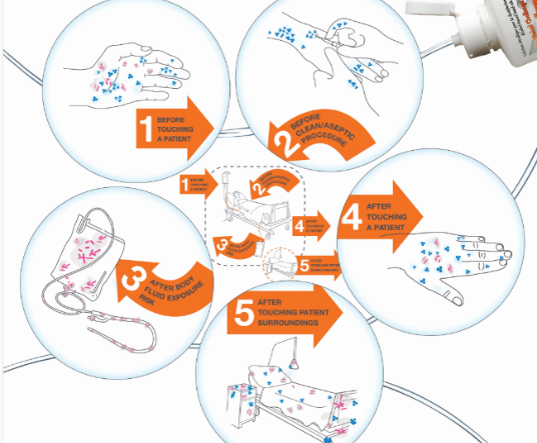
Rather than relying solely on lectures or online modules, the workshop immersed residents in a series of interactive activities focused on evidence-based infection prevention practices. Participants rotated through multiple learning stations that explored proper hand hygiene techniques, indications for glove use, institutional policies, skin health, and the World Health Organization's Five Moments for Hand Hygiene.
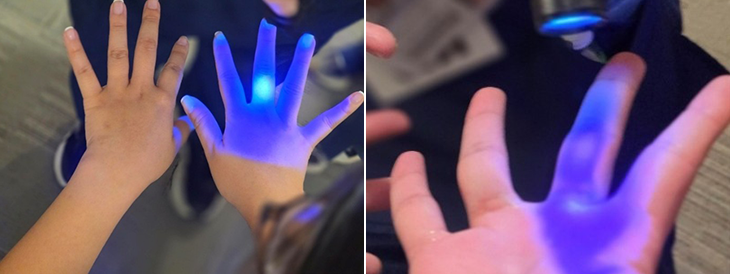
One of the most popular exercises utilized Glo Germ and ultraviolet light technology to provide immediate visual feedback on handwashing effectiveness. Residents applied fluorescent material to their hands, completed hand hygiene using recommended techniques, and then evaluated areas commonly missed during handwashing under black light.
Pediatric residents participate in a Glo Germ exercise that provides visual feedback on handwashing technique and highlights commonly missed areas.
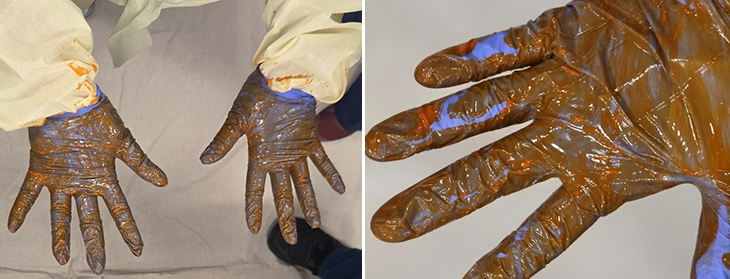
Additional activities focused on personal protective equipment (PPE) donning and doffing. Through an interactive exercise using washable paint to simulate contamination, participants observed how microorganisms can spread from gloves and PPE to the healthcare worker, patient environment, and other surfaces when proper technique is not followed.
Participants practice PPE donning and doffing techniques during a simulation-based infection prevention activity.
The workshop also included discussion of common hand hygiene and glove use myths, proper use of alcohol-based hand rub versus soap and water, and practical strategies for maintaining healthy skin while adhering to infection prevention expectations.
Strong Resident Feedback
Feedback from participants was overwhelmingly positive.
Post-workshop survey results found that 100 percent of respondents considered the workshop more helpful than previous hand hygiene education they had received. Overall satisfaction was high, with 71 percent rating the workshop as "Very Helpful" and the remaining participants rating it "Somewhat Helpful." Residents consistently highlighted the value of hands-on learning, practical demonstrations, and interactive exercises. The learning station led byElizabeth H Partridgereceived the highest ratings, with every participant describing it as "Very Helpful."
Reflecting on the session, Dr. Partridge noted: "I'm grateful and humbled to see how engaged the residents are. They want to understand why hand hygiene and appropriate glove use are important and discuss the challenges they have with implementing best practices."
Survey findings also identified an important educational opportunity: many residents demonstrated uncertainty regarding appropriate glove use for low-risk tasks where World Health Organization guidance recommends hand hygiene alone. The workshop directly addressed this knowledge gap while reinforcing the message that glove use does not replace proper hand hygiene practices.
Looking Ahead
Following the success of the pilot program, UC Davis Health leadership has approved the workshop as an annual mandatory training experience for pediatric residents. Program leaders are also exploring opportunities to expand the model to additional residency programs across the health system.
By combining simulation-based education with infection prevention best practices, the workshop demonstrates how innovative training approaches can build practical skills, strengthen safety culture, and support UC Davis Health's ongoing commitment to protecting patients, learners, and staff.