‘High reliability’ principles delivering results in Emergency Medicine
By Clifton B. Parker
(SACRAMENTO)
UC Davis Health’s Department of Emergency Medicine is making measurable progress on patient care quality and safety. This is happening through new training programs, daily operational huddles, and an inclusive focus on teamwork, among other improvements.
The Department of Emergency Medicine’s embrace of High Reliability Organization (HRO) principles since 2017 is one major reason for these wins. Currently, the health system is reviewing a proposal to implement these principles more broadly – in the year ahead, this cultural shift may spread to other units and areas of UC Davis Health.
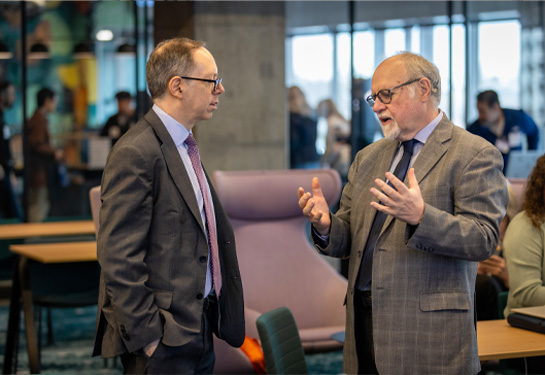
Chief Clinical Officer Bruce Hall said, “High reliability is the study of human performance in complex systems and complicated situations. It includes ways to think about problems at a high level, ways to better analyze things that happen, ways to minimize mistakes, ways to improve how we get things done and stay more safe, and ways to deal with mistakes fairly.”
He added, “I’m really impressed how our Emergency Department colleagues, including staff, nurses, and doctors, have been out on the leading edge of this kind of work. Emphasizing high reliability in our work can help move our organization to a ‘safety-first’ culture that drives higher performance everywhere.”
These practices have contributed to sustained improvements in Emergency Department performance, including a significant reduction in patients who leave without being seen (LWBS). Since the adoption of HRO principles, LWBS rates declined from approximately 15% in 2015 to about 2% today.
Emergency Medicine case example
Foundational work on high reliability began in the Department of Emergency Medicine in 2017. At that time, the Emergency Department became one of the first clinical areas at UC Davis Health to formally adopt HRO principles – an initiative driven by Rupy Sandhu, vice president for Emergency Services, in close partnership with Dr. David Barnes and Leigh Clary, RN.
“From the beginning, this work was about building reliability and resiliency into the system, not relying on individual performance,” Sandhu said. “The Emergency Department provides the ideal environment to operationalize HRO principles because of its complexity, pace, and risk.”
High Reliability Organizations emphasize organizational mindfulness – anticipation of risk, identification of early signals of failure, and a proactive approach to problems before they escalate into crises. In health care, this means creating an environment where team members are empowered to raise concerns, leaders remain closely connected to frontline operations, and process deviations are addressed before they can cause harm.
‘Everyone to the table’
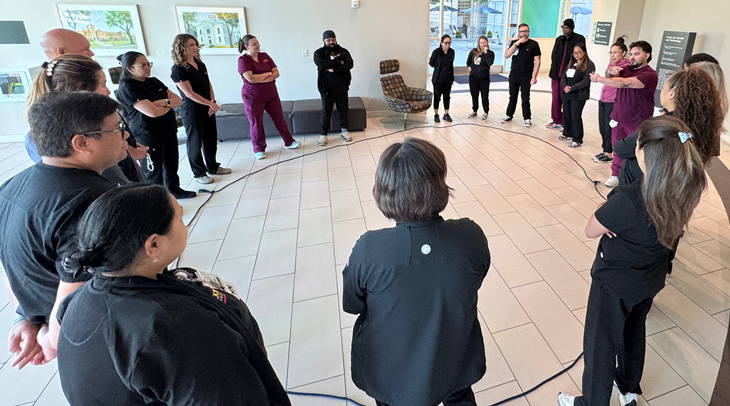
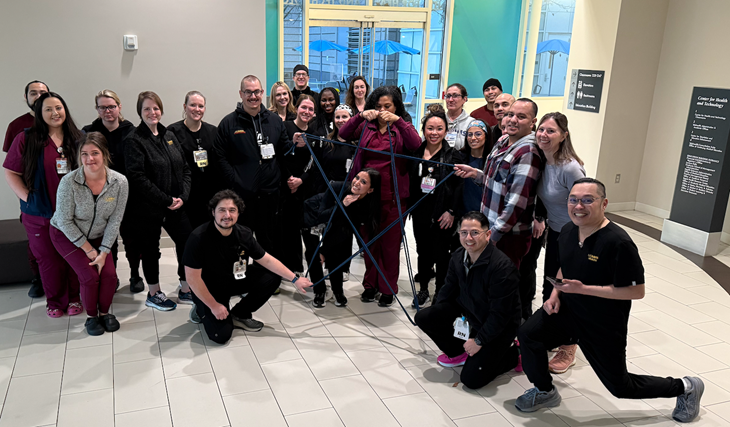
Starting in 2017, Sandhu and Barnes partnered to lead a deliberate and inclusive rollout of HRO principles in Emergency Medicine. The initiative engaged all Emergency Medicine faculty and senior residents, along with nurses and emergency department technicians, establishing a shared language and consistent expectations across clinical roles.
As the work matured, participation expanded to include registration teams and patient safety officers, reinforcing that reliability and safety are shared responsibilities for all staff.
“High reliability required us to bring everyone to the table,” said Barnes. “Faculty, residents, nurses, technicians, and operational partners all experience risk differently. When we created a common framework, we strengthened not just teamwork, but trust.”
Teamwork
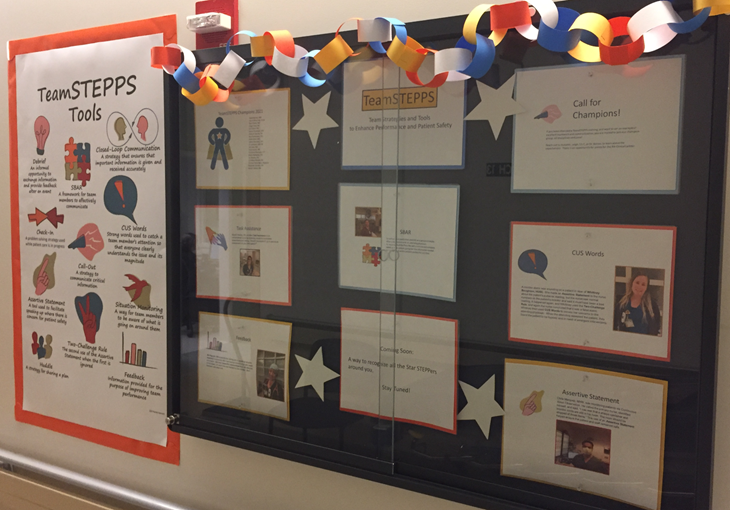
A cornerstone of this effort is the use of TeamSTEPPS, a nationally recognized teamwork and communication framework that operationalizes HRO principles into daily behaviors for clinical teams. Through structured education and real-time application, TeamSTEPPS supports situational awareness, closed-loop communication, mutual support, effective leadership, and psychological safety across disciplines.
Leigh Clary, RN, has played a critical role in embedding these principles into frontline operations and sustaining them over time.
“For a HRO to last, it has to live in daily practice,” Clary said. “That means integrating it into huddles, shift handoffs, escalation pathways, and how teams communicate under pressure. Our focus is making reliability the default, not the exception.”
Emergency Medicine’s HRO framework is grounded in five traditional core principles that guide both system and frontline decision-making:
Preoccupation with failure
Reluctance to simplify interpretations
Sensitivity to operations
Commitment to resilience
Deference to expertise
To these, the ED teams added three additional points of emphasis:
Continuous learning
Shared responsibility
Safety as a core value
System transformation
As HRO work progresses at UC Davis Health, there will be close attention to transparency and early risk identification. Daily operational and safety huddles, like those refined in the Emergency Department, encourage teams to scrutinize operational strain, emerging risks, and near misses.
“Some of the most meaningful improvements come from conversations about what almost happened,” Sandhu said. “When teams feel safe to speak up early, we learn and can prevent harm rather than respond to it.”
“While LWBS is a nationwide Emergency Department performance metric, the drivers behind our local improvement – anticipation, communication, and responsiveness – are actually system capabilities,” Barnes said. “That’s why high reliability is so relevant to the future of UC Davis Health.”
Consistent, safe care
With UC Davis Health exploring a vision to scale high reliability across the organization, the Emergency Department’s experience offers a model for how HRO principles can be embedded, sustained, and expanded.
“For us, this work started in the Emergency Department, but the principles apply everywhere,” Clary said. “High reliability is about creating consistent, safe care, regardless of role, unit, or setting.”
Together, these efforts will position UC Davis Health to continue advancing a culture where safety is foundational, learning is continuous, and teams are empowered to deliver reliable, high-quality care.
Hall said, “Every patient, every place, every time.”