
Pharmacy Residency Programs
PGY-2 Oncology Pharmacy Residency
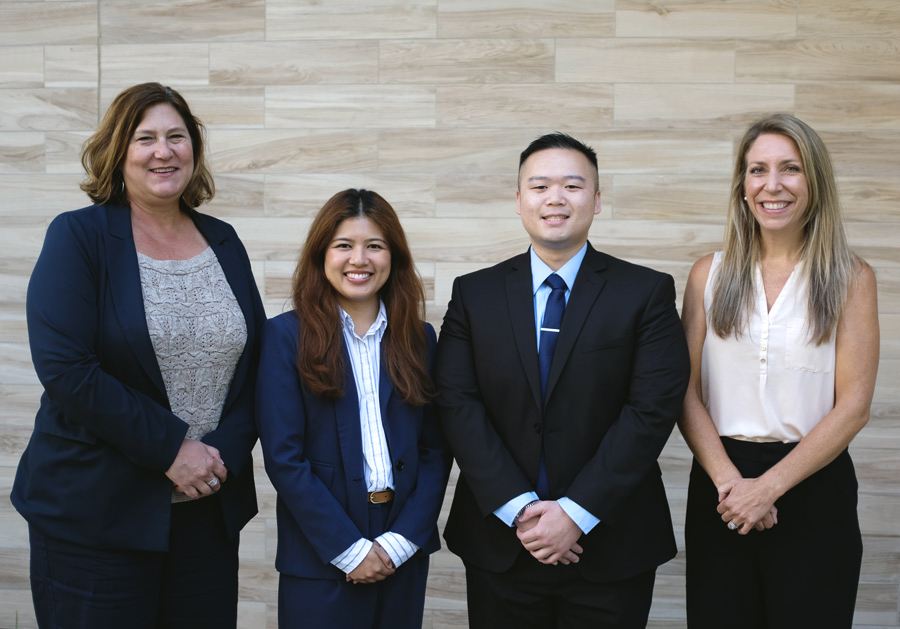
Residency Program Director
Contact Information:
Andrea Iannucci, PharmD, BCOP
aaiannucci@health.ucdavis.edu
Phone: 916-734-3352
Julie Guglielmo, PharmD, BCOP
jaguglielmo@health.ucdavis.edu
Phone: 916-703-4125
Andrea Iannucci, PharmD, BCOP
Assistant Chief Pharmacist, Oncology and
Investigational Drugs Services
Health Sciences Clinical Professor
UCSF School of Pharmacy and
UC Davis School of Medicine
Residency Program Coordinator
Julie Guglielmo, PharmD, BCOP
Senior Oncology Pharmacist
Assistant Clinical Professor
UCSF School of Pharmacy
2025-2026 Residents
James Chhen, PharmD
Mika Calibo, PharmD
Program Overview
The Oncology Pharmacy Residency at the University of California, Davis Medical Center, is a one-year, PGY2 residency in Oncology Pharmacy Practice. The residency is supported by the Department of Pharmacy.
Oncology is a strong, well-established and progressive center of excellence at UC Davis Health. The UC Davis Cancer Center is a Comprehensive Cancer Center, as designated by the National Cancer Institute. Clinical Pharmacy Services at UCDH are provided in the areas of medical oncology, hematology, cellular therapy, pediatric oncology, investigational drugs service and at the UC Davis Comprehensive Cancer Center Infusion Rooms and clinics. The oncology specialty residency will provide residents with a comprehensive training and educational experience in oncology pharmacy.
UC Davis Health Pharmacy Department Mission
UC Davis Health Pharmacy's mission is to provide the highest quality and most cost-effective pharmaceutical care in an environment that fosters efficient patient-focused care, education and research. Pharmaceutical care services are designed to meet the needs of our customers (primarily patients, nurses and physicians) in a way that constructively impacts all aspects of the medication use process (assessing, prescribing, dispensing, administering and monitoring). We will be flexible and proactive in our responsiveness to opportunities and challenges in the dynamic health-care field.
UC Davis Health PGY2 Oncology Pharmacy Residency Purpose
PGY2 pharmacy residency programs build on Doctor of Pharmacy (Pharm.D.) education and PGY1 pharmacy residency training to develop pharmacist practitioners with knowledge, skills, and abilities as defined in the educational competency areas, goals, and objectives for advanced practice areas. Residents who successfully complete PGY2 residency programs are prepared for advanced patient care or other specialized positions, and board certification in the advanced practice area, if applicable.
The purpose of the PGY2 Oncology Residency Program is to provide the PGY2 oncology residents with opportunities to function independently as practitioners by conceptualizing and integrating accumulated experience and knowledge and incorporating both into the provision of patient care or other advanced practice settings. Residents who successfully complete the PGY2 Oncology pharmacy residency are prepared for advanced patient care, academic, or other specialized positions, along with board certification in oncology pharmacy.
The aim of the UC Davis PGY2 Oncology Pharmacy Residency is to train oncology pharmacists to provide high quality, evidence-based, cost-effective, specialty care to patients with cancer and hematologic disorders in a positive learning environment that promotes independent, critical thinking, creativity and a culture of mutual respect.
Program Design
The major area of focus is adult hematology and oncology, with an emphasis on supportive care, antineoplastic drug pharmacology, management of patients with malignant and hematologic disorders, cellular therapies, investigational cancer therapies, prevention and management of antineoplastic drug toxicities and medication safety in oncology pharmacy practice. Oncology patient care is provided in multidisciplinary settings, and oncology pharmacy residents will interact with clinical pharmacists, pharmacy technicians, physicians, nurses, discharge planners, dietitians, patients, and caregivers to provide comprehensive care to patients with cancer. Daily activities will include coordinating cancer treatment plans, chemotherapy preparation and administration activities, preventive and supportive management of cancer treatment-related complications, providing drug information to physicians, nurses and patients, medication reconciliation and coordination of home and discharge medications.
The UC Davis Health PGY2 Oncology Residency is designed to meet the educational goals and objectives, as outlined by ASHP and the ASHP Accreditation Standard.
Program Structure
The PGY2 Oncology Residency is a full-time, 52-week residency program, beginning on July 1st and ending on June 30th. Clearance to start work by UC Davis Health Employee Health and Human Resources must be completed prior to the established residency start date.
Proposed Calendar of Activities:
|
Quarter 1 |
Quarter 2 |
Quarter 3 |
Quarter 4 |
|
July
|
October
|
January
|
April
|
|
August
|
November
|
February
|
May
|
|
September
|
December
|
March
|
June
|
|
Longitudinal Activities with quarterly assessment |
|||
|
|||
UC Davis Health PGY2 Oncology Residency Learning Experiences:
The residency learning experiences will primarily be divided into block rotations and longitudinal learning experiences. The majority of rotations will be 4 weeks in duration. Rotation schedules will be determined based on availability and resident interests. Schedules will be adjusted and updated with the resident at each quarterly development plan meeting.
Case Conference/Topic Content:
The UC Davis Health PGY2 Oncology Residency is designed to provide the resident with a broad range of experiences in a variety of practice settings. Required learning experiences have been designed to meet the appendix content requirements, as outlined by ASHP. A content checklist and patient tracker are provided to each resident to document exposure to the required content and patient experiences. Residents will also maintain a list of patients tracked in the UC Davis Health electronic medical record to maintain PHI. This activity will be documented in PharmAcademic as a longitudinal learning experience, and progress will be reviewed quarterly with each resident as part of their individual development plans.
UC Davis Health PGY2 Oncology Resident’s Role in Teaching:
UC Davis Health offers many opportunities for both clinical and didactic teaching. The resident will be responsible for assisting preceptors with clerkship teaching for University of California, San Francisco pharmacy students and UC Davis Health PGY1 pharmacy residents during various learning experiences.
The PGY2 Oncology Resident will also have the opportunity to participate in and lead didactic teaching as well as journal club discussions with the other student and resident learners.
Residency Research Project:
All UC Davis Health PGY2 residents are required to complete a research project during their residency and present their research at a regional, state, or national conference. In preparation for conducting their research project, the resident will complete UC Davis Health IRB-required training and certification. The resident will prepare a project proposal, which will be reviewed and approved by the UC Davis Health Pharmacy Research Oversight Committee. The resident will also submit their project to the Pharmacy and Therapeutics Oncology Sub-Committee and the IRB for approval before embarking on their research. The resident will also be provided opportunities to present their research at one or more regional pharmacy residency conferences and submit their project as a poster presentation at a national pharmacy meeting (e.g. HOPA). Upon completion of the project, the resident will be required to summarize their research project in a manuscript suitable for submission to a journal for publication.
Pharmacy and Therapeutics Committee Activities:
The PGY2 Oncology resident will be required to participate in the Oncology Sub-Committee of the UC Davis Health Pharmacy and Therapeutics Committee. The resident will also be required to complete the following activities for the Oncology Sub-Committee:
- New oncology drug review/monograph
- MUE on oncology/supportive medication use or oncology guideline update
Additional assignments will be determined by the RPD in collaboration with the UC Davis Health P&T Committee coordinator, based on the resident’s interests and the needs of the committee.
Committee Assignments:
The PGY2 Oncology residents will rotate in quarterly assignments on the following UC Davis Health Committees: 1) Oncology Sub-Committee 2) BMT CQI Committee 3) UCDCCC Scientific Research Committee. The resident will be assigned various activities during each committee rotation. Activities may include specific projects, coordinating agendas and minutes, reviewing documents, and maintaining/updating the UC Davis Health Hazardous Drugs Inventory. The purpose of the resident’s committee involvement is to ensure the resident gains exposure to the oncology pharmacist’s role in activities related to quality improvement, medication safety, safe handling of hazardous drugs, guideline development, and assessment/implementation of technology and automation within the institution and pharmacy department.
Professional Development:
The PGY2 oncology resident is encouraged to maintain an active role in pharmacy and oncology professional organizations. The resident is strongly encouraged to become a member of the Hematology Oncology Pharmacists Association (HOPA) and attend their annual meeting in the early Spring. The resident will be provided a travel stipend from the institution and professional leave time to facilitate participation in professional development activities.
The PGY2 Oncology residents will also participate in the Northern California Oncology Pharmacy Network (NCOPN). This is a regional oncology pharmacy group that offers the residents opportunities to interact with other PGY2 Oncology Pharmacy residents and pharmacists from California, As part of this group, the residents will be required to present a journal club article or case presentation at one of the regular virtual meetings. Additionally, the residents will present their oncology research projects at the annual NCOPN Research Forum which is typically scheduled about 3-4 weeks in advance of the Annual HOPA Annual Conference.
Pharmacy Department Service:
The PGY2 oncology resident will be expected to provide ~400 hours of pharmacy department service. This expectation will be met primarily by providing oncology pharmacist coverage every third weekend plus one major holiday (Thanksgiving, Christmas Eve, Christmas Day or New Year’s Day), at least one minor holiday and ~15 shifts of evening Oncology support A back-up oncology pharmacist will always be available on site or on-call, to advise and support the PGY2 Oncology Pharmacy resident as needed.
Required Competencies:
Residents function as licensed pharmacists in patient care activities. As such, minimum knowledge in a variety of areas must be assured. Within one month of starting the Residency, the resident must complete competencies required of all clinical pharmacists.
Resident Portfolio:
Each resident must maintain a portfolio containing all information from the residency year including but not limited to: required deliverables to document successful residency completion, copies of papers or projects done during rotations, lectures given, research project manuscript, P&T drug monograph, and MUE. The portfolio shall be maintained in Pharm Academic and/or in the resident’s folder on the Pharmacy Department shared drive.
Benefits:
Health, Dental and Vision insurance for resident and dependents; vacation, sick leave and professional leave, as outlined in the Pharmacy Resident Manual. Travel fundsare included in the base salary. There is a stipend for Pharmacy Department scrubs.
Resident Personnel Policies:
The following policies can be located in the Pharmacy Resident Manual
- Candidate Minimum Qualifications & Pre-employment requirements
- Early Commitment Policy
- Licensure
- Duty-hours & Moonlighting
- Professional, planned/unplanned, and extended leave
- Disciplinary & Corrective Action
