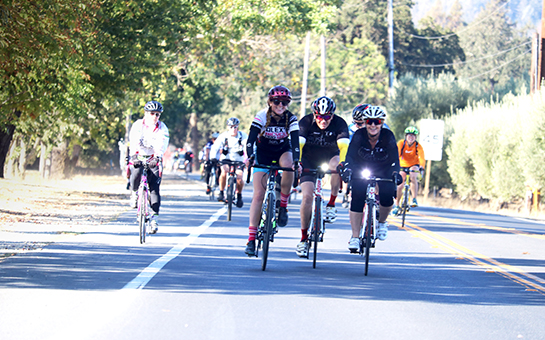



A new clinical trial started at UC Davis Comprehensive Cancer Center is testing a fresh approach for people with high-risk diffuse large B-cell lymphoma (DLBCL). The hope is that the new sequence of highly targeted therapy may give patients with the fast-moving and high-risk form of non-Hodgkin lymphoma a better chance at beating the aggressive cancer.
High-risk DLBCL can be difficult to treat, and many patients relapse even after standard therapies. That is why clinical trials like the one available at UC Davis are so important.
“This is a group of patients at high-risk for relapse, and they need better options,” said Joseph Tuscano, the doctor who initiated the clinical trial. “We’re trying to combine the best of targeted immunotherapy with the strength of chemotherapy to create a more effective plan.”
Local foothills lineman father of three enrolls
Bryan Mazza is one of the first to benefit from Tuscano’s clinical trial. The 39-year-old father of three lives in the former gold-mining town of El Dorado. After spending a decade traveling the country as a utility lineman, he settled into the foothills with Pacific Gas & Electric. Mazza specializes in power line restoration and often hikes or even snowshoes to get to power poles, which he then climbs for repairs. It is a physically taxing job, but he loves it.
In August 2023, Mazza had back pain that would not go away. He wondered if it was from a strained muscle.
“It was worse when sleeping or after eating a big meal,” Mazza explained. “I went to the local urgent care and was told I might be suffering from gallstones, so they recommended I get an ultrasound.”
A patient at Marshall in Placerville, Mazza was scheduled for an ultrasound there. It showed possible kidney cysts. Follow-up imaging with a contrast abdominal CT scan was scheduled.
Worsening symptoms led to ER visit
Before the appointment, Mazza’s back pain suddenly became worse. He didn’t feel well. His wife, Jessica, whom he credits for saving his life, insisted he go to the Marshall emergency room. He did so, he said, only to appease her.
A CT scan showed multiple masses on his kidneys and nodules on his lungs.
At the doctor’s appointment following the hospital visit, Mazza said he could see on the doctor’s face that he was about to be told something he did not want to hear.
“My only thought was how I was going to tell my wife and kids,” Mazza said.
Teaming up to take on cancer
Biopsy results showed it was stage four DLBCL, a cancer that develops from blood cells. It grows rapidly and is an aggressive form of non-Hodgkin lymphoma.
Fortunately, as a UC Davis Cancer Care Network affiliate, Marshall immediately gave Mazza access to Joseph Tuscano at UC Davis Comprehensive Cancer Center, an expert in the disease.
Because the cancer was spreading rapidly, Tuscano personally called Mazza the evening Marshall sent the referral. He explained that he had a new clinical trial he thought could really increase Mazza’s chances of successfully fighting his cancer.
“I’m a big believer in science, so I was willing to enroll,” Mazza said.
A two-pronged attack
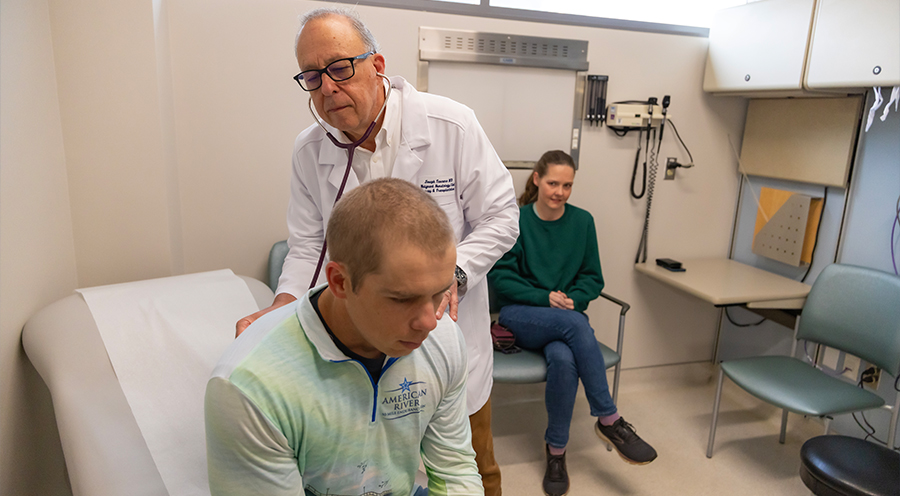
Tuscano said he wanted to give Mazza’s cancer a “one-two punch,” with immunotherapy striking the cancer first, followed by chemotherapy to wipe out any remaining cells. The hope is that it will have a better chance of long-lasting results.
“I liked Dr. Tuscano’s candor,” Mazza said. “He didn’t sugarcoat anything. He told me I faced an uphill battle. But because of my age and other reasons, he said he felt the clinical trial plus the chemotherapy would save my life, and it did.”
Tuscano gave Mazza two targeted drugs: loncastuximab tesirine and rituximab. These medicines find and attach to specific proteins primarily on lymphoma cells, making it easier to destroy them.
Next: personalized chemotherapy plan
After the targeted medicines, Mazza received a well-known chemotherapy combination called DA EPOCH R. It includes several drugs, all delivered intravenously.
“The aggressive chemo protocol meant I had to stay five days at UC Davis Medical Center every three weeks for six treatment cycles,” Mazza explained. “It did a number on me, but the nurses and everyone on the cancer floor known as Davis 8 were amazing.”
Mazza and other patients in the trial undergo lab tests and imaging, which allow Tuscano’s team to closely watch how well the cancer is responding.
Fortunately, because of the relationship between Marshall and UC Davis, Mazza had coordinated care that allowed him to get his frequent blood tests and dressing changes to his infusion port close to home at Marshall’s Cancer Center in Cameron Park.
“It really helped me save time, and it was much more convenient because I live an hour from Sacramento but only 15 minutes from Cameron Park,” Mazza said. “I even drove myself most of the time.”
Getting his strength back
By April 2024, Mazza was in remission but weak during his recovery. He had lost his hair and some muscle mass. Regardless, he was starting to think about what he needed to do to get ready to return to his physically demanding job.
“I decided to walk a half mile, then a mile, and before I knew it, I was starting to jog. So, I signed up for a 5K run, which was a few months away,” Mazza said. “That became my goal: to enter a race.”
By then, Mazza was back on the job but still enjoying running. So, in November, he entered a half marathon (13.1 miles) in scenic Apple Hill, near his home. He trained by himself and ran the race by himself.
But that wasn’t enough for Mazza. By conquering cancer, he felt he could conquer just about anything, so he entered the American River 25-mile Endurance Run. Again, he was alone in the race but not alone in his cancer fight, because Jessica and all three of his children were at the finish line to help him celebrate.
This year, Mazza completed a 50-mile ultramarathon. He credits Tuscano with being a positive force as he recovered from treatment.
Looking ahead
“Every advancement starts with research,” Tuscano said. “Our goal is simple: Give patients a better chance at long-lasting remission. But we need patients like Mazza to be willing to participate in clinical trials. For that, we are grateful he put his confidence in our team at UC Davis Health and the leading-edge clinical trials we are bringing to the region.”
To learn more about enrolling in this or other clinical trials, visit the UC Davis Health Clinical Trials page or call 916-734-0565.
"I liked Dr. Tuscano’s candor. He didn’t sugarcoat anything. He told me I faced an uphill battle. But because of my age and other reasons, he said he felt the clinical trial plus the chemotherapy would save my life, and it did.—BRYAN MAZZA