

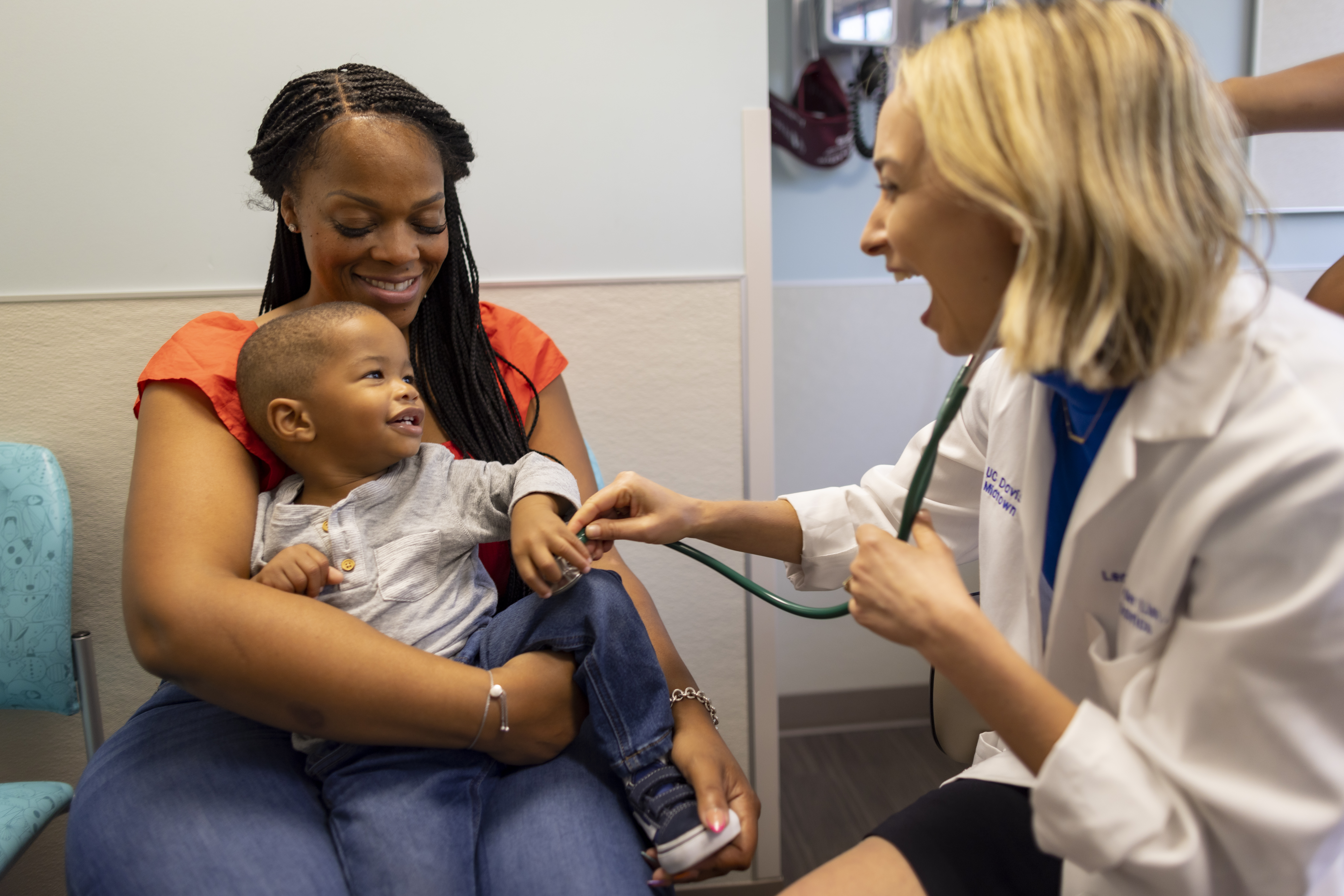
Choosing a pediatric primary care doctor is one of the most important decisions parents make for their child’s health. From the very first newborn visit, a pediatrician begins tracking growth and development while building a trusted relationship to support your child’s long-term health and well-being.
What is pediatric primary care?
Similar to adult primary care, pediatric primary care is often your first point of contact when your child has a health issue or question. It’s also where your child will get regular preventative care, often called well-child care.
The pediatric primary care team is a group of physicians, nurses, advanced practice providers, child life specialists, medical social workers and more.
Primary pediatric care providers help prevent, detect and manage physical, behavioral and developmental health concerns in children. They also have expertise about when to refer patients to specialists, and which specialists would be most helpful.
Primary pediatric care often begins in the first week of life and continues through the teen years and young adulthood, typically up to age 18-21. At that point, young adults typically transition to adult primary care.
Learn more about why you should partner with a primary care provider
How does pediatric primary care support each stage of growth?
From your child’s first days of life through the transition to adulthood, pediatric primary care provides consistent, age-appropriate support. Regular checkups not only track growth and development, but also help prevent illness, address concerns early and guide families through each stage.
Understanding these stages can also help you know when to seek care and how to choose the right pediatrician early on.
Infants and young children (0-4 years)
In the early months and years, pediatric visits will focus on growth, development and prevention. Pediatric providers track milestones like feeding, movement and communication. They also offer guidance to parents on sleep, nutrition, safety and much more. Your child’s pediatrician will also help ensure they receive the recommended childhood vaccine schedule to protect against serious illness.
School-age children (5-12 years)
As children grow and enter school, care expands to support not just physical health, but also learning, behavior and social development. Pediatric providers help reinforce healthy habits, monitor growth and address concerns like attention, sleep challenges or emotional well-being. Annual checkups play a key role in keeping children healthy, supported and ready to thrive both academically and socially.
Adolescents and teens (13-18+ years)
During the teen and young adult years, pediatric primary care begins to shift to meet changing needs. Visits often include more direct communication with the teens and one-on-one time with their provider. Pediatric primary care providers continue to monitor physical health while also addressing topics like mental health, skin concerns, reproductive and sexual healthcare, relationships and lifestyle choices. This helps teens take greater ownership of their health.
Learn more about adolescent medicine and how it can support your child
When should you choose a pediatrician during pregnancy?
Many expecting parents wonder when to choose a pediatrician during pregnancy. While it may seem like a decision to make after your baby arrives, most experts recommend selecting a pediatrician before birth.
Pediatricians typically advise starting your search between 24 and 32 weeks pregnant, giving you time to find the right provider and feel confident in your baby’s care plan before delivery.
When choosing a pediatrician, parents often ask about services offered, approach to care, office hours and availability and how after-hours or urgent concerns are handled. Asking these questions early can help you find a pediatrician who meets your family’s needs.
The American Academy of Pediatrics (AAP) Find a Pediatrician tool is also a great resource for finding a pediatrician in your area.
What can I do to support my child’s health?
Parents can help support their child’s health in many ways. From ensuring regular check-ups with their pediatric primary care team to serving healthy, nutritious food at home, parents can directly impact their children's health and well-being.
Other ways parents can support their children at home:
- Getting timely immunizations
- Getting physical activity
- Developing safe and healthy sleep habits
- Seeking assessments for autism and other neurodevelopmental conditions if appropriate
- Supporting dental health
- Maintaining regular structures, routines and constancy
- Fostering healthy development
- Creating a safe home environment
- Providing safe, age-appropriate transportation
- Limiting screentime and access to social media
- Building strong relationships with their child’s care team
- Encouraging independence and healthy decision-making as children grow
Sign up for our Health Highlights e-newsletter
Helpful questions to ask your child's pediatrician during their next visit
Regular visits with your child’s pediatrician are a great opportunity to ask questions and stay informed about their health and development. Coming prepared can help you make the most of each appointment and ensure your concerns are addressed.
Some common questions parents ask include:
- Is my child meeting their growth and developmental milestones?
- Are my child’s eating, sleeping and activity habits appropriate for their age?
- How can I support my child’s mental and emotional well-being?
- What should I know about upcoming developmental changes in my child?
- Are there any concerns about behavior, learning or social development in my kid?
- What symptoms or changes in my child should I watch for at home?
As children get older, it can also be helpful to encourage them to ask their own questions and take an active role in their health. Adolescent medicine providers are a great resource for teens and young adults as they become more independent in managing their health.
Schedule a primary care appointment for your child
When should I take my child to the doctor?
While routine checkups are an important part of pediatric primary care, there are times when children should be seen by a doctor sooner.
You should consider scheduling a visit if your child experiences:
- Fever that is persistent or higher than expected for their age.
- Constipation or diarrhea.
- Changes in behavior, mood or energy levels.
- Difficulty eating, sleeping or staying hydrated.
- Ongoing pain, discomfort or unexplained symptoms.
- Concerns about growth or development.
- Signs of illness that are not improving or are getting worse.
For urgent symptoms such as trouble breathing, severe pain, seizure, dehydration or injury, seek immediate medical care through urgent care or emergency departments or by calling 911.
For non-emergency concerns, telehealth services offer a convenient way to connect with your child’s care team from home. Many visits are available on the same day, helping families avoid travel, parking and long wait times.
At UC Davis Health, Telehealth Express Care provides on-demand video visits, including evenings, weekends and holidays. Whether you’re an existing patient or not, you can access care online from anywhere in California with no appointment needed.
See how telehealth visits can deliver urgent care quickly and easily
Learn when you should go to the emergency room (ER), urgent care or doctor's office
This blog was medically reviewed by Serena Yang, division chief of general pediatrics at UC Davis Health.