Celebrating Black History Month: Employees share their perspectives
By Carolyn Ramirez
Honoring the resilience, creativity, and achievements of Black Americans throughout history
(SACRAMENTO)
A confidential survey was recently distributed among members of theAfrican American Faculty and Staff Association Employee Resource Group, asking questions about the meaning of Black History Month, family and community traditions, role models who embody equality and inclusion, and how colleagues can best demonstrate allyship. More than 25 people responded to the survey.,
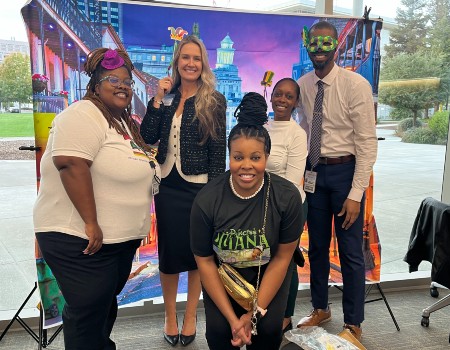
Principles of Community Week 2024
What Black History Month means to me
Several survey respondents expressed feelings of pride, joy, and cultural identity. They described Black History Month as a source of empowerment, a reminder of the strength, creativity, and impact of Black people, and as motivation to lead with confidence and intention.
One respondent said, “Black history to me is both personal and powerful. It represents resilience, legacy, and the excellence of those who came before me, whose strength and perseverance created opportunities I carry forward today. It is a reminder of the responsibility to lead with intention, to take up space with confidence, and to honor the voices and contributions that have too often gone unrecognized. Black history is not just about the past; it lives in the work I do, the standards I uphold, and the example I set for others, reinforcing that progress is ongoing and that my presence, leadership, and impact matter.”
Recognizing the generations before us
When asked who they wanted to honor or recognize, many respondents shared stories about family members, mentors and extended relatives.
One respondent wrote, “My uncle was among the first black engineers at NASA; he was a trailblazer and is honored annually after his death.”
Another said, “My parents always made sure to pay it forward and instill in my siblings and me pride in looking out for people in our community. Even if we didn't have much, we would find a way to help someone else because they understood that kindness matters and it's always a blessing to be a blessing to others.”
Several respondents also praised their grandmothers, grandfathers and role models who challenged segregation, fought for equal rights, and paved the way for future generations.
A respondent added, “My grandmother served as a NAACP member, marched, and served her community. And was a God-fearing woman!”
Friendsgiving 2025
Genuine allyship in workplaces
It’s one thing to say you’re supportive, it’s another thing to “show up” and demonstrate genuine allyship.
Here are four key themes that came up in the survey responses:
Speak up against injustice and consistently advocate for fairness by addressing bias and amplifying Black voices in the workplace.
Support Diversity, Equity, and Inclusion initiatives and create safe spaces where Black colleagues feel respected and heard.
Build trust by listening to Black colleagues’ experiences, accepting feedback, and educating yourself on Black culture and history.
Treat all colleagues equally, challenge stereotypes, and offer mentorship and encouragement to help foster a supportive community.
A respondent shared, “If you see something,say something. We need to have each other's back if we feel something is not fair/right. If we don't say anything, we are also failing ourselves. Also, if someone has a great idea, hype them up and let them know how valuable their ideas are. Lastly, be kind. Sometimes that really does go a long way.”
Another respondent said, “I think real allyship shows up in everyday moments, not just in statements or certain months. It looks like listening without being defensive, speaking up when something is not right, and making sure people get credit for their ideas. It also means being mindful like checking your own assumptions, paying attention to how language and systems affect people differently, and making space for different voices without expecting others to do all the educating. It does not have to be perfect; it just has to be consistent and intentional.”
Black history is America’s history. Everyone, especially allies, is strongly encouraged to take time to participate in educational events and celebrations happening throughout the month (and beyond).
Learn more about all our UC Davis Health Employee Resource Groups. These groups are open to anyone, regardless of background, who wishes to support, participate, or be educated in the many cultures and communities at UC Davis Health. Membership and participation in Employee Resource Group activities are not dependent on race, ethnicity, sex, gender, gender identity, religious affiliation, or any protected category under Title VII of the Civil Rights Act.