From feedback to connection: Patient Flow’s ‘High Five’ builds trust and teamwork
By Carolyn Ramirez
Brief check-ins strengthen communication and responsiveness
(SACRAMENTO)
This story is part of “You Said, Together We Did,” a series highlighting how feedback from the Employee Experience Survey and conversations with managers and supervisors is turning into real results across our organization.
When employees speak, it’s important to listen — and sometimes a small change can make a meaningful difference.
Late last year, Jennifer Erickson, director of the Patient Flow Management Center, met with the department’s charge nurses to review results from the 2025 Employee Experience Survey.
Employees identified opportunities to improve stress and well-being, communication within and beyond the unit, professional development and staffing. Leaders shared the results during team huddles and began exploring how to turn the feedback into action.
After recent vacancies were filled, Erickson conducted a pulse survey to see whether the priorities had changed. Short staffing was no longer a primary concern, but four of the original issues remained for the Patient Flow team.
Creating space for connection
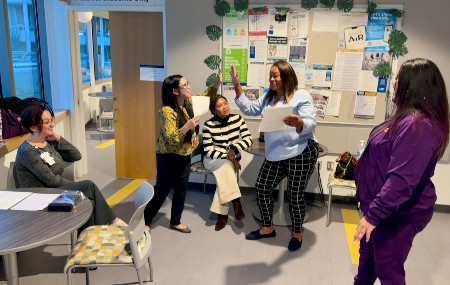
Inspired by the Employee Experience Survey, charge nurse leaders developed the “High Five” model to strengthen communication.
The goal was to create a five- to 10-minute check-in outside the main work area where staff could decompress, reflect on the day and discuss key updates at the end of each shift.
Led by a charge nurse, each High Five gives employees time to discuss how the shift went, review escalations and receive feedback from nursing supervisors.
Building trust through conversation
Leaders initially wondered whether employees would hesitate to speak up. Instead, staff began sharing feedback right away, using the time to debrief, raise concerns and reflect on what went well.
Since its launch, the model has improved communication, strengthened relationships and created a reliable space for employees to give and receive feedback.
The small investment of time serves a larger purpose: making open communication part of the team’s daily work. The model has been especially valuable for newer leaders and team members.
Sabrina Copple, assistant nurse manager at the Patient Flow Management Center, said the High Five has helped her get to know the team and build trust.
“The High Five is a more informal and meaningful opportunity to connect with staff, hear their perspectives, and create space for open and honest conversations,” Copple said.
During night shifts, High Fives typically take place just before the sign-off huddle, giving employees time to reflect and prepare important updates for the oncoming team.
The conversations work both ways. The High Five also gives employees an opportunity to hear from nursing supervisors about successes, challenges and ways to improve.
Janele Quinajon, assistant nurse manager at the Patient Flow Management Center, said the conversations support reflection, learning and growth.
“Receiving positive feedback from nursing supervisors helps boost staff confidence and morale,” Quinajon said. “When opportunities for improvement are identified, we are able to make meaningful changes to our workflows and have seen positive improvements over time.”
Next steps
As the High Five model evolves, leaders say its success lies in its simplicity: Set aside a few minutes. Step away from the daily rush. Listen to one another. Share what worked and what didn’t.
Then use those conversations to make the next shift — and the workplace — better for everyone.
What began as a response to the Employee Experience Survey has become a regular practice that helps employees feel heard, builds trust and turns feedback into action.
Leaders plan to expand communication between shifts so teams can share information, identify opportunities and learn from one another across the department.
Are you a manager or supervisor looking for Employee Experience Survey tools and resources? Learn more.