How do you actually make work better for your team? EH&S started with data
(SACRAMENTO)
The Employee Experience Survey helps teams across UC Davis and UC Davis Health understand what employees value about their workplace and where there are opportunities to make it better.
For Environmental Health and Safety, the results highlighted both. Employees reported a strong sense of trust and connection among colleagues, while also identifying stress and workload as an area of concern. The team used those findings to identify concrete ways to strengthen how they work together.
"We do take it seriously, and we continue to work on it and track throughout the year," said Becky Grunewald, Associate Director of Environmental Health and Safety.
Protecting what already works
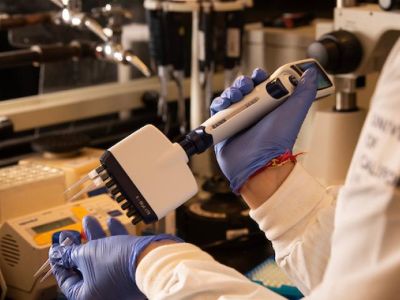
Environmental Health and Safety provides guidance, information, training and consultation to support environmental protection and safety at work, including biological safety, environmental protection, field research safety, hazardous waste management and disposal, industrial hygiene, laboratory safety and research safety.
One of the team's strengths was clear: employees felt they had a strong team and trusted their coworkers. As the team evolved, they wanted to make sure they preserved that culture.
"Things are changing, we're getting bigger," Grunewald said. "We liked where we were at last year when we took the survey, but how do we make sure that with this growth that it doesn't become more impersonal or not as strong of a culture?"
The team made "maintaining our culture through growth" one of two priorities.
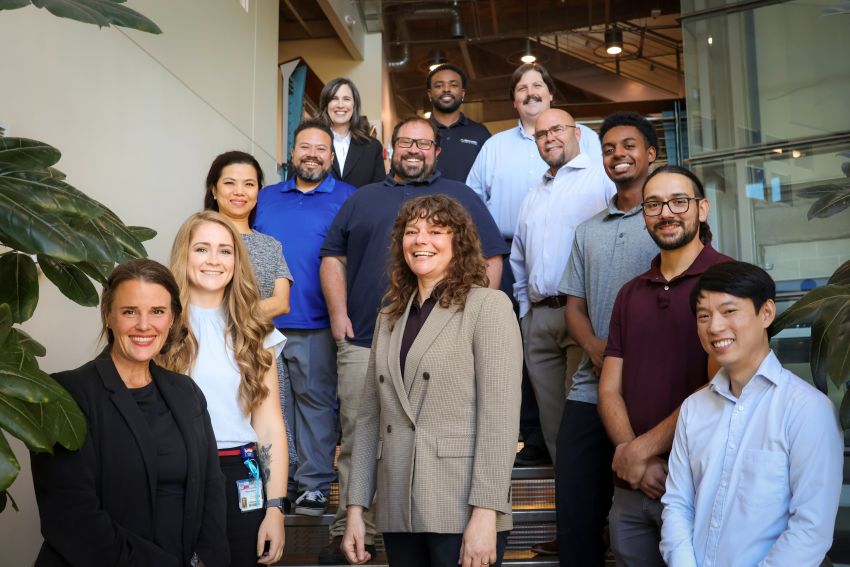
One change was to rethink the weekly team meeting. With about 13 employees, having everyone provide a verbal update every week was becoming impractical. Employees now provide brief written updates that are shared with the team, allowing colleagues to stay connected to one another's work. The team still makes time for everyone to share verbally, just less frequently.
"It's just small tweaks like that to the team meeting so that we can continue to meet every week, but make it functional for people and a good use of their time," Grunewald said.
The team has also continued making space for connection outside of day-to-day work through activities such as potlucks and other gatherings.
Looking at what's behind workload and stress
The team's second priority focused on stress and workload. Rather than focusing on stress broadly, the team asked a more practical question: What parts of the work itself are contributing to it?
"What are the kinds of things that are making us feel stressed and overworked, and how can we improve the way that we approach them?" Grunewald said.
Employees identified a complex chemical review process as one opportunity. When someone in a medical environment wants to introduce a new chemical, such as a disinfectant, Environmental Health and Safety and other partners may need to review its safety, protective equipment requirements and effectiveness. With several people involved, the process can require multiple handoffs and additional time.
The team is now working with Risk and Safety Solutions on a technology-based process to streamline submissions and tracking. The work is still underway, but the team hopes to apply the same approach to other tasks that contribute to workload and stress.
"If we have all these different tasks that kind of stress you out or take you away from what you consider to be your primary task for the day, those add up," Grunewald said.
Turning results into shared priorities
The team's actions were selected together. Employees reviewed the survey results, brainstormed potential responses and then used confidential voting to narrow six or seven ideas down to two priorities.
There are encouraging early signs. Grunewald said participation remains strong in team meetings and activities, but she is careful not to draw conclusions yet. The next Employee Experience Survey will provide a clearer measure of where the team stands and whether its efforts have made a difference.
She's also identified something she'd do differently next time: establish an internal measure at the beginning of the process to help track progress between surveys.
Keep coming back to the "why"
Grunewald's advice for other teams is to keep connecting the work back to what employees originally shared.
"My advice would be to continue to draw attention back to the original survey results and what you decided to work on as a team," she said.
With competing priorities, it can be easy to lose sight of why a change began. Reminding employees of that connection reinforces that their feedback was heard and informed action.
"When you remind them of the why, it signals to them that you take their responses seriously and that you have made changes because of those," Grunewald said.
For Environmental Health and Safety, that means continuing to return to the results, assess what's working and taking action as a team.
From feedback to follow-through
The Employee Experience Survey gives employees a chance to share what’s working and where there’s room to improve. You Said, Together We Did highlights more ways teams across UC Davis and UC Davis Health are using that feedback to make meaningful changes in the employee experience.