Office of Research

Newsletter

Research News and Updates

Close up of researcher looking at vials filled with brighly colored fluids
professional woman stands at podium, holding a microphone
January 2026

Happy New Year! As we welcome 2026, I’d like to take some time to share how the School of Medicine has strategically developed funding initiatives to amplify both our scientific output and our success in securing external funding. Over the past few years, the School of Medicine has developed several funding initiatives to invest in research projects that demonstrate the prospect of innovative outcomes and major funding, with an emphasis on collaborative efforts. These investments are paying off—transforming early-stage ideas into high-impact projects and generating millions in extramural support that strengthens our research enterprise and expands our reach.

One of the longest running of these initiatives is the Cultivating Team Science (CTS) Award program, which started in 2021 and is now in its sixth round of funding. This award is designed to support large-scale, collaborative research efforts within the School of Medicine. It is a two-year grant of $200,000 per team, with two teams funded per year. During the two-year period, investigators form multi-department teams to plan, prepare and submit major team-based grant applications to federal agencies such as the National Institutes of Health (NIH). These awards have supported groundbreaking work in areas ranging from opioid use disorder treatment and neurodevelopmental health to innovative brain-computer interfaces and regenerative medicine.

In its five-year run to date, this initiative has already seen remarkable returns. For example, the $2 million awarded by the School of Medicine has already catalyzed more than $32 million in extramural funding from the NIH and other agencies. Furthermore, this number represents funding generated only by teams from the first three cohorts of awardees (the 2021-2023 cycles) who have submitted grant applications, so far. 

In addition to the funding secured thus far, more than 50 publications have been generated by the CTS awardees. Follow this link to see the awarded projects from the first five years of this program.

This trajectory underscores the power of collaboration and the importance of investing in innovative ideas. As we move forward, we will continue to leverage these successes to position UC Davis as a leader in translational research and team science nationally. The sixth round of funding for the Cultivating Team Science Award is open now through February 6. Please take this opportunity to review the details of this award and to apply for this funding. 

Thank you for your dedication to our research mission. I look forward to working with all of you to make 2026 another year of transformative impact.

Warm regards,

Kim E. Barrett, Ph.D.
Vice Dean for Research
UC Davis School of Medicine

January 2026 School of Medicine Research Image Competition Award Winners

This quarter’s winners are from the lab of ophthalmology professor Glenn Yiu, including Mirella Rivera-Velazquez, Carol Villafuerte Trisolini and Sophie Le. The team received a gift basket filled with UC Davis goodies. They are also automatically eligible to win the grand prize of $1500, which will be awarded at the Research Celebration in October 2026. 

This competition is ongoing and images for the next quarter are being accepted now through March 15! If you did not win this time, you may re-submit your image once more at any future competition. Submit your image here.

Grants Facilitation Unit

four professionals stand in front of a mural of geometric shapes in bright primary colors
Get to Know

School of Medicine Office of Research

The Grants Facilitation unit (GFU) of the School of Medicine Office of Research has a 20-plus year history of collaboration with the UC Davis Clinical and Translational Science Center (CTSC), stemming back to establishing one of the first awards at UC Davis in 2006. The GFU collaborates and interfaces with nearly every CTSC program.

The GFU continues to play an integral role in the development and writing of CTSC grant renewals to support the center, which occur every five years. In FY24-25, the GFU will have assisted with the complete suite of grants submitted as part of the CTSC’s renewal, marking its 20th year.

The arrival of 2025 brought many challenges at the national level, including at the Department of Health and Human Services, which oversees biomedical funding agencies such as the National Institutes for Health (NIH) and National Center for Advancing Translational Sciences (NCATS), currently the funding institution for CTSC awards. Due to presidential executive orders and changing guidelines and rules, the GFU had to pivot quickly to ensure compliance for all the CTSC renewal components, including stringent review of NIH biosketches for all key personnel and faculty mentors in the training programs. The GFU accepted this new challenge and advised CTSC investigators on ways to respond to new executive orders and guidelines that were released.

The GFU has supported the CTSC for more than two decades and will continue its legacy of advancing the research and training enterprise at the UC Davis School of Medicine. The GFU has positively impacted the development of hundreds of CTSC scholars and supported the CTSC’s 12 core programs essential to investigators through grant renewal efforts. The GFU will carry on with its proactive collaborations and ensure the CTSC continues to have a positive impact on the UC Davis School of Medicine.

Grants Facilitation Unit

  • Erica Chédin, Ph.D., Director
  • Hardeep Obhi, Ph.D., Research Development Specialist
  • Jeffrey Engler, Ph.D., Research Development Specialist
  • Heather Hughes, Ph.D., Research Development Specialist

Research in the Department of Cell Biology and Human Anatomy
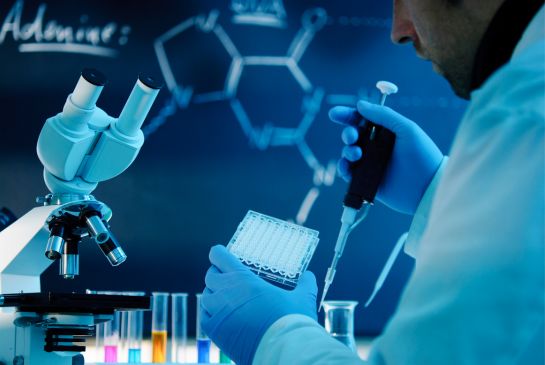
artistic rendering of a researcher in a lab with a microscope, slides and beakers

The Department of Cell Biology and Human Anatomy has recently welcomed the appointment of Wendy Marie Campana, Ph.D., a distinguished neuroscientist, as its new chair. Campana brings a wealth of expertise and a vision for advancing research that bridges fundamental science and clinical impact.

Campana’s groundbreaking work has transformed our understanding of how nerve cells and their supporting cells respond to injury and contribute to chronic pain. Her research explores mechanisms that could lead to new therapies for conditions affecting millions worldwide. With more than 75 peer-reviewed publications in areas such as peripheral nerve biology, spinal cord injury, Schwann cell physiology, and neuropathic pain, Campana is recognized as a leader in the field. Read more

Vision Science Research

 Department researchers also affiliated with the UC Davis Center for Vision Science include professors Anna La Torre, Nadean Brown, Thomas Glaser, Marie Burns and Ed Pugh.

  • Catalyst for a Cure – Glaucoma Research Foundation and Regulation of Retinal Neurogenesis by Foxp1 (Site Principal Investigator (PI Anna La Torre). A multi‑institution consortium accelerating strategies to prevent retinal ganglion cell loss, the eye cells lost in glaucoma, and restore vision. La Torre is also the site PI of a study on how a gene called Foxp1 helps guide the early development of the retina.
  • Optic Stalk–Disc Development and Differentiation. Optic Stalk (PI Nadean Brown) research aims to uncover why certain eye diseases occur by studying how the eye develops in mice.
  • Homeotic Hotspot in the Human Genome for Eye and Brain Disease (PI Thomas Glaser) is a study of specific regions of the human genome that act like “hotspots” for eye and brain development. These areas contain genes that can influence conditions affecting vision and neurological health.

Research Mission

To conduct discovery research that advances our understanding of biological mechanisms, with a long-term goal of achieving a mechanistic understanding of human disease, making way for the development of therapeutic interventions that improve human health.

Faculty research interests span a constantly evolving spectrum that includes vision biology, cell biology, developmental biology, neurosciences, stem cells, and cancer biology. More about individual research programs can be viewed on websites for each investigator's website here.

Research interests in the department include:

  • Stem Cell Biology
  • Developmental and Reproductive Biology
  • Cancer Biology
  • Vision Science
  • Intracellular Trafficking and Cell-matrix Interactions
  • Development of the Nervous System

Some of the most recently funded or renewed projects include:

  • Regulation of Phosphoinositide Metabolism and Calcium Dynamics in the Neocortex, a project led by associate professor Sergi Simo with co-PI Eamonn Dickson, professor of physiology and membrane biology. This study will look at how a protein complex called CRL5 helps manage certain chemical processes and calcium dynamics.
  • Innate Immune Response to SARS‑CoV‑2 in the Olfactory Epithelium. The goal of this study is to look at how cells in the nose respond when infected with the virus that causes COVID-19. Professor Qizhi Gong is the principal investigator.
  • Function and Regulatory Mechanisms of the Wnt5a‑Ror Morphogenetic Pathway (NIGMS). This study, led by Henry Ho, focuses on a signaling system called the Wnt5a-Ror pathway, which helps shape how tissues form and organize in the body.
  • Novel Strategies for Understanding and Treating Fibrous Dysplasia. This collaboration with UCSF focuses on understanding how abnormalities in the Gs signaling pathway cause abnormal bone growth and affect fracture repair. Associate professor Fernando Fierro is the site PI.
  • Role of post-transcriptional regulation on cortical cell fate specification, led by La Torre and Simo. This research studies how the developing brain makes the right types of cells at the right time, focusing on small molecules called microRNAs that help control this process.

Associated Labs

Brown Lab (Professor Nadean Brown). What they study: Developmental genetics of eye development.

Burns and Pugh Lab (Professor Marie Burns and Distinguished Professor Edward Pugh). What they study: Photoreceptors, the light-sensing cells in the eye.

Fierro Lab (Associate Professor Fernando Fierro). What they study: Regenerative medicine.

Gong Lab (Professor Qizhi Gong). What they study: The olfactory epithelium. 

Ho Lab (Professor Henry Ho). What they study: Wnt5a-Ror signaling in development and disease.

Knoepfler Lab (Professor Paul Knoepfler). What they study: How changes in gene regulation (epigenetics) affect stem cells and cancer growth.

La Torre Lab (Professor Anna La Torre). What they study: Stem cells and vision restoration. 

Schumann Lab (Professor Cynthia Schumann). What they study: Neurodevelopmental disorders. 

Simo Lab (Associate Professor Sergi Simo). What they study: Development and disorders of the central nervous system.

Tarantal Lab (Professor Alice Tarantal). What they study: Translational research, using nonhuman primate models to advance gene therapy, stem and progenitor cell‑based regenerative medicine, and in vivo imaging to study and treat pediatric and congenital diseases.