
Health and TechnologyMarch 11, 2026
Pilot program in emergency medicine department trains residents to use AI tool
Advanced technology for note-taking helps ease doctor workload and improves patient experience
(SACRAMENTO)
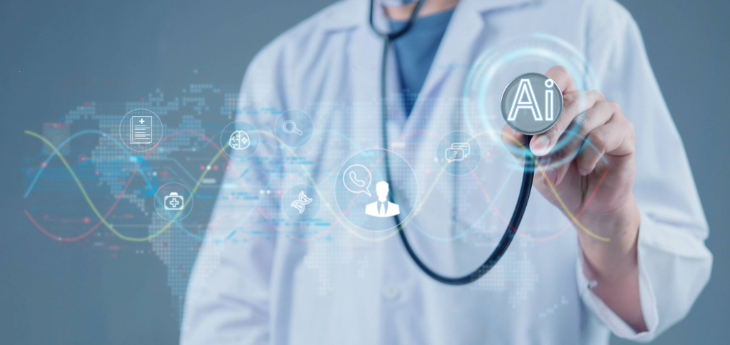
UC Davis Health is leveraging artificial intelligence (AI) to enhance patient care and reduce the workload of experienced physicians. And now it’s taking a step further by preparing the next generation of health care providers to harness the advanced technology in a way that only an academic medical center can.
The Department of Emergency Medicine at UC Davis Medical Center is implementing a pilot program to teach its residents to use note-taking technology that faculty physicians have already implemented in their clinics. The pilot program will provide residents with training to apply generative AI tools during patient encounters, review those notes, and understand the opportunities and inherent risks of using the technology.
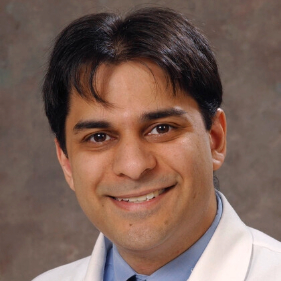
“We take great pride in preparing our residents for real-world practice,” shared Aman Parikh, professor of emergency medicine, who oversees the pilot program. “Our goal is to help them grow into confident, skilled attending physicians — and integrating tools like AI scribes is an essential part of that journey.”
“We take great pride in preparing our residents for real-world practice. Our goal is to help them grow into confident, skilled attending physicians — and integrating tools like AI scribes is an essential part of that journey.”—Aman Parikh
What is AI scribe technology?
The note-taking tool is called Abridge AI, which transcribes clinical conversations in real time and produces draft notes during a patient visit. This allows clinicians to focus on conversations with patients without having to type notes into their computer.
Following a patient encounter recorded by the software, AI organizes the conversation into a medical note — in this case, an emergency department provider note. This includes the patient’s medical history, physical exams and medical decision making. After a physician reviews, edits, and approves the notes, they are uploaded directly into the patient’s medical record.
“With AI scribe, doctors can focus more on their patient and truly listen, without having to rush to the computer to jot down notes before they forget important details,” explained Parikh. “It also helps patients better understand their records. Rather than being filled with acronyms and jargon meant mainly for other clinicians, their notes become clearer and more meaningful.”
Additional benefits include an eased workload for physicians by reducing time spent on documentation and after-hours administrative work.
“Many doctors feel they are more efficient when using this technology and it allows them to leave work on time and avoid working on notes from home,” Parikh added. “This will likely reduce burnout and help promote long-term meaningful careers in medicine.”
Safe and responsible use of AI
The growth of AI has created significant benefits but also some challenges for health care systems to support responsible adoption of the technology.
UC Davis Health has been using AI for many meaningful tasks, aside from note taking. Researchers have built models that can predict the risk of hospitalization, improve health equity and scan millions of medical records learn which patients are at higher risk of a life-threatening aneurysm.
The health system also relies on a safeguard, a dedicated Analytics Oversight Committee to review all advanced analytics models, including those powered by AI, that are used in clinical decision-making. Their goal is to develop a streamlined and innovative approach that ensures health AI is implemented responsibly, ethically and effectively — always with the best interests of patients and the community in mind.
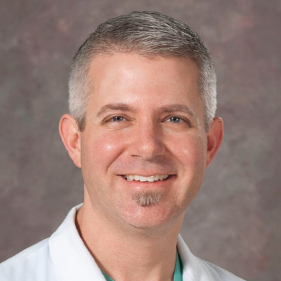
“Our AI governance committee provides critical oversight to ensure that every pilot is thoughtfully designed and that decisions around expansion are guided by rigorous analysis of effectiveness, safety and health equity,” explained Jason Yeates Adams, professor of medicine and chair of the Health Analytics Core.
The pilot program in emergency medicine — the first UC Davis residents to train on AI scribe — was approved and vetted by the oversight committee.
“Many training programs haven’t yet adopted this technology for residents, which highlights that we’re at the forefront of AI integration,” Adams said. “We’re preparing the next generation of physicians to use these tools safely and effectively, while also helping restore the human connection in the doctor-patient relationship.”
“We’re preparing the next generation of physicians to use these tools safely and effectively, while also helping to restore the human connection in the doctor-patient relationship.”—Jason Yeates Adams
A leader in training future health care providers
The pilot is the latest program that offers residents and fellows a dynamic blend of mentorship, support and challenge within a leading-edge educational environment. Training takes place in state-of-the-art facilities, where learners actively contribute to delivering safe, ethical and innovative care.
The health system hosts more than 850 full-time residents and fellows across 75 programs accredited by the Accreditation Council for Graduate Medical Education.
“As the only academic medical center in the Sacramento region, we have a responsibility to continually evolve and prepare our residents for the future of medicine,” Parikh said. “That includes training them to use emerging technologies like AI scribes. We can’t keep teaching the way we did 20 years ago — our approach must reflect the realities of modern clinical practice.”