

AIR Program
Attention, Impulsivity and Regulation/ADHD
Research Team
-
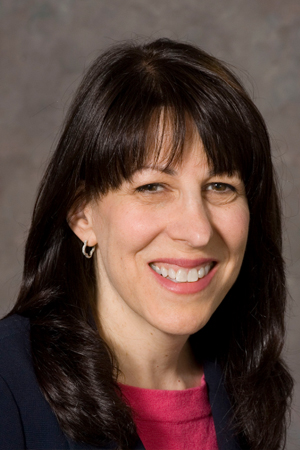 Director, ADHD Program
Julie Schweitzer, Ph.D.
Julie Schweitzer, Ph.D., is a Professor in Psychiatry and Behavioral Sciences at the MIND Institute and leads the AIR/ADHD Program. Her research focuses on understanding and improving attention and impulsivity in children and adults, particularly those with ADHD, using cognitive neuroscience and behavioral techniques. She is developing tech-based tools, like virtual reality games, to boost attention and self-control. Her work, which incorporates fMRI, eye-tracking, and other methods, has earned numerous NIH and federal grants supporting studies in ADHD, autism, and substance use disorders. She is active in training translational scientists across UC Davis Health and is the Director of the Clinical and Translational TL1 Postdoctoral Training grant, a member of the CTSC Kitchen Cabinet, Associate Director of the Mentored Clinical Research Training Program and is the Director of the UC Davis Schools of Health Mentoring Academy.
-
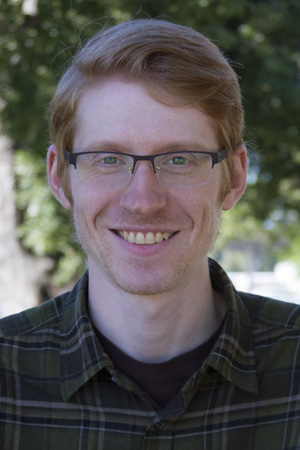 Research Coordinator
Jared Borden, M.A.
Jared Borden, M.A., is the Research Coordinator for the Mapping Impulsivity's Neurodevelopmental Trajectory (MINT) study in the Attention, Impulsivity, and Regulation (AIR) Laboratory. He received a Bachelor's degrees in Psychology and Physics from Colgate University and Master's degree in Clinical Psychology from Teachers College, Columbia University.
-
 Assistant Professor
Catrina Calub, Ph.D.
Catrina Calub, Ph.D., is a Assistant Professor, Department of Psychiatry and Behavioral Sciences, working in the Clinical and Translational Science Center training program under Julie Schweitzer, Ph.D. She completed her pre-doctoral internship in a specialized healthcare program at Oregon Health and Science University and earned her Ph.D. in Clinical Psychology from the University of Central Florida. Her research is focused on understanding how behavioral, cognitive, and cultural factors relate to ADHD, with the aim of improving treatments for the condition. She received the 2022 CHADD Young Scientist Research Award for her work and potential contributions to ADHD research. Recently, she also received the Klingenstein Third Generation Foundation ADHD Award to study early childhood risk and protective factors for outcomes in youth with ADHD using data from the NIH-supported ECHO program.
-
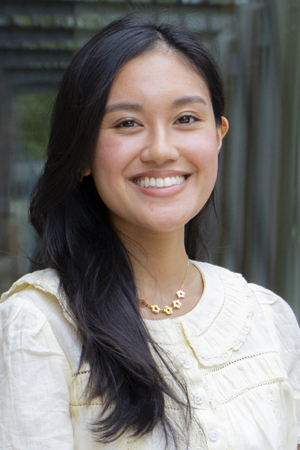 Junior Specialist
Jeramiah-Diane Bunac, B.A.
Jeramiah-Diane Bunac, serves as a Junior Specialist in the AIR Lab, supporting the Q-DATA (Quantifying Distraction and Attention in Teens in Academic settings) and the VRAM (Virtual Reality Attention Management) studies. She earned her B.A. in Molecular and Cell Biology and Psychology from UC Berkeley. Her research interests include attention, executive functioning, and neurodevelopment, particularly how
these factors shape adolescents' academic experiences and daily functioning. Through her work in the classroom with school-aged students, she became interested in how research can inform evidence-based interventions that support youth on a broader scale. She hopes to continue exploring the intersection of research and practice as she considers future graduate training in school psychology. -

Prerona Mukherjee, Ph.D.
Prerona Mukherjee, Ph.D., holds a Master’s degree in Cognitive Science and a Doctorate from the University of Edinburgh, where her research focused on emotion and information processing in schizophrenia. With a background in computer science, she has extensive experience in the software industry.
Her research investigates the interaction between emotion and cognition, particularly regarding self-control and attention in conditions such as ADHD and schizophrenia. She is interested in enhancing outcomes like academic achievement and resilience through innovative tools, including smartphone applications and virtual reality. Additionally, she is active in mental health outreach and volunteering.
Current Externs
-
 Clinical Graduate Student Extern
Nnamdi Agude, M.S.
Nnamdi Agude comes from a Sport Psychology background and completed his M.S. in Performance Psychology at California Baptist University. Agude is a current doctoral student at Alliant University and has eight years of experience as a BHT and mentor for foster youth ages 13–17, conducting skill-building workshops for teens. Now, under the supervision of Julie Schweitzer and Catrina Calub, Nnamdi continues to develop the tools needed to provide families and teens at UC Davis MIND Institute with psychoeducation and executive function skill-building for ADHD, and ultimately to provide therapeutic intervention in his career.
-
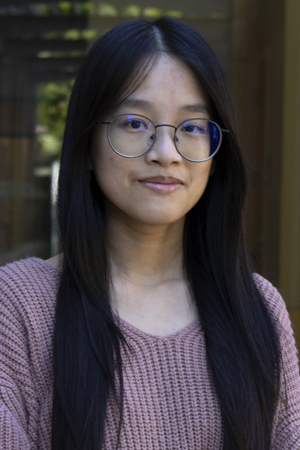 Clinical Graduate Student Extern
Amanda Ho
Amanda is a fourth-year Clinical Psychology Psy.D. candidate at Alliant University, Sacramento, with a Bachelor's degree in Psychology from Sacramento State. Her experiences include various roles in leadership, crisis counseling, teaching, and community engagement. As an advocate for individuals with lived experience in mental health, Amanda’s research interests focus on clinicians' experiences with stigma and disclosure in the mental health field. In the future, she hopes to continue her efforts to improve the accessibility and affordability of mental health services, while also exploring how technology can support and enhance mental health care. Amanda is currently working on the Q-DATA study.
-
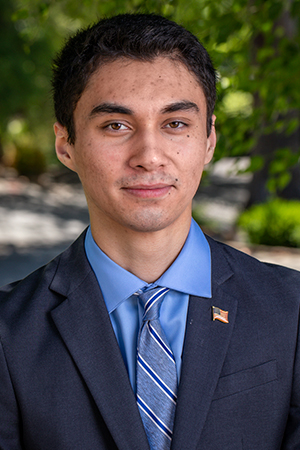 Clinical Graduate Student Extern
Lance Howell, M.A.
Lance is a Clinical Psychology Psy.D. candidate at Alliant International University, Sacramento, and holds a bachelor's degree in psychology from Utah State University. His experience includes working alongside a clinical and forensic psychologist, providing therapy and conducting assessments in VA outpatient and inpatient settings, and delivering therapy in a community mental health center. He has worked with individuals from diverse backgrounds across the lifespan, ranging from children to geriatric adults. He is currently training at the MIND Institute to further develop his assessment and clinical skills while working with children and adolescents as he continues toward his goal of becoming a clinical and forensic psychologist.
-
 Clinical Graduate Student Extern
Alexis Montañez, M.A.
Alexis Montañez is a doctoral candidate in clinical psychology at Alliant University. Her research and clinical interests include neurodevelopmental disabilities, mental health of mothers and families during and after pregnancy, and mental health equity, with a focus on strengths-based, culturally responsive care and improving access to services for underserved communities. She is currently involved in the VRAM (Virtual Reality Attention Management) and Q-DATA (Quantifying Distraction and Attention in Teens in Academic Settings) studies and co-leads the Executive Function Skills Group for teens with ADHD.
-
 Clinical Graduate Student Extern
Amber Willeford
Amber Willeford is a doctoral candidate in Clinical Psychology at Alliant University and a Clinical Psychology Extern in the Attention, Impulsivity, and Regulation (AIR) Lab at the UC Davis MIND Institute. Her interests include neurodevelopmental disabilities, attention-deficit/hyperactivity disorder (ADHD), executive functioning, psychological assessment, and intervention. Through her work in the AIR Lab, Amber supports research and clinical activities focused on understanding attention, self-regulation, and developmental outcomes in children and adolescents. She plans to pursue a career in clinical neuropsychology, with a focus on assessment, intervention, and research that improves outcomes for individuals with neurodevelopmental disabilities.
Current Volunteers
-
- Yooseon Shin, B.S.
- Diyansha Magesh, B.S.
- Samhitha Chava
- Olivia Chan, B.S., B.A.
- Gabe Enriquez
- Rafay Tariq
Our Collaborators
University of California, Davis Collaborators
- Ana-Maria Iosif, Ph.D. – UC Davis Division of Biostatistics
- Deborah Bennett, Ph.D. – UC Davis Center for Health and the Environment
- Heather Elahi, Psy.D. – UC Davis MIND Institute
- Joy Geng, Ph.D. – Center for Mind and Brain
- Dipak Ghosal, Ph.D. – Department of Computer Sciences
- Amanda Guyer, Ph.D. – Human Experiences and Affective Development Lab
- Irva Hertz-Picciotto, Ph.D. – UC Davis MIND Institute, UC Davis Environmental Health Sciences Center
- Saeedeh Komijani, M.S. – Department of Computer Sciences
- Xin Liu, Ph.D. – Department of Computer Sciences
- Sophie Quynn, M.S. – Department of Computer Sciences
- Marjorie Solomon, Ph.D. – UC Davis MIND Institute
- Manpreet Singh, M.D., M.S.
Outside Collaborators
- Catherine Fassbender, Ph.D. - Department of Psychology, DCU Glasnevin Campus
- Stephen Hinshaw, Ph.D. - Department of Psychology, UC Berkeley
- Sam McClure, Ph.D. - Department of Psychology, Arizona State University