Hypertension reduction program improves health for Black adult patients
By Carolyn Ramirez
How the program came to fruition, now thriving
(SACRAMENTO)
When people hear words like “cancer,” “heart disease” or “Alzheimer’s,” our brains immediately know the magnitude of such a diagnosis.
What about the word “hypertension?” Any visceral reactions? No? Well, perhaps it’s time to dig a little deeper into that.
High blood pressure, also known as hypertension, is blood pressure that is higher than normal. Blood pressure is measured in millimeters of mercury (mmHg). While it varies throughout the day, a “normal” blood pressure level is less than 120/80mmHg. To learn more about blood pressure readings, click here.
The Centers for Disease Control and Prevention (CDC) estimates that 47% of adults in the United States have hypertension. When looking at populations based on sex and race, the CDC estimates the following have high blood pressure:
To reduce the disparity gap – differences in the quality of health and health care across racial, ethnic, and socio-economic groups – UC Davis Health providers teamed up to reduce hypertension rates among Black adult patients.
About thehypertension reduction program
UC Davis Health’s hypertension disparities reduction initiative was launched in 2021, as part of the UC Office of California Population Health (UCPH). It represents a UC Davis-wide effort to reduce inequities across our patient population.
Reshma Gupta, chief of Population Health and Accountable Care at UC Davis Health, said that hypertension is the greatest international chronic condition that leads to mortality and morbidity. As such, it has become a top priority to make the reduction program a key initiative at UC Davis Health.
Heather Martin, manager for pharmacy primary care in clinical services, and Heather Leisy, medical director of population health quality, shared the inner workings of running such an operation.
Martin said, “People may be surprised to learn that UC Davis Health has clinical pharmacists working in their doctor’s office who offer many programs to help people improve their health by managing medical conditions like diabetes, chronic pain and high blood pressure.”
Through a collaborative practice agreement, physicians refer a patient to a UC Davis Health clinical pharmacist, who then closely monitors and tends to a patient’s treatment – such as starting medications, changing medications, and doing any lab tests related to ongoing medication use.
Since the start of this project, primary care clinical pharmacists have completed approximately 900 hypertension patient care visits for Black persons with high blood pressure.
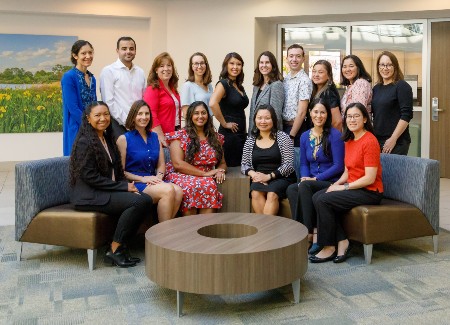
Primary care clinical pharmacy team. Not pictured: Tanya Shepard, Jessica Hernandez and Cristina Dobre
To help streamline alerts and the referral process, improvements were made to the medical records system.
Leisy shared, “We recognize that some of our providers experience alert notification fatigue, so we partnered with additional teams to come up with a more user-friendly and accessible solution.”
As part of the population health team, Ben Rasmussen, internal medicine physician at UC Davis Health, was involved in the medical records system improvement project.
Rasmussen said, "We implemented electronic medical tools that could alert our providers if an African American patient had extremely high blood pressure levels in real time. Through some trial and error, our team was able to redesign the tools in a more user-friendly way to help our at-risk African American population, without interrupting provider workflows."
Once the referral process was underway, now it was time to contact patients whose blood pressure was flagged as “high.”
Sometimes “cold calling” people can be intimidating. So, the Organizational Excellence team provided inclusive communication practices to providers so that they could connect with patients in a meaningful way and express concern about the patient’s high blood pressure level.
Barbara Thatcher, clinician health and wellbeing organizational consultant, said, “I work closely with multiple providers throughout the year, to demonstrate culturally inclusive communication and best practices. Collaborating with the hypertension reduction team – to help enhance the patient-clinician relationship, which has contributed to reducing health disparities around high blood pressure – has been incredibly rewarding.”
Reducing disparity gap from 6% to less than 3%
When the program was first launched, the hypertension disparity gap was close to 6%. Today, the disparity gap is slightly above 2%. Such a reduction is worth celebration.
Gupta expressed her gratitude to all that are involved in the initiative. She said, “I am so proud of our team’s commitment to tackle a key health care issue that is affecting our communities, which is also a condition previously identified in our most recent community health needs assessment. The team’s integrated patient input and interdisciplinary approach to reduce disparities has been a keen focus to positive patient experiences and outcomes.”
Concerned about high blood pressure? There are ways to lower it naturally through your diet. Click here to learn more.