
Structural Heart Program
Treatments
If you need treatment for heart valve disease, you receive the highest level of care at the UC Davis Health Heart and Vascular Center. Our doctors are internationally known for performing nonsurgical procedures to fix heart valve problems. This approach offers you a faster, less painful return to daily activities.
Why choose UC Davis for heart valve repair and replacement
Specialists at our Structural Heart Disease Program offer the latest surgical and nonsurgical treatments for heart valve disease. You benefit from:
- Region’s most experienced team: We were the first hospital in Sacramento to perform aortic valve replacement using a thin tube called a catheter. This procedure took place in 2012. Since then, we have performed more than 1,000 transcatheter aortic valve replacements (TAVRs). Our team’s vast experience improves your chances for a successful outcome. Find out more about TAVR.
- Experts in open-chest procedures: Catheter-based procedures are not right for everyone. Open-chest surgery allows your care team to perform multiple heart procedures during one operation. Your doctor will review your options with you to help you select the best treatment for your needs.
- Nationally recognized specialists: Our interventional cardiologists (doctors who specialize in catheter-based methods) train other doctors from across the country. Your care comes from heart specialists who are known for their skills performing these procedures.
- Commitment to nonsurgical advancements: We participate in cardiovascular clinical trials to develop and improve catheter-based techniques. Through these trials, you have access to a wide range of catheter-based procedures not available elsewhere in the area. Our doctors also conduct and publish research, as well as speak at conferences around the world.
- Care focused on you: We tailor your visit to our structural heart disease clinic to maximize your time. When possible, you meet with several specialists and undergo tests during the same appointment.
- Leading cardiac rehab team: We are home to Sacramento’s most experienced Cardiac Rehab Program. Our team of heart, exercise, nutrition and mental health specialists help you recover from a heart valve repair or replacement.
TAVR and other transcatheter heart valve disease treatments
Our team’s involvement in cardiovascular clinical trials gives us deep expertise in catheter-based treatments. As a result, we offer the most catheter-based heart procedures in the region. These procedures include:
Your doctor may recommend TAVR if you have aortic stenosis. This serious condition causes the aortic valve to stiffen and restrict blood flow. During TAVR, your doctor: in the groin or chest to the heart
- Inserts an expandable replacement valve through the catheter
- Expands the replacement valve, which pushes away and takes the place of the diseased aortic valve
Aortic valve stenosis is a narrowing of the aortic valve opening that does not allow normal blood flow. This can lead to chest pain or chest tightness, heart palpitations, fatigue and shortness of breath, especially with exertion. No drug therapy exists for treating severe aortic stenosis. With aortic valve replacement, however, many people can lead normal, healthy lives.
Physicians have had great success treating severe, symptomatic aortic valve stenosis by replacing the faulty valve with a new one during an open-heart surgery procedure.

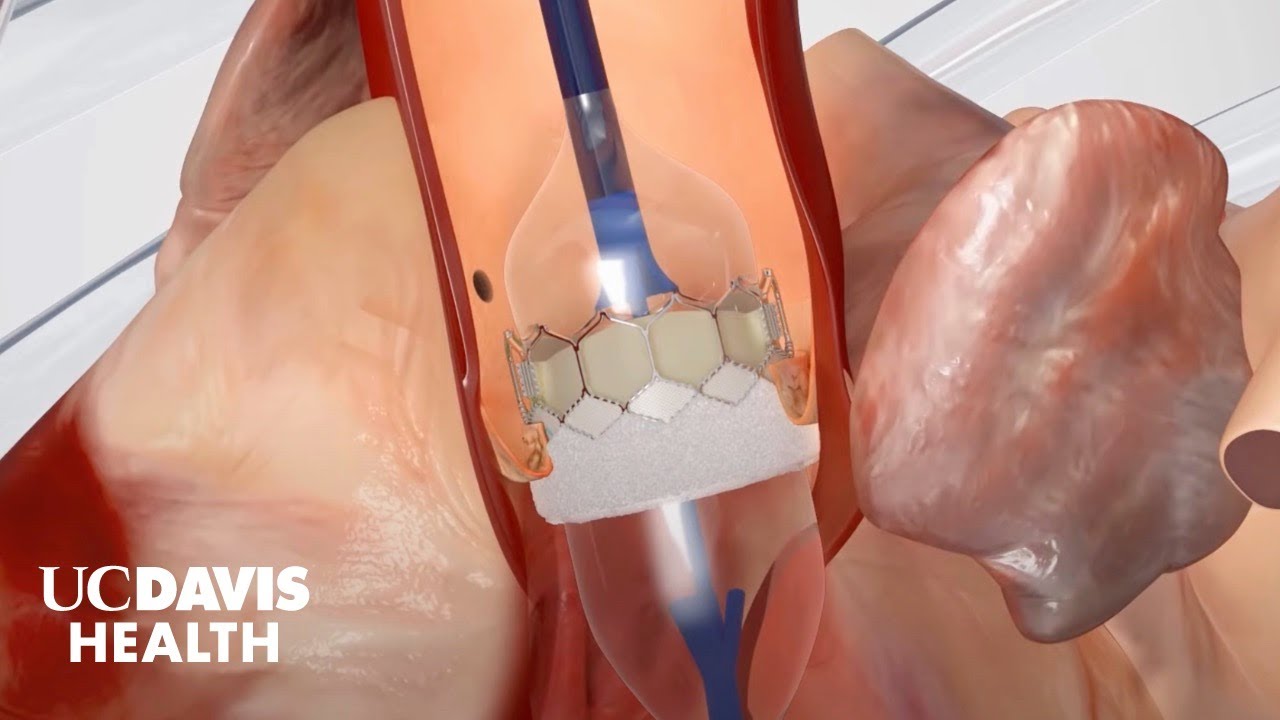
An alternative to surgery for some patients is transcatheter aortic valve replacement, or TAVR. This minimally invasive procedure involves replacing the valve without removing the old, damaged valve. Instead, the new valve is delivered through a catheter and inserted inside the old aortic valve, using the old valve to secure the new valve. The TAVR procedure is performed using different approaches, based on the best and safest way to place the new valve.
TAVR patients usually experience a much more rapid recovery than they would following a traditional, open heart surgery valve replacement. It can be an effective option for patients who otherwise would have limited choices for treating their aortic stenosis.
To learn more about severe aortic stenosis treatment at UC Davis Health: email: StructuralHeartNurseCoordinators@health.ucdavis.edu, or call 916-734-6500. Please fax medical records, referrals, and or consultation requests to 916-734-8282, Attn: TAVR Program.
Our Team
- Jeffrey Southard, M.D.
- Garrett Wong, M.D.
- Benjamin Stripe, M.D.
- Romear Campbell, RN, MSN
- Lauren Dillon, RN, MSN
- Allison Kelly, RN
- Janet Wells, R.N., M.S.N.
Cardiothoracic surgeons
Contact us
For appointments, please call 1-800-2-UC-DAVIS (1-800-282-3284) or connect with one of our heart and vascular specialists.