
Residency Programs
Internal Medicine/Psychiatry Residency
Residents and Graduates
Nathan Wobig, M.D., Albert Einstein College of Medicine
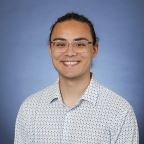
The further I went through medical school, the more I saw that my patients' mental health were central determinants in their physical health. Unmanaged, bipolar disorder, depression, and schizophrenia often lead to worsening glycemic control and blood pressures, frequently to the point of devastating consequences. Similarly, alcohol use disorder drove liver disease, which in turn drove patients’ depression. As I witnessed this time and time again, I started to appreciate the gaps at the intersections of our medical systems. Only then, was I introduced to the wonderful world of med-psych. Thanks to a few amazing mentors, I realized that many other physicians had not only appreciated this intersectionality, but had devoted their careers to it. I knew definitively that this was something I wanted to do myself. I hope to focus my med-psych training within the sphere of addiction medicine. Here, I feel that the lines between psychiatry and medicine fade completely. I chose UC Davis because of the incredibly supportive and warm culture that exists in the program, as well as their commitment to championing care for the underserved. Outside of medicine, I love to play basketball and pickleball, hike, and play piano. I’m very excited to explore NorCal’s beauty and check out the Sacramento Farmers’ Markets.
Fatima Ghiathi, M.D., M.S., Mercer University School of Medicine
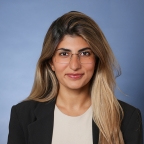
More than one in five adults in the United States experiences mental illness each year, and nearly one in twenty lives with a serious mental illness that can profoundly affect daily life. Globally, millions of people experience psychosis during their lifetime, yet many continue to face barriers to receiving integrated, compassionate care. I was drawn to med-psych because I believe there should never be a divide between caring for the mind and caring for the body. Every person deserves thoughtful, comprehensive care, regardless of their background, circumstances, or the complexity of their illness. I strive to be a physician who can meet patients in that complexity with both clinical excellence and genuine humanity. I feel incredibly fortunate to train at UC Davis alongside a remarkable community of integrated care physicians, within a program that embodies the kindness, curiosity, and commitment to patients that continues to inspire my path in this field.
Mary "Maggie" Owens, M.D., UC Los Angeles School of Medicine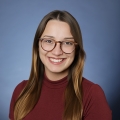
I witnessed firsthand what the devastating impact of limited healthcare access and medical mistrust throughout my childhood in a rural Tennessee community. Particularly the lack of access to specialty care and mental health services inspired me to pursue a career focused on providing integrated, compassionate medical and psychiatric services to underserved communities. My street medicine work with unhoused individuals on Skid Row through UCLA’s Student-Run Homeless Clinics deepened my understanding of the trust required to care for patients often failed by the healthcare system, and it underscored the inseparable nature of physical and mental health in vulnerable populations. I also explored integrative approaches to care, completing acupuncture certification through the UCLA Center for East-West Medicine to better support patients experiencing the depressive symptoms that so often occur in the setting of chronic pain.
I am pursuing combined training in Internal Medicine and Psychiatry at UC Davis because of its strong commitment to social medicine, health equity, and service to diverse communities. I was also drawn to the supportive community and emphasis on resident wellbeing. Outside of medicine, I enjoy woodworking, bowling, line dancing, and cooking Southern comfort food.
Harsimran Bhandal, M.D., Hackensack Meridian
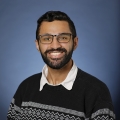
I was drawn to pursuing internal medicine and psychiatry combined training because dual training would allow me to provide holistic, whole-person care. I am interested in providing care for LGBTQIA+ individuals, in addition to underserved minority populations, such as the Sikh-Punjabi community. Combined training would not only provide me with the opportunity to gain robust individual training in internal medicine and psychiatry, but also equip me with the capacity to integrate concepts that would deliver the best care for patients.
I was drawn to UC Davis because of the sheer diversity of Sacramento and the ability to serve patients from all walks of life. Furthermore, given the diversity of people, Sacramento is an amazing place to explore types of cuisine across the globe. Within a few miles of the UC Davis Medical Center, one has access to Ethiopian, Persian, Afghani, Mexican, Japanese, just to name a few.
Alyssa Miawotoe, M.D., UC Davis School of Medicine
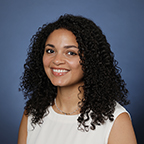
I realized the importance of addressing both the body and mind as a crisis counselor and EMT. This was reaffirmed throughout medical school when I encountered various patients with both medical and psychiatric needs heavily impacting their day-to-day lives. I noticed that many patients with complex comorbid conditions would often fall through gaps in the current medical system. To provide comprehensive and preventative care, I pursued combined training in medicine and psychiatry. My goal is to work with patients with complex psychiatric and medical needs to achieve positive outcomes and be an empowering force in improving overall quality of life. Through my training, I aim to develop skills to navigate the system, advocate for patients, and tailor management to everyone’s unique conditions and experiences. I chose UC Davis because of the genuine support of faculty and residents, the encouragement to foster my passions, the ability to work with a diverse patient population at various clinical sites, and the ability to mentor medical students from underrepresented backgrounds. Finally, the program’s emphasis on cultural humility was particularly important to me as a Togolese-American. Outside of medicine, I enjoy exploring all the hidden gems in Sacramento and the beautiful Northern California region.
Jonathan Credo, M.D., University of Arizona

I was drawn to pursue medicine from my time serving Tribal communities in a research capacity. Specifically, the intersection of environmental exposures and community health. Too often, despite compelling data and overwhelming support from the community, we would be met with resistance from decision-makers because we "lacked medical training," and thus, our results/conclusions were unsubstantiated. While in medical school, I continually returned to serve the Tribal, minority, and rural communities I had for much of my life, first in research and then later in the clinic. Through it all, I saw the increasing request by communities for collaborations to have medical and mental health aspects and the immense impact this unique skill set could have in the nuanced research world of environmental health, Tribal sovereignty, and holistic healthcare. Much like my decision to pursue an M.D./Ph.D., I knew combined internal medicine/psychiatry training would allow me to best serve and advocate for my community. I appreciate the incredibly supportive environment and dedication to patients of all backgrounds championed at UC Davis and am honored to be able to train in the internal medicine/psychiatry program. My Navajo and Filipino heritage teaches the importance of a holistic mindset, which I have been comforted to see is exemplified at UC Davis and I hope I can learn to carry that with me through my training and beyond. I am reminded of the wisdom and kind words shared with me by an elder: medicine allows you to treat, psychiatry provides the space to heal, and education (research) will let you share (teach).
Elena Kolpikova, M.D., University of Washington
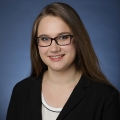
During medical school, I got the opportunity to work with patients whose psychiatric and physical health conditions wholly impacted their lives, yet who faced many barriers to receiving comprehensive care. Nobody is immune to becoming sick, however it is often an entirely different experience for those who are uninsured, or cannot speak English, or are facing homelessness and lacking transportation. One of my favorite aspects of medicine presents itself during the transition out of the hospital and back into the clinic setting. I am passionate about working within the resources my patients have, and learning about what else our healthcare system can offer them to help them stay healthy. I aspire to become a clinician capable of addressing my patients' complex emotional needs while partnering with them to understand whatever illness they may be faced with. I am thrilled to join the UC Davis Internal Medicine/Psychiatry residency program, where I feel incredibly supported to explore my passions within medicine (including medical education, addiction medicine, infectious disease, and mood disorders) and create meaningful relationships with my peers, mentors, and the community we are all working to care for. As a transplant from Seattle, I am ever appreciative of the warm and welcoming culture I have found here.
Sydney Wyatt, M.D., University of Oklahoma
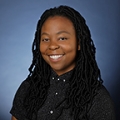
Throughout medical school, I consistently encountered patients with complex comorbid medical and psychiatric conditions. However, I found that our existing healthcare system failed to adequately address their needs. During this time, I realized I wanted to pursue med-psych, where I could work with this vulnerable patient population from a comprehensive and holistic perspective. I chose the UC Davis Internal Medicine/Psychiatry program because of the encouraging and supportive atmosphere with the kindest co-residents. My ultimate goal is to leverage my skills and knowledge gained through this program to make a significant impact on patients in an integrative primary care setting. In my free time, I enjoy exploring the endless hiking trails, snowboarding, eating my weight through Sacramento and San Francisco, and catching sporting events. I am so happy to be in a residency program that fosters my interests within and outside of medicine.
Rida Fatima, M.D., University of Washington
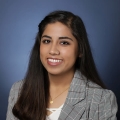
During my time in medical school, I found myself incredibly drawn to taking care of patients with both complex medical conditions and comorbid psychiatric concerns. I quickly learned that to provide truly holistic care both needs would have to be thoroughly addressed. This drive to focus on my patients’ comprehensive mental and physical health led me to join the UC Davis Internal Medicine/Psychiatry family! Now, with my passion for working with underserved populations, I hope to bring my skill set to the communities that need it most. With my background as a Pakistani and then a Wyomingite, I hope to be involved with educational and advocacy efforts to improve access to mental health resources while functioning in a primary care setting.
Paul Glasheen, M.D., University of Colorado
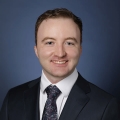
Like many of my co-residents, I was drawn to combined training in internal medicine and psychiatry because of the unique challenges facing patients with co-morbid medical and psychiatric illnesses, beyond the baseline barriers, stigma, and discrimination they may encounter as participants in a healthcare system where outcomes are unfortunately influenced by one’s identity and income. I entered medical school passionate about psychiatry, and then became fascinated by the practice of internal medicine and the interplay of the two fields. I also feel that combined training will help me best address unequal health outcomes for marginalized patients with high needs and low access. I was drawn to UC Davis, particularly for the excellent clinical training, the institutional commitment to advocacy, and the incredibly warm and welcoming people!
2026 - Britany Lundberg, M.D.
Dr. Lundberg joined the faculty at UC Davis where she practices outpatient Med/Psych in both of our main resident clinics (Sacramento County Health Center and Ambulatory Care Center).
2026 - Stacy Haponyuk, M.D.
Dr. Haponyuk is an addiction psychiatry fellow at UT South Western.
2025 – Ethan Cermeno, M.D.
Dr. Cermeno is splitting his clinical time between primary care and outpatient psychiatry at Sutter in Sacramento.
2025 – Garrett Peck, M.D.
Dr. Peck is working at Kaiser in Sacramento and focusing on integrated care and outpatient psychiatry.
2024 – Jackie Hsieh-Wong, M.D.
Dr. Wong is a Hematology-Oncology Fellow at UC Davis. She plans to focus her career on providing comprehensive physical and mental healthcare for people with and after cancer.
2024 – Kelsey Wong, D.O.
Dr. Wong is working at Kaiser in San Diego and focusing on outpatient mental healthcare.
2023 – Matt Adams, M.D.
Dr. Adams provides medical and psychiatric care for a substance use disorder treatment program at Kaiser in Sacramento. He teaches our combined and internal medicine residents.
2023 – James Tur, M.D.
Dr. Tur is a volunteer clinical faculty at UC Davis. He works as a hospitalist in a rural area (Bishop) and works with underserved patients including those who use substances in multiple contract positions in Sacramento. Finally, he started a private psychotherapy practice.
2022 – Joseph Kim, M.D.
Dr. Kim is faculty at Albert Einstein/Montefiore where he works as a hospitalist and consult-liaison psychiatrist, as an associate program director, and develops models for complex med/psych care.
2022 – Luther Arms, M.D.
Dr. Arms is faculty at UC San Francisco where he directs integrated care at San Francisco General Clinic and provides psychiatric care at CitiWide for patients with the most serious mental illness.
2021 – Eleasa Sokolski, M.D.
Dr. Sokolski completed addiction medicine fellowship at Oregon Health and Science University where she is now faculty. She uses her combined training to integrate primary care and psychiatry with treating substance use disorders.
2021 – Philippe Levy, M.D.
Dr. Levy is developing models for primary care/psychiatry integration as well as providing medical consultation for mental health providers with Lifestance Health. His practice also includes psychiatric medication management and psychotherapy via telehealth.
2021 – Simone Lew, M.D., M.S.
Dr. Lew joined the faculty at UC Davis continuing to work with residents and students. Her clinical practice is at the Sacramento County Jail doing inpatient/outpatient Psychiatry and general medical care at Sacramento County Mental Health Treatment Center.
2020 – Christine Kho, M.D.
Dr. Kho started a new practice of integrated psychiatry and primary care at a large FQHC (AltaMed) in Los Angeles, where she is developing new mental healthcare services. She also teaches psychiatry to primary care attendings, residents, and nurse practitioner.
2018 – Jeremy DeMartini, M.D.
Dr. DeMartini is an associate professor and training director of the Internal Medicine/Psychiatry Residency Training program at UC Davis. His clinician-educator practice includes primary and urgent care for patients with serious mental illness, and collaborative/integrated psychiatric care.
2017 – Chinonyerem Okwara, M.D.
Dr. Okwara supervises residents in outpatient psychopharmacology and psychotherapy as well as psychosomatics and psycho-oncology at Baylor Scott and White Healthcare in central Texas.
2017 – Lindsey Enoch, M.D.
Dr. Enoch is an assistant professor of internal medicine and psychiatry at the University of Washington. Her clinical time is divided between primary care, outpatient collaborative care consultation and telepsychiatry. She also oversees multidisciplinary teams that provide mental healthcare to underserved areas and teaches in the integrated care fellowship.
2016 – Aleea Maye, M.D.
Dr. Maye practices outpatient internal medicine, psychiatry, and geriatrics in Chesapeake, VA.
2016 – Angie Yu, M.D.
Dr. Yu works as a collaborative care psychiatrist in primary care at Kaiser Permanente in south Sacramento. She also developed a novel multi-disciplinary clinic for major neurocognitive disorders. In addition, she is a preceptor for the Accelerated Competency-based Education in Primary Care (ACE-PC) medical student program and the integrated care elective for UC Davis residents.
2015 – Matthew Reed, M.D., M.S.P.H.
Dr. Reed completed the Pain Medicine Fellowship at UC Davis. He is the former Associate Psychiatry Program Director, Director of Consultation and Liaison Psychiatry, and Director of Education for the Train New Trainers Primary Care Psychiatry Fellowship at UC Irvine. He now practices psychiatry and pain medicine at Hoag Hospital in Orange County.
2013 – David Hsu, M.D.
Dr. Hsu completed the Geriatric Psychiatry Fellowship at Brigham and Women’s Hospital and now practices at Dignity Health in Sacramento, CA.
2012 – Margaret Leung, M.D.
Dr. Leung completed the Hospice and Palliative Care Fellowship at Harvard Medical School, Massachusetts General Hospital and now practices at Kaiser Permanente, in Roseville, CA.