Specialties
General Medicine and Bioethics
Research Spotlight: Addressing the Primary Care Physician Shortage
November 12, 2025
Primary care in the U.S. is in decline. While primary care is the foundation of an effective health care system, there is a shortage of primary care (PC) physicians.
UC Davis Health is committed to addressing the shortage of primary care physicians by educating a larger and more diverse primary care workforce, and by working with Federally Qualified Health Centers in the region to provide primary care and behavioral health services to low-income residents.
As the region’s only academic health center, a core mission of UC Davis is to meet the Primary Care workforce needs of California’s urban and rural counties. UC Davis is among the top schools for Primary Care specialization. In 2025, 63% of UC Davis graduates matched into Primary Care—leading all UC medical schools by greater than 20%—and 81% of graduates matched for residency in California.
UC Davis offers five Primary Care pathways that train students in Primary Care in medically underserved and rural settings:
- ACE-PC (Accelerated Competency-based Education in Primary Care) provides a 3-year MD degree for Primary Care-bound students. The majority of graduates practice in Federally Qualified Health Centers, which are primary care clinics that receive federal funds to provide healthcare services to underserved communities.
- Rural-PRIME (Programs In Medical Education) recruits and trains students for rural practice. 65% of graduates have entered Primary Care; 40% in rural settings, and 56% in medically underserved communities.
- REACH (Reimagining Education to Advance Central California Health) recruits and trains students for rural practice in the Central Valley. 60% of graduates are in Primary Care residency.
- TEACH-MS (Transforming Education and Community Health for Medical Students) recruits and trains students for urban underserved PC. 79% of graduates have entered PC residency, and 53% practice in underserved settings.
- Tribal Health PRIME (Programs In Medical Education) recruits students committed to serving American Indian/Alaska Native (AI/AN) communities and has tripled the number of AI/AN students (from 3 to 16). UC Davis’s new Huwighurruk Tribal Health Post Baccalaureate Program (in Humboldt County) provides conditional acceptance into Tribal Health PRIME.
UC Davis conducts numerous recruitment activities for over 1000 students per year. One-third of current students participated in at least one of these recruitment efforts:
- AvenueM: A community college to medical school pathway program for disadvantaged students from Northern California.
- Medical School Preparatory Enhancement Program (MSPEP): 6-month program to help students apply to medical school, including paid MCAT testing.
- Post-baccalaureate Program: 1-year academic preparation and advising with an explicit workforce diversity mission.
- Huwighurruk Tribal Health postbaccalaureate: Tuition-free yearlong at Cal Poly Humboldt with guaranteed admissions to UC Davis SOM Tribal and Indian Health Centers.
- K-12 Outreach: in-school presentations on health careers by staff and medical students.


Publications
-
Accelerated 3-Year MD Programs in the United States: Key Features, Innovations, Growth, Outcomes, and Lessons Learned
This commentary provides an update on the current state of thirty-two 3-year MD programs in the United States, highlighting the key features, innovations, growth, outcomes, and lessons learned in the development and implementation of these programs at CAMPP (Consortium of Accelerated Medical Pathway Programs) member institutions.
Cangiarella, J., Gonzalez-Flores, A., Fancher, T. L., Santen, S. A., & Coe, C. L. (2025). Accelerated 3-Year MD Programs in the United States: Key Features, Innovations, Growth, Outcomes, and Lessons Learned. Academic Medicine, 100(5), 536–540. https://doi.org/10.1097/acm.0000000000005981 -
Training More Physicians for Medically Underserved Communities: The Power of Regional Medical Education Collaboratives Across the Training Continuum
This perspective describes two models, the University of North Carolina Fully Integrated Readiness for Service Training (FIRST) and the California Oregon Medical Partnership to Address Disparities in Rural Education and Health (COMPADRE), that link undergraduate medical education (UME) and graduate medical education (GME) through mission-oriented admissions, tailored curricula, and place-based clinical training focused on recruiting, training, and retaining physicians to work in rural and underserved communities. Both programs leveraged regional collaboratives across the medical training continuum to address and mitigate common workforce development challenges. This intentional linkage across the medical training continuum mitigates barriers commonly experienced in physician workforce development efforts, promoting graduates to practice in regions with dire physician shortages.
Tran-Reina, M. L., Hollander-Rodriguez, J., Fancher, T. L., Roberts, C., Co, J. P. T., & Coe, C. L. (2025). Training More Physicians for Medically Underserved Communities: The Power of Regional Medical Education Collaboratives Across the Training Continuum. Journal of Graduate Medical Education, 17(2 Suppl), 19–23. https://doi.org/10.4300/JGME-D-24-00476.1 -
Developing a Primary Care Workforce for Underserved Communities - The UC Davis TEACH Program
The Transforming Education and Community Health (TEACH) program, a specialized track for third-year internal medicine residents, attracts students and residents from diverse and underrepresented backgrounds to University of California Davis Health, in partnership with the Sacramento County Health Center (SCHC), where it trains them to deliver culturally humble care, improves continuity of inpatient and outpatient care, enhances resident and faculty diversity, and addresses local health care disparities. TEACH graduates reflect the racial and ethnic diversity of California and have been consistently more likely than their peers to practice general internal medicine and to practice in medically underserved settings. The program’s success underscores the importance of community–academic partnerships in advancing health equity.
Sanchez, S., Henderson, M. C., Vierra, H., & Fancher, T. L. (2025). Developing a Primary Care Workforce for Underserved Communities - The UC Davis TEACH Program. The New England Journal of Medicine, 392(14), 1357–1358. https://doi.org/10.1056/NEJMp2413297 -
Accelerated Competency-based Education in Primary Care (ACE-PC): a 3-year UC Davis and Kaiser Permanente Partnership to Meet California's Primary Care Physician Workforce Needs
This assessment of the University of California Davis Accelerated Competency-based Education in Primary Care (ACE-PC) program implemented in 2014 with Kaiser Permanente Northern California (KPNC) and the American Medical Association’s Accelerating Change in Medical Education initiative considers the broad stakeholder input to address needs for a diverse physician workforce. While accelerated programs are not advisable for all students, particularly those who need time to explore other specialties or who struggle to reach out for help, ACE-PC is a successful 3-year MD pathway for diverse students committed to PC and health equity.
Gonzalez-Flores, A., Henderson, M. C., Holt, Z., Campbell, H., London, M. R., Garnica Albor, M., & Fancher, T. L. (2024). Accelerated competency-based education in primary care (ACE-PC): a 3-year UC Davis and Kaiser Permanente partnership to meet California's primary care physician workforce needs. Medical Education Online, 29(1), 2385693. https://doi.org/10.1080/10872981.2024.2385693 -
Return on Investment of Three-Year Accelerated Programs for Students, Medical Schools, Departments, and Community
When schools consider innovations, they might consider A3YPs for multiple reasons; this perspective helps provide justification for the program and broadly considers return on investment (ROI). The ROI for students includes decreased debt, reduced costs and stress associated with the fourth-year residency applications, and a directed pathway with facilitated transition into a residency program with accompanying professional identity development.
Santen, S. A., Gonzalez-Flores, A., Coe, C. L., Partin, M., Brenner, J. M., Nalin, P. M., Macerollo, A. A., Cangiarella, J., Saavedra, A., & Leong, S. L. (2024). Return on Investment of Three-Year Accelerated Programs for Students, Medical Schools, Departments, and Community. Medical Science Educator, 34(4), 919–925. https://doi.org/10.1007/s40670-024-02043-7 -
Are They Prepared? Comparing Intern Milestone Performance of Accelerated 3-Year and 4-Year Medical Graduates
This study investigated whether medical school length (3 vs 4 years) was associated with early residency performance. For the specialties studied, there were no significant differences in MS performance between 3-year and 4-year graduates at 6 and 12 months into internship. These results support comparable efficacy of accelerated 3-year programs in preparing medical students for residency.
Santen, S. A., Yingling, S., Hogan, S. O., Vitto, C. M., Traba, C. M., Strano-Paul, L., Robinson, A. N., Reboli, A. C., Leong, S. L., Jones, B. G., Gonzalez-Flores, A., Grinnell, M. E., Dodson, L. G., Coe, C. L., Cangiarella, J., Bruce, E. L., Richardson, J., Hunsaker, M. L., Holmboe, E. S., & Park, Y. S. (2024). Are They Prepared? Comparing Intern Milestone Performance of Accelerated 3-Year and 4-Year Medical Graduates. Academic Medicine 99(11), 1267–1277. https://doi.org/10.1097/ACM.0000000000005855 -
Accelerated 3YMD programs: the last decade of growth of the Consortium of Accelerated Medical Pathway Programs (CAMPP)
This evaluation of the current state of the 3-year MD programs through the Consortium of Medical Pathway Programs (CAMPP) adds to the discussion around a transition to a competency-based medical education (CBME) framework, that students can achieve needed competencies for graduation in less than the traditional four-year structure.
Coe, C. L., Santen, S. A., Reboli, A. C., Boscamp, J. R., Stoltz, A. M., Latif, E., Dodson, L. G., Hunsaker, M., Paavuluri, A., Brenner, J., Ramanathan, S., Macerollo, A., Leong, S. L., Strano-Paul, L., Traba, C., Jones, B. G., Rundell, K., Gonzalez-Flores, A., Crump, W. J., Vining, M., … Cangiarella, J. (2024). Accelerated 3YMD programs: the last decade of growth of the Consortium of Accelerated Medical Pathway Programs (CAMPP). Medical Education Online, 29(1), 2400394. https://doi.org/10.1080/10872981.2024.2400394
News
Our team continues to drive innovative initiatives in medical education that are designed to improve the health of California’s diverse communities, especially in rural areas or historically medically underrepresented communities experiencing physician shortages.

April 15, 2026
How the School of Medicine built a primary care pipeline
UC Davis graduates a higher share of primary care physicians than most medical schools, which expands access and addresses shortages in underserved California communities.
November 3, 2025
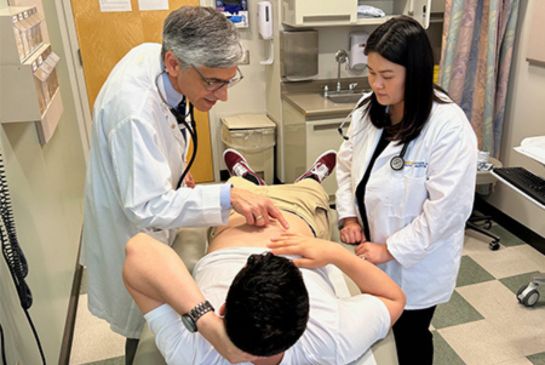
UC Davis expands program to train rural doctors
New partnerships in Shasta, Nevada and Humboldt counties aim to boost local primary care and psychiatry workforce.
October 17, 2025
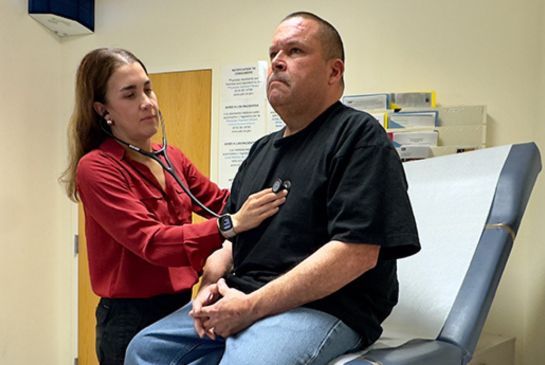
Two decades of dedication
Residents and faculty in the TEACH partnership have championed health equity and reshaped the primary care workforce.
July 18, 2025
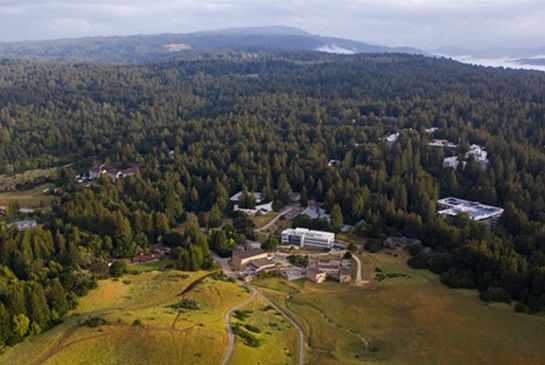
New medical school pathway for Central Coast region
Latest PRIME program seeks to improve health and increase access to care in medically underserved area.
June 23, 2025
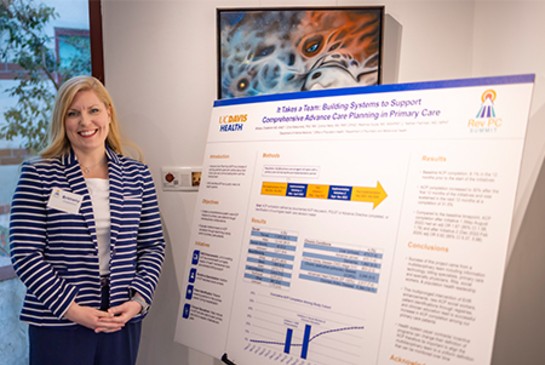
New report aims to revitalize declining primary care
A team of 30 national experts convened by UC Davis Health offers solutions to improve patient care, diversify workforce and boost funding.

NOVEMBER 1, 2024
Experts convene to seek solutions to primary care crisis
UC Davis hosted a who's who of state and national thought leaders and physicians eager to improve the declining state of primary care.

OCTOBER 16, 2024
A simple solution to the primary care physician shortage
In an op-ed for The Sacramento Bee, Anthony Jerant and Richard Kravitz share their perspective on the shortage of primary care physicians.
November 16, 2023
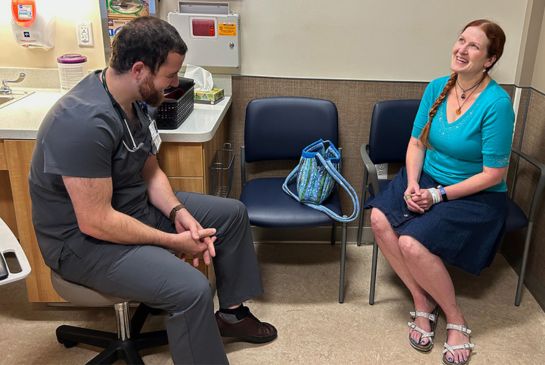
UC Davis medical students reach underserved populations
COMPADRE partnership opens clinical training program in Klamath Falls, OR in an effort to increase physician workforce.
June 5, 2019
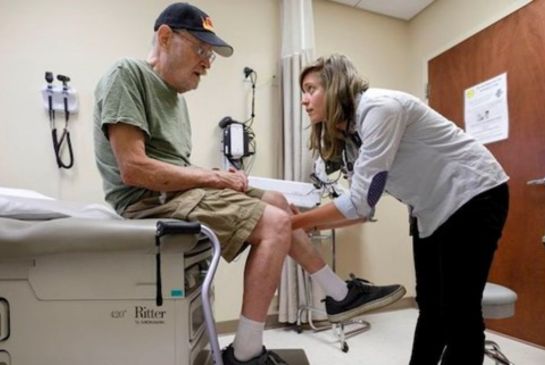
COMPADRE: $1.8M Award Aims to Transform Rural Health Care
Oregon Health & Science University and the University of California, Davis to expand access to quality health care.