Pediatrics
Ear Infections
Ear infections are common in children and infants. Our pediatric specialists treat your child with compassion and expert care.
Medically reviewed by Jamie Funamura, M.D. on May 18, 2026.
What Are Ear Infections?
An ear infection, also called acute otitis media (AOM), happens when fluid in the middle ear builds up behind the eardrum. The fluid buildup leads to swelling and pain.
Sometimes, fluid stays trapped behind the eardrum after an infection, in a condition known as otitis media with effusion (OME). In some children, this fluid stays trapped for a long time or comes back, leading to chronic otitis media with effusion (CME).
Our pediatric experts are here to help prevent and treat ear infections, offering compassionate care so your child feels better quickly.
On this page
Ear Infection Symptoms
The primary symptom of an ear infection is ear pain. However, ear infections can cause a range of symptoms in children and infants.
Common Symptoms
If your child is unable to communicate to you that their ear hurts, look for these other common symptoms:
- Difficulty sleeping
- Fever
- Fussiness and crying
- Rubbing or tugging on the ear
Emergency Symptoms
Although a mild ear infection may clear on its own, your child should receive prompt medical care if they experience more severe symptoms:
- Fever higher 102.2° F
- Hearing loss
- Problems with balance
- Pus or fluid draining from the ear
- Symptoms that get worse or last longer than a few days
Causes of Ear Infections
Ear infections happen when bacteria enter the middle ear. This often occurs after your child has a cold, flu or other upper respiratory infection. The bacteria cause swelling inside the middle ear, which leads to a buildup of fluid behind the eardrum.


Diagnosing an Ear Infection
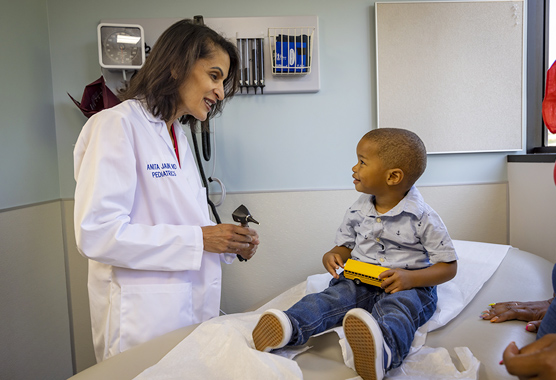
Your child’s provider will ask about your child’s symptoms and do a physical exam. They will use a lighted instrument called an otoscope to examine your child’s eardrum for redness or pus.
Treatments for Ear Infections
Your child’s provider will discuss the appropriate treatment plan with you. Sometimes, a mild ear infection will go away without treatment. If your provider recommends treating your child’s ear infection, the plan may include one or more of these options:
Watchful Waiting
Your provider may recommend watching your child’s symptoms for a few days to see if they improve on their own.
Over-the-Counter Medicines
Medicines like acetaminophen can help reduce pain and fever.
Antibiotics
Your provider may recommend an antibiotic for a severe ear infection or an infection that lasts longer than two or three days.
Referral to an Ear, Nose and Throat (ENT) Specialist
If your child has recurring ear infections, your provider may recommend they see a pediatric ENT to discuss the option of ear tubes to prevent future infections.
Preventing Ear Infections
Most ear infections happen when a child has a cold, flu or other upper respiratory infection. Lowering their risk of getting sick can help prevent an ear infection. This includes:
Hand Washing
Frequent hand washing helps prevent the spread of germs that cause colds and the flu.
Immunizations
Studies show that children who are vaccinated against the flu and other diseases get fewer ear infections than children who aren’t.
“Ear Infections in Children,” NIH, https://www.nidcd.nih.gov/health/ear-infections-children
Who does it affect?
5 in 6Children will have an ear infection by age 3.
Source: National Institute on Deafness and Other Communication Disorders: Ear Infections in Children
Request an Appointment
As Sacramento's No. 1 hospital, you'll benefit from unique advantages in primary care and specialty care. This includes prevention, diagnosis and treatment options from experts in 150 specialties.
Referring Physicians
To refer a patient, submit an electronic referral form or call.
Patients
Call to make an appointment.
Consumer Resource Center
Awards and Recognitions

Ranked among the best in 6 specialties
A U.S. News & World Report best hospital in cancer care, cardiology, heart & vascular surgery, geriatrics, neurology & neurosurgery, orthopedics, and pulmonology & lung surgery.

Ranked among the nation’s best children’s hospitals
U.S. News & World Report ranked UC Davis Children’s Hospital among the best in pediatric nephrology, orthopedics*, and neonatology. (*Together with Shriners Children’s Northern California)

Ranked Sacramento’s #1 hospital
Ranked Sacramento’s #1 hospital by U.S. News, and recognized in 23 types of care including acute kidney failure, cancer care, cardiology, heart & vascular surgery, COPD, colon cancer surgery, diabetes, diabetes & endocrinology, ear, nose & throat surgery, gastroenterology & GI surgery, geriatrics, gynecological cancer surgery, heart arrhythmia, heart attack, heart failure, hip fracture, hip replacement, leukemia, lymphoma & myeloma, lung cancer surgery, neurology & neurosurgery, orthopedics, pneumonia, pulmonology & lung surgery and stroke.

The nation’s highest nursing honor
UC Davis Medical Center has received Magnet® recognition, the nation’s highest honor for nursing excellence.

World-class cancer care
One of ~59 U.S. cancer centers designated “comprehensive” by the National Cancer Institute.

A leader in health care equality
For the 13th consecutive year, UC Davis Medical Center has been recognized as an LGBTQ+ Healthcare Equality Leader by the educational arm of America’s largest civil rights organization.
Latest Children's Health News