
Cancer
Look to us for innovative treatments and personalized care when you or a loved one has cancer. We bring together a team of experienced specialists to find the best path forward for you.
Medically reviewed by David Tom Cooke, M.D. on June 16, 2026.
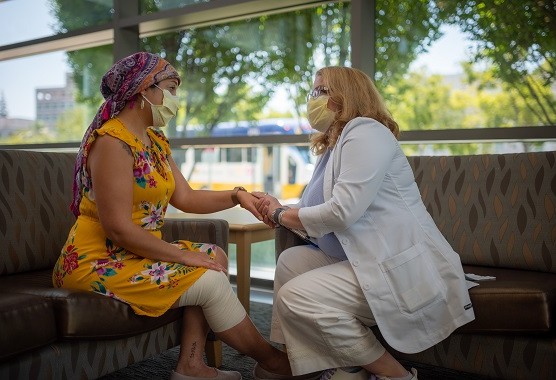
Nationally Recognized Cancer Care
Our skilled clinicians and researchers strive every day to provide excellence in cancer care. UC Davis Comprehensive Cancer Center has multiple national recognitions from the National Cancer Institute, National Comprehensive Cancer Network and U.S. News & World Report.
These national accolades recognize our dedication to providing you with the highest level of care. Our team of cancer care professionals surrounds you with the medical, emotional and social support you need to achieve the best possible result.
On this page
Our Difference
Collaborative Care
Effective cancer care requires a multidisciplinary team of specialists working on your behalf. Our providers work together to develop a personalized care plan for you. Your cancer care team includes experienced physicians, surgeons, nurses, advanced practice providers, pharmacists, research coordinators and other caring staff members.
Innovative Treatments
UC Davis Comprehensive Cancer Center is one of 58 National Cancer Institute-designated comprehensive cancer centers in the U.S. We offer the most advanced treatments available and access to clinical trials. Through leading-edge research, our experts are driving the development of new medications, devices and other therapies.
Support Services
We know the challenges of cancer extend beyond physical health. That’s why we provide a full range of oncology support services for people of all ages. We offer programs and services, including children's programs and support for adolescents and young adults. Services range from social work and support groups to nutrition education and financial navigation.
Request an Appointment
Our cancer specialists provide thorough evaluations and personalized treatment plans. Learn more about how to make an appointment at UC Davis Comprehensive Cancer Center.
Patients
New Patient Referral Office
UC Davis Health Referring Physicians
For providers in UC Davis Medical Group or our Cancer Care Network
Physician Referral Center
External Referring Physicians
For providers who are external clinicians
Referral Office
Our Cancer Specialties
Cancer can grow anywhere in your body, but our wide range of specialists can manage cancer wherever it occurs. Our expert cancer care teams will work with you to create a personalized treatment plan.
Our Cancer Specialties Include:
Gynecologic Oncology
Our gynecologic oncologists treat cancers of the female reproductive system. These include cancers in the uterus, ovaries, cervix and vulva.
Hematology and Medical Oncology
Our skilled medical oncologists and hematologists provide accurate diagnoses of solid organ tumors, blood cancers and blood disorders. They also manage medical treatments like chemotherapy and immunotherapy.
Hereditary Cancer Program
Our licensed and certified genetic providers can help you find out your cancer risk level. Assessments and genetic testing let us give you personalized recommendations to lower your risk of developing cancer.
Pediatric Oncology
Our pediatric oncology specialists treat cancers in children. Your child’s care team members work together to diagnose and treat childhood cancer with compassion and excellence.
Urologic Oncology
Our urologic oncology specialists have expertise in treating cancer of the prostate, penis, testicles, kidney and bladder. They work with other cancer specialists to offer thorough treatment.
Awards and Recognitions
Ranked among the best in 6 specialties
A U.S. News & World Report best hospital in cancer care, cardiology, heart & vascular surgery, geriatrics, neurology & neurosurgery, orthopedics, and pulmonology & lung surgery.
Ranked among the nation’s best children’s hospitals
U.S. News & World Report ranked UC Davis Children’s Hospital among the best in pediatric nephrology, orthopedics*, and neonatology. (*Together with Shriners Children’s Northern California)
Ranked Sacramento’s #1 hospital
Ranked Sacramento’s #1 hospital by U.S. News, and recognized in 23 types of care including acute kidney failure, cancer care, cardiology, heart & vascular surgery, COPD, colon cancer surgery, diabetes, diabetes & endocrinology, ear, nose & throat surgery, gastroenterology & GI surgery, geriatrics, gynecological cancer surgery, heart arrhythmia, heart attack, heart failure, hip fracture, hip replacement, leukemia, lymphoma & myeloma, lung cancer surgery, neurology & neurosurgery, orthopedics, pneumonia, pulmonology & lung surgery and stroke.

The nation’s highest nursing honor
UC Davis Medical Center has received Magnet® recognition, the nation’s highest honor for nursing excellence.
World-class cancer care
One of ~59 U.S. cancer centers designated “comprehensive” by the National Cancer Institute.

A leader in health care equality
For the 13th consecutive year, UC Davis Medical Center has been recognized as an LGBTQ+ Healthcare Equality Leader by the educational arm of America’s largest civil rights organization.
Types of Cancers We Treat
Cancer occurs when the cells in your body grow uncontrollably. It can develop nearly anywhere in your body and spread (metastasize) to other areas.
About 2 in 5, or 40% of people in the U.S. will develop cancer in their lifetime. At UC Davis Health, we provide high-quality, compassionate care to manage cancer.
We Treat These Cancers:
Bone Cancers
Bone cancer can start in the bone or spread there from somewhere else in your body. Bone tumors make up less than 1% of all cancers. This makes them relatively rare.
Brain and Spinal Cord Cancers
These tumors develop in your brain or spinal cord. They can affect how you move, think and sense the world around you. Most brain and spinal cord tumors spread there from another location.
Breast Cancer
For U.S. women, breast cancer is the second-most common cancer type, after skin cancer. One in eight women will develop breast cancer during their life. Screening can detect cancer early when treatment is most effective.
Colon and Rectum Cancers
Colon and rectum cancers (also called colorectal cancer) occur in the large intestine. The large intestine is the last section of your digestive tract.
Digestive System Cancers
The digestive tract spans from the mouth to the anus. Cancer can develop anywhere along this tract. Digestive system cancer types include esophageal, stomach, gallbladder and small intestine.
Endocrine System Cancers
Endocrine tumors grow in the organs that make hormones. These hormones control many bodily functions. The most common type of endocrine cancer is thyroid cancer.
Eye and Vision-Related Cancers
Eye cancer affects children and adults and can develop on the surface of the eye or its inner structures. Cancer of the eye usually spreads there from another site, such as the breast or lung.
Female Reproductive System Cancers
Female reproductive system cancer types include cervical, ovarian, uterine, vaginal and vulvar. Endometrial cancer develops in the lining of the uterus and is the most common female reproductive system cancer.
Head and Neck Cancers
Head and neck cancers can form in the nose, mouth and throat. They can also appear in nearby structures, like the sinuses and salivary glands.
Hematologic Cancers
Most hematologic (blood) cancers begin in the bone marrow, the center of the bones that makes blood cells. Blood cancer types include leukemia, lymphoma and multiple myeloma.
Kidney Cancer
Kidneys filter waste from your blood and balance the amount of fluid in your body. The most common type of kidney cancer is renal cell carcinoma.
Liver Cancer
The liver is a large organ that has many important functions, like the breakdown and storage of nutrients. Liver cancer often spreads there from another location, such as the breast or colon.
Lung Cancer
Lung cancer is one of the most common cancers in the U.S. and the top cause of cancer death. Smoking is a major risk factor, but not all people with lung cancer have smoked.
Pancreatic Cancer
The pancreas makes chemicals that help with digestion and hormones that help control blood sugar levels. Pancreatic cancer is a relatively rare but serious type of cancer.
Pediatric Cancer
The cancers that typically affect children are different from cancers in adults. The most common types of pediatric cancers are leukemia and tumors of the brain and spinal cord.
Prostate Cancer
The prostate gland is part of the male reproductive system that makes some of the fluid in semen. Most prostate cancers grow slowly, but some can spread quickly.
Thoracic Cancer
Thoracic cancers occur in the chest cavity. They include cancers of the lung, esophagus and thymus — a small organ that sits just behind your breastbone (sternum).
State-of-the-Art Cancer Care and Treatments
If you or a loved one has cancer, you want the most advanced care available. UC Davis Comprehensive Cancer Center features nationally recognized experts and leading-edge treatments. Throughout your cancer journey, we work with you to develop a customized treatment plan that meets your unique needs.
Our Cancer Treatment Services:
Surgical Oncology
Our surgical oncologists perform detailed procedures to remove cancerous tumors. They coordinate surgery with other cancer specialists to provide the most effective treatment plan. When possible, we offer robotic surgery. This minimally invasive approach allows the surgeon to reach tight spaces and avoid delicate nerves and muscles.
Radiation Oncology
We offer a wide range of radiation treatments that destroy cancer while minimizing damage to surrounding tissues. We were one of the first centers in Northern California to offer stereotactic body radiation therapy (SBRT). SBRT uses image guidance to deliver high doses of radiation to a precise area.
Medical Oncology
Medical oncology uses medications to treat cancer. Chemotherapy is a widely used cancer medication. Immunotherapy harnesses your immune system to destroy cancer. Targeted therapy focuses on the unique molecular profile of your tumor. You may have access to new medications or combinations of medications through one of our many clinical trials.
Stem Cell Transplant
Stem cells are blood-forming cells found in your bone marrow. Stem cell transplant restores damaged stem cells in people with hematologic cancers. UC Davis Health performed the first bone marrow transplant in the region. We also launched one of the first on-site CAR T-cell manufacturing and therapy programs in the area. CAR T-cell therapy changes your immune cells so they can fight cancer better. Our experienced program provides exceptional care and access to national clinical trials.
Cancer FAQs
The most common cancer treatments include surgery, radiation therapy, immunotherapy and chemotherapy.
Cancer starts when genetic changes in DNA (mutations) disrupt the life cycle of your cells. Cells grow too quickly or don’t die as they should. The build-up of cells interferes with the way your body works.
Cancer screening programs and advances in treatments have dramatically improved cancer survival rates.
Factors that increase your risk for developing cancer include older age, drinking alcohol, chemical exposure, smoking and being overweight. You also have a higher risk if a close relative has had cancer.
“Cancer statistics, 2025,” American Cancer Society, https://acsjournals.onlinelibrary.wiley.com/doi/10.3322/caac.21871
Latest Cancer News