
Cancer
Skin Cancer
UC Davis Health offers state-of-the-art diagnosis and treatment of skin cancer. Our knowledgeable experts help you manage your condition while providing supportive care.
Medically reviewed by Daniel Eisen, M.D. on April 21, 2026.
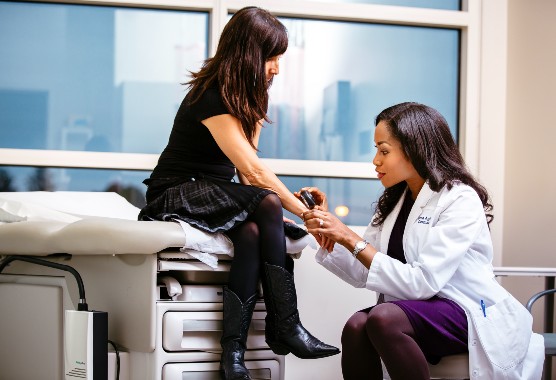
Ready to Diagnose and Treat Skin Cancer
Skin cancer is the most common type of cancer in the U.S. At UC Davis Health, our dermatologists and skin cancer specialists diagnose and treat all types of cutaneous malignancies. We use the most up-to-date therapies while giving you all the support you need.
On this page
Types of Skin Cancers (Cutaneous Malignancies)
Cutaneous malignancies occur when your skin cells grow abnormally.
There are three main types of cutaneous malignancies:
- Basal cell carcinoma: This skin cancer starts in the hair follicles in your skin’s outer layer (epidermis). It’s the most common type of cutaneous malignancy.
- Squamous cell carcinoma: This skin cancer starts in the squamous cells in your epidermis. It’s the second most common type of cutaneous malignancy.
- Melanoma: This skin cancer starts in the pigment that gives your skin color (melanocytes). Melanoma is one of the most serious kind of cutaneous malignancy, as it can easily spread to other parts of your body (metastasis) if not treated early.
Skin Cancer Symptoms
Skin cancer first appears as a change on your skin. Symptoms can vary depending on the type of skin cancer. Noncancerous lesions may also share some of these symptoms.
Common Symptoms
Some common symptoms of cutaneous malignancies include:
- Asymmetric large mole with irregular borders and variable colors
- Black or brown streak beneath a nail
- Mole that changes in appearance or bleeds, or a new mole
- New or changing lesion
- Scaly lesion that is painful or itchy
- Sore that doesn’t heal or comes back
- Sore that looks crusty and may bleed
- Waxy or pearly bump
Skin Cancer Causes and Risk Factors
Cutaneous malignancies can form when your skin is exposed to ultraviolet (UV) rays from sunlight or UV sources such as tanning beds. UV rays damage your skin’s DNA, causing abnormal skin cells. But skin cancer can also develop in areas of your body that haven’t been exposed to UV rays.
Learn about melanomas and ways to protect yourself in the sun
Though anyone can develop skin cancer, certain factors can increase your risk. These risk factors include:
Exposure to UV Rays
Your risk increases if you spend a lot of time in the sun, have a history of sunburns, have used tanning beds or live in a high-altitude or sunny place. Exposure to certain types of UV light therapy for conditions such as psoriasis or eczema may also raise your risk.
Light-Colored Skin
People with lighter natural skin are at higher risk, as well as those who have skin that freckles or burns easily, green or blue eyes and red or blond hair.
Moles
Having a high number of moles, large moles or moles with an irregular shape (atypical moles) increases your risk.
Precancerous Skin Lesions
Having rough, scaly, pink skin growths (actinic keratoses) raises cutaneous malignancy risk.
Family History
You may have higher risk if your parents or siblings have had skin cancer, particularly melanoma.
Personal History
Having skin cancer once increases your chances of getting it again.
Radiation Exposure
Having radiation treatment increases your risk of developing skin cancer in that area.
Weakened Immune System
People with weaker immune systems, such as those who’ve had organ transplants or have HIV, have higher skin cancer risk.
Exposure to Chemicals
People exposed to certain chemicals, such as arsenic, coal tar, paraffin and some types of petroleum, may be at increased risk.
Age
Basal and squamous cell carcinoma risk increases as you get older.
Skin Cancer Diagnosis
Our knowledgeable physicians at UC Davis Health specialize in diagnosing skin cancer. We first ask you whether you’ve noticed any new lesions or changes to your skin, such as freckles, moles or skin growths. Then we perform a thorough skin examination to check for signs of cancer.
Many symptoms for abnormal tissue can also be signs of cancer. It’s important to get a professional evaluation to distinguish between the two.
If your physician suspects a cutaneous malignancy, we remove a sample of skin for testing (biopsy). We examine the sample under a microscope to check for cancer. If we do find skin cancer, we determine what type it is to figure out how to best treat it.
Skin Cancer Treatments at UC Davis Health
At UC Davis Health we specialize in offering personalized care for people with all types of skin cancer. Your treatment plan will vary based on the size, stage and location of the cancer. Our compassionate team of experts ensure you always receive the highest level of care.
Excisional Surgery
We cut out the tumor and a small surrounding area of healthy skin to ensure the cancer has been removed.
Mohs Surgery
During Mohs surgery, specialists cut out the cancer and check it with a microscope while you wait to ensure the entire cancer is removed. It has the highest cure rate but is mostly used for aggressive skin cancers and those on the head and neck.
Curettage and Electrodesiccation
We scrape off cancer cells using a tool with a sharp edge (curette). Then we use an electric needle to destroy any remaining cancer cells.
Topical Chemotherapy
Chemotherapy (chemo) uses drugs to kill skin cancer cells. We apply topical chemo directly to the skin.
Cryotherapy
We freeze the skin cancer with liquid nitrogen to destroy any abnormal tissue.
Immunotherapy
We use medications that help your immune system fight skin cancer cells. We commonly give immunotherapy through an IV.
Targeted Therapy
We inject drugs that focus on specific skin cancer cells, which cause those cells to die.
Chemotherapy
You can take chemo as a pill or as an injection through an intravenous (IV) infusion. You may also receive chemo after surgery.
Radiation Therapy
High-energy X-rays can destroy skin cancer cells while avoiding the surrounding healthy tissue (radiation oncology).
Photodynamic Therapy (PDT)
Photodynamic therapy is a light-based treatment performed in clinic where a photosensitizing agent is applied and soaks into the affected tissue. The treated area is then exposed to light which stimulates the topical agent to destroy targeted areas. This safely and effectively shrinks or eliminates growths. PDT is primarily used for pre-cancerous growths (actinic keratoses) and non-melanoma skin cancer (basal cell carcinoma and squamous cell carcinoma).
Laser Resurfacing and Chemical Peels
Laser resurfacing and chemical peels (alpha or beta hydroxy acids) remove layers of skin below the origin of the cancerous or pre-cancerous cells. After the peel, the skin heals quickly to a healthier state. Most common side effects are redness, mild swelling and peeling of the skin during the healing. The most common areas for this treatment are the face, scalp, and lips.
Preventing Skin Cancer
You can lower your risk for skin cancer if you:
- Avoid tanning beds
- Limit sun exposure in the middle of the day
- Seek shade when outdoors
- Wear protective clothing, hats and sunglasses
- Use broad-spectrum sunscreen with an SPF of at least 30
- Perform regular skin exams to find suspicious spots early, particularly if you have risk factors
Skin cancer is the
#1 Most common cancer in the U.S.
Every year, more than
6MAdults get treated for basal and squamous cell carcinomas
Source: Centers for Disease Control and Prevention (CDC): Melanoma of the Skin Statistics
Request an Appointment
Our cancer specialists provide thorough evaluations and personalized treatment plans. Learn more about how to make an appointment at UC Davis Comprehensive Cancer Center.
Patients
New Patient Referral Office
UC Davis Health Referring Physicians
For providers in UC Davis Medical Group or our Cancer Care Network
Physician Referral Center
External Referring Physicians
For providers who are external clinicians
Referral Office
Awards and Recognitions
Ranked among the best in 6 specialties
A U.S. News & World Report best hospital in cancer care, cardiology, heart & vascular surgery, geriatrics, neurology & neurosurgery, orthopedics, and pulmonology & lung surgery.
Ranked among the nation’s best children’s hospitals
U.S. News & World Report ranked UC Davis Children’s Hospital among the best in pediatric nephrology, orthopedics*, and neonatology. (*Together with Shriners Children’s Northern California)
Ranked Sacramento’s #1 hospital
Ranked Sacramento’s #1 hospital by U.S. News, and recognized in 23 types of care including acute kidney failure, cancer care, cardiology, heart & vascular surgery, COPD, colon cancer surgery, diabetes, diabetes & endocrinology, ear, nose & throat surgery, gastroenterology & GI surgery, geriatrics, gynecological cancer surgery, heart arrhythmia, heart attack, heart failure, hip fracture, hip replacement, leukemia, lymphoma & myeloma, lung cancer surgery, neurology & neurosurgery, orthopedics, pneumonia, pulmonology & lung surgery and stroke.
The nation’s highest nursing honor
UC Davis Medical Center has received Magnet® recognition, the nation’s highest honor for nursing excellence.
World-class cancer care
One of ~59 U.S. cancer centers designated “comprehensive” by the National Cancer Institute.

A leader in health care equality
For the 13th consecutive year, UC Davis Medical Center has been recognized as an LGBTQ+ Healthcare Equality Leader by the educational arm of America’s largest civil rights organization.
Latest Cancer News
