Hernia Surgery
Hernias can be stressful, but our experienced surgical team is here to help you heal as quickly as possible.
Medically reviewed by Diana Farmer, M.D. on Sep. 03, 2026.

Expert Hernia Surgery
Surgery is the treatment of choice for most hernias because they usually don’t go away on their own. The type of hernia surgery you need depends on many factors, including the hernia’s size and location and your medical history.
While some hernias require traditional (open) surgery, we provide minimally invasive and robotic methods whenever possible. Our compassionate team of experts focuses on your comfort and well-being, helping you get back to your everyday activities as quickly as possible.
On this page
Types of Hernia Surgery
A hernia happens when an organ or tissue bulges out of its normal place. Usually, this happens if there is a weak spot in your abdomen or groin that lets the organ bulge through.
The goal of hernia repair surgery is to put the organ or tissue back in its place and to reinforce the weakened area. Types of hernia surgery include:
Traditional (open) hernia repair
During a traditional hernia repair, your surgeon makes a single incision, usually several inches long. They push the bulging tissue or organ back into place and repair the weakened area with stitches or surgical mesh. Because your incision is larger, recovery from this type of hernia repair usually takes longer than other methods.
Laparoscopic hernia repair
This minimally invasive hernia repair requires three or four incisions that are about an inch long. Your surgeon uses slim instruments and a tiny camera to see inside your body and repair the hernia without a larger, open procedure. Laparoscopic hernia repair offers a faster recovery time and less pain than open surgery.
Robotic hernia repair
During a robotic hernia repair, your surgeon uses slim, robotic instruments and a high-definition, 3-D camera to see and repair the hernia. You may have three or four “keyhole” incisions, which are much smaller than traditional surgery incisions. The instruments mimic your surgeon’s hand movements, offering enhanced precision and steadiness for precise results. Robotic-assisted surgery offers a faster recovery and less risk of complications than other hernia repair methods.
Request an Appointment
As Sacramento's No. 1 hospital, you'll benefit from unique advantages in primary care and specialty care. This includes prevention, diagnosis and treatment options from experts in 150 specialties.
Referring Physicians
To refer a patient, submit an electronic referral form or call.
Patients
Call to make an appointment.
Consumer Resource Center
What to Expect With Hernia Repair
We perform a high volume of hernia repairs and focus on your unique needs at every step. We understand that any kind of surgery can be stressful, so knowing what to expect can ease any anxiety. In general, your hernia repair surgery will involve:
-

Before Your Surgery
In most cases, you meet with your surgical team several days before your surgery. Your team will tell you what type of repair you will have and how to prepare. We answer your questions and provide clear instructions on what to do before you come to the hospital.
-
Day of Your Surgery
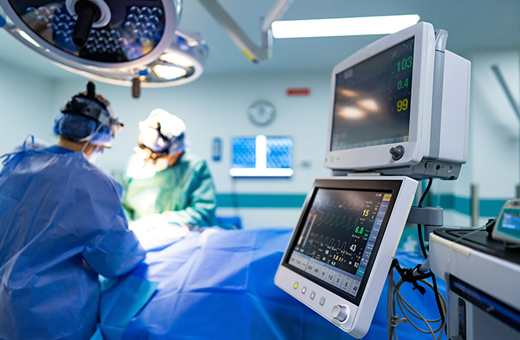
When you arrive at the hospital or surgery center, we greet you and take you to a private prep area. We discuss your surgery and place an intravenous (IV) line in your arm, which provides your anesthesia and other medications.
-

After Your Surgery
After your hernia repair is complete, your team cares for you as your anesthesia wears off. Depending on your surgery, you may go home the same day or spend the night in the hospital. We keep you informed of your progress at every step.
Home Care and Recovery
Home care is an important part of a successful hernia repair. Our team talks with you about how to heal as quickly as possible, which may involve:
Pain Control
Taking your medications as prescribed will minimize any discomfort. You may need to avoid driving or operating machinery while you’re taking your medications.
Rest
Avoid lifting heavy objects or straining your abdominal muscles until your surgeon says it’s safe. Go for short, easy walks and get adequate sleep at night. Take naps when needed.
Incision Care
Keeping your incisions clean and dry will aid in healing. Our team will explain how to safely bathe and dress the incisions.
Awards and Recognitions

Ranked among the best in 6 specialties
A U.S. News & World Report best hospital in cancer care, cardiology, heart & vascular surgery, geriatrics, neurology & neurosurgery, orthopedics, and pulmonology & lung surgery.

Ranked among the nation’s best children’s hospitals
U.S. News & World Report ranked UC Davis Children’s Hospital among the best in pediatric nephrology, orthopedics*, and neonatology. (*Together with Shriners Children’s Northern California)

Ranked Sacramento’s #1 hospital
Ranked Sacramento’s #1 hospital by U.S. News, and recognized in 23 types of care including acute kidney failure, cancer care, cardiology, heart & vascular surgery, COPD, colon cancer surgery, diabetes, diabetes & endocrinology, ear, nose & throat surgery, gastroenterology & GI surgery, geriatrics, gynecological cancer surgery, heart arrhythmia, heart attack, heart failure, hip fracture, hip replacement, leukemia, lymphoma & myeloma, lung cancer surgery, neurology & neurosurgery, orthopedics, pneumonia, pulmonology & lung surgery and stroke.
The nation’s highest nursing honor
UC Davis Medical Center has received Magnet® recognition, the nation’s highest honor for nursing excellence.

World-class cancer care
One of ~59 U.S. cancer centers designated “comprehensive” by the National Cancer Institute.

A leader in health care equality
For the 13th consecutive year, UC Davis Medical Center has been recognized as an LGBTQ+ Healthcare Equality Leader by the educational arm of America’s largest civil rights organization.
Latest Surgery News