Thoracic Surgery
We offer the most advanced surgical procedures for all types of conditions in the chest, including robotics. We’re here for you with human-centered, state-of-the-art care, including access to clinical trials.
Medically reviewed by David Tom Cooke, M.D. on Sep. 21, 2026.
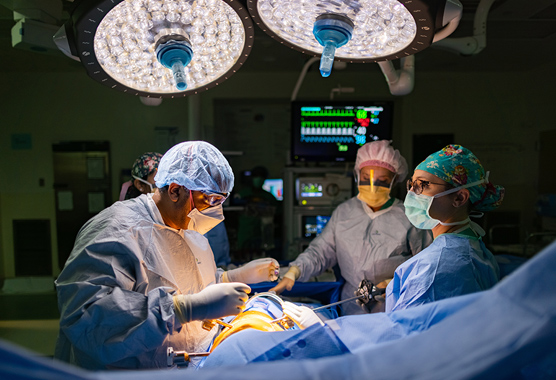
Minimally Invasive and Robotic Thoracic Surgeries Techniques
We’re here to guide you through the process with expertise and support if you need surgery for a chest condition. Our thoracic surgeons treat conditions affecting the lungs, esophagus, airway, diaphragm and other parts of your chest.
We use the latest surgical techniques, such as minimally invasive and robotic surgery. From diagnosis through recovery, we focus on your comfort, safety and long-term health.
On this page
Conditions We Treat with Thoracic Surgery
We use minimally invasive surgical techniques for most procedures. Robotic-assisted surgery and advanced laparoscopy can help you recover faster with less pain and a faster return to activities. We treat:
Airways
We treat airway conditions like tumors and narrowing with advanced surgeries that help preserve healthy lung tissue. Our team also offers bronchoscopy and stent placement, using robotics with tiny high-definition 3D cameras to safely open blocked airways.
Chest Wall
If you have a tumor or benign abnormalities of your chest wall, such as pectus excavatum or carnitum and chronic rib fractures, we offer surgery focused on your comfort, function and appearance. We safely remove tumors and restore normal anatomy using advanced techniques and help you heal and return to daily life.
Esophagus
We treat esophageal cancer and non-cancerous esophageal conditions, such as complex achalasia and hiatal hernia, with advanced surgical options tailored to your needs. We use minimally invasive techniques, including robotics, and aim to restore your ability to swallow and eat comfortably.
Hyperhidrosis
We offer minimally invasive surgery to treat hyperhidrosis, a condition that causes excessive sweating in the hands, underarms or feet. We use a camera to guide tiny incisions that safely interrupt signals that cause sweating.
Lung
We treat a wide range of lung conditions, from lung cancer and infections to collapsed lungs and fluid buildup. Whenever possible, we use minimally invasive techniques like robotics to ease recovery and help preserve healthy lung tissue.
Thymus
We perform thymus surgery to help treat myasthenia gravis or remove tumors called thymomas. We use minimally invasive techniques, such as robotics, when possible, to reduce pain and support a faster, smoother recovery.
Request an Appointment
As Sacramento's No. 1 hospital, you'll benefit from unique advantages in primary care and specialty care. This includes prevention, diagnosis and treatment options from experts in 150 specialties.
Referring Physicians
To refer a patient, submit an electronic referral form or call.
Patients
Call to make an appointment.
Consumer Resource Center
Preparing for Thoracic Surgery
We understand that facing surgery can be stressful, and we’re committed to helping you feel informed and supported. Your care team will guide you through each step, answer your questions and make sure you feel confident going into surgery.
-

Before Surgery
Before surgery, you'll review your medical history, imaging tests and treatment plan with your surgeon and care team. We’ll explain any pre-op instructions, like fasting or medication changes, and answer your questions to help you feel fully prepared.
-

During Surgery
During surgery, your surgical team will focus on your safety and comfort, giving you the best possible care. You'll be under anesthesia, and your surgical team will monitor you closely throughout the surgery.
-

After Surgery
After surgery, you’ll wake up in a recovery room with your care team by your side. We’ll manage your pain, support your breathing and keep you comfortable as you begin to recover.
Home Care
Going home after surgery is an important step in your recovery, and we’re here to help you through it. Your team will give you clear instructions for recovering at home, and we’re always available for questions.
Pain Management
Take pain medication as directed by your team. Managing pain helps your recovery and enables you to move, breathe and sleep better.
Activity and Breathing Exercises
Gentle movement and breathing exercises help prevent complications such as blood clots and pneumonia. Your team will let you know what activities are safe.
Post-Op Instructions
Follow all post-op instructions to help your body heal and prevent complications. Take medications and care for your incision as directed by your team.
Awards and Recognitions
Ranked among the best in 6 specialties
A U.S. News & World Report best hospital in cancer care, cardiology, heart & vascular surgery, geriatrics, neurology & neurosurgery, orthopedics, and pulmonology & lung surgery.
Ranked among the nation’s best children’s hospitals
U.S. News & World Report ranked UC Davis Children’s Hospital among the best in pediatric nephrology, orthopedics*, and neonatology. (*Together with Shriners Children’s Northern California)
Ranked Sacramento’s #1 hospital
Ranked Sacramento’s #1 hospital by U.S. News, and recognized in 23 types of care including acute kidney failure, cancer care, cardiology, heart & vascular surgery, COPD, colon cancer surgery, diabetes, diabetes & endocrinology, ear, nose & throat surgery, gastroenterology & GI surgery, geriatrics, gynecological cancer surgery, heart arrhythmia, heart attack, heart failure, hip fracture, hip replacement, leukemia, lymphoma & myeloma, lung cancer surgery, neurology & neurosurgery, orthopedics, pneumonia, pulmonology & lung surgery and stroke.
The nation’s highest nursing honor
UC Davis Medical Center has received Magnet® recognition, the nation’s highest honor for nursing excellence.
World-class cancer care
One of ~59 U.S. cancer centers designated “comprehensive” by the National Cancer Institute.

A leader in health care equality
For the 13th consecutive year, UC Davis Medical Center has been recognized as an LGBTQ+ Healthcare Equality Leader by the educational arm of America’s largest civil rights organization.
Latest Surgery News