Pediatrics
Anorectal Malformations
We offer reconstructive surgeries and comprehensive care for children with anus and rectum conditions that affect their ability to pass stool.
Medically reviewed by Payam Saadai, M.D. on Jan. 11, 2026.
Compassion and Expertise for Your Child
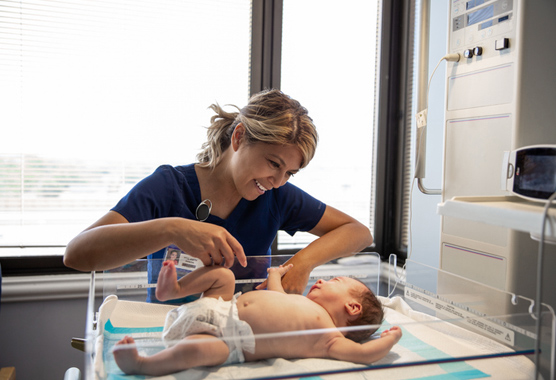
Babies with anorectal malformations usually need surgery to help them poop normally. At UC Davis Children’s Hospital, our pediatric colorectal surgeons offer comprehensive, compassionate care for children with anorectal malformations. Our pediatric colorectal surgeons use advanced reconstructive surgeries to allow your child to pass stool normally.
On this page
What Is an Anorectal Malformation?
An anorectal malformation happens when the anus, rectum or both don’t form properly while a baby is in the womb. The rectum (the last part of the large intestine) carries poop into the anus, where it leaves your baby’s body.
With an anorectal malformation, the anus may be:
- Missing (imperforate anus)
- Too narrow
- Normal, but the rectum is blocked, too narrow or in the wrong location
A baby may also have an abnormal connection (fistula) between their rectum and:
- Perineum (skin between the anus and genitals)
- Urethra (tube that carries pee out of the body)
- Bladder (organ that holds urine)
In some female children, the anus, vagina, and urethra share the same opening. These are called cloacal malformations and are a complex type of anorectal malformation.
Symptoms of Anorectal Malformation
Signs of an anorectal malformation can be different, depending on the type and how severe it is.
Common Symptoms
Anorectal malformations cause symptoms soon after a baby’s birth. Symptoms include:
- Anus that’s missing or not in the usual location
- Difficulty pooping or no bowel movement within 24 to 48 hours after birth
- Narrow anus
- Stool that leaks from the urethra, perineum or genitals
Emergency Symptoms
Anorectal malformations can cause a potentially life-threatening blockage in the intestine. You should get immediate medical care for your child if they show these signs of a bowel blockage:
- Abdominal cramps, swelling or bloating
- Diarrhea
- Fever
- Inability to poop, pass gas or pee
- Nausea and vomiting
Causes and Risk Factors of Anorectal Malformations
Experts aren’t sure what causes anorectal malformations. An anorectal malformation is a congenital abnormality, meaning it is present at birth. This means that something happens while a baby is in the womb that affects how the anus or rectum forms. A gene change (mutation) may play a role in some cases.
Certain factors may increase the risk of an anorectal malformation.
Down Syndrome
A child with Down syndrome (trisomy 21) is more at risk.
Family History
A child is more likely to have an anorectal malformation if a sibling has the condition.
Inherited Conditions
Anorectal malformations are common in children who have Townes-Brocks syndrome. An inherited gene mutation causes this condition.
VACTERL Association
VACTERL association (also known as VATER syndrome) is a congenital abnormality that causes anorectal malformations. It also affects a child’s heart, spine, limbs, urinary system, food pipe and windpipe.
Anorectal Malformation Diagnosis and Testing
Doctors can find anorectal malformations during a physical exam that babies have soon after birth. Your child’s doctor uses diagnostic and medical imaging tests to better examine the rectum and anus.
Contrast studies
Contrast studies produce images of your baby’s organs, soft tissues, spine and urinary tract.
Ultrasound
An ultrasound can detect problems with your baby’s organs, urinary system and spine.
X-Rays
An X-ray shows the position of the rectum, as well as fistulas.
Anorectal Malformation Treatments
A baby with an anorectal malformation usually needs surgery. The type, timing and number of surgeries your child needs depend on their unique diagnosis. Our pediatric colorectal surgeons are experts at correcting anorectal malformations. Your baby’s care team will talk to you and your family about treatment options, listen to your concerns and answer your questions.
Anal Dilation
A baby with an anus that is too narrow, but in the correct location, may not need surgery. Our team teaches you how to use an anal dilator to stretch the anal muscles. Anal dilation may also take place after surgery to treat an anal blockage or create a new anus.
Colostomy
Our surgeon makes an opening (stoma) in your baby’s belly and reroutes the large intestine to it. A colostomy allows poop to leave your baby’s body through this new opening into a bag. Another surgery reverses the colostomy after your child has surgery to correct the anorectal malformation.
Posterior Sagittal Anorectoplasty (PSARP)
During PSARP, a surgeon creates a new anus in the perineum or moves the anus to the anal sphincter muscles that control bowel movements. If needed, the surgeon removes tissue blocking the anus or rectum, and moves the rectum into the correct location. When possible, this procedure takes place laparoscopically. Our surgeons insert a scope device and tiny instruments through several small incisions. This minimally invasive approach helps your child recover faster with less pain and scarring.
Who does it affect?
1 in 5KBabies have anorectal malformations
Source: National Library of Medicine: Anorectal Malformations
Request an Appointment
As Sacramento's No. 1 hospital, you'll benefit from unique advantages in primary care and specialty care. This includes prevention, diagnosis and treatment options from experts in 150 specialties.
Referring Physicians
To refer a patient, submit an electronic referral form or call.
Patients
Call to make an appointment.
Consumer Resource Center
Awards and Recognitions
Ranked among the nation’s best hospitals
A U.S. News & World Report best hospital in cardiology, heart & vascular surgery, diabetes & endocrinology, ENT, geriatrics, neurology & neurosurgery, and pulmonology & lung surgery.
Ranked among the nation’s best children’s hospitals
U.S. News & World Report ranked UC Davis Children’s Hospital among the best in pediatric nephrology, orthopedics*, and pulmonology & lung surgery. (*Together with Shriners Children’s Northern California)

Ranked Sacramento’s #1 hospital
Ranked Sacramento’s #1 hospital by U.S. News, and high-performing in aortic valve surgery, back surgery (spinal fusion), COPD, colon cancer surgery, diabetes, gynecological cancer surgery, heart arrhythmia, heart failure, kidney failure, leukemia, lymphoma & myeloma, lung cancer surgery, pacemaker implantation, pneumonia, prostate cancer surgery, stroke, TAVR, cancer, orthopedics, gastroenterology & GI surgery, and urology.
The nation’s highest nursing honor
UC Davis Medical Center has received Magnet® recognition, the nation’s highest honor for nursing excellence.
World-class cancer care
One of ~59 U.S. cancer centers designated “comprehensive” by the National Cancer Institute.

A leader in health care equality
For the 13th consecutive year, UC Davis Medical Center has been recognized as an LGBTQ+ Healthcare Equality Leader by the educational arm of America’s largest civil rights organization.
Latest Children's Health News
