Dermatology
Alopecia (Hair Loss)
Alopecia can significantly affect your physical and emotional health. Our specialists provide compassionate care for all types of hair loss so you can feel like yourself again.
Medically reviewed by Oma Agbai on June 24, 2026.
What Is Alopecia?
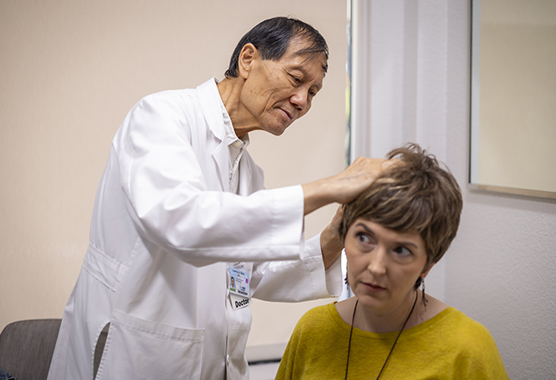
Alopecia is the medical term for hair loss from the scalp or other locations on your body. It can happen suddenly or gradually, affecting small patches or large areas.
Our experts understand that hair loss can affect your physical and emotional well-being. We take the time to listen to your concerns and offer personalized treatment to focus on the cause of hair loss.
On this page
Types of Alopecia
There are several types of alopecia. Each has different causes:
Alopecia Areata
Alopecia areata is an autoimmune condition and happens when your immune system mistakenly attacks hair follicles. It can cause patches of baldness, brittle nails and loss of eyebrows or eyelashes.
Androgenic Alopecia
Also called male or female pattern hair loss, this type occurs when androgen hormones shrink your hair follicles. It often causes hair thinning at the top of the head or the temples.
Central Centrifugal Cicatricial Alopecia
This type of alopecia causes inflammation and scarring of the hair follicles and may be caused by a genetic predisposition. The hair loss usually begins in the center of your scalp.
Frontal Fibrosing Alopecia
This type of alopecia leaves scarring and it may be an autoimmune condition. This condition often causes hair loss at the front or back of your hairline or loss of the outer parts of your eyebrows.
Lichen Planopilaris
Experts believe this type of hair loss is an autoimmune condition. It may cause patches on your scalp that are bald, red or scaly and it can cause scarring.
Telogen Effluvium
This temporary hair loss occurs two to three months after physical or emotional stress or hormonal changes. You may notice larger amounts of hair coming out when you wash or brush your hair.
Traction Alopecia
Traction alopecia can affect people who frequently wear tight hairstyles, such as braids, cornrows and locs. The hair loss usually begins at the front of your hairline but can occur wherever the hairstyle is pulling or rubbing your hair follicles.
Symptoms of Alopecia
It’s normal to lose some hair each day, so it can be hard to spot symptoms of alopecia at first. Knowing the signs of alopecia can help you get medical treatment sooner.
Scalp Symptoms
Alopecia can cause discomfort or inflammation on your scalp before visible hair loss begins. Some people notice:
- Burning
- Flaking/scaling
- Itching
- Redness
- Pain/Tenderness
- Sensitivity
Hair Loss Patterns
Alopecia can cause different patterns of hair loss, depending on what type it is. Hair loss patterns include:
- Circular or oval bald patches on the scalp or beard
- Complete loss of body hair or scalp
- Gradual thinning of hair on head
- Loss or thinning of eyelashes or eyebrows
- Receding hairline at the temples
- Sudden shedding or losing handfuls of hair
- Strip of baldness on front or back of the head
- Widening part with scalp showing through
Alopecia Diagnosis and Testing
Your provider will examine hair loss patterns and discuss your concerns to diagnose alopecia. You may need additional tests to identify the specific type of alopecia and check for any scalp scarring. An early diagnosis is important, as prompt treatment helps prevent long-term changes to your hair follicles.
Physical Examination
Your provider will ask you about your symptoms and health history. They may also ask you about conditions that run in your family.
Laboratory Tests
Blood tests can identify or rule out some conditions that can cause hair loss, such as nutrient deficiencies, hormonal issues and thyroid disease.
Trichoscopy
This test uses a powerful magnifying lens to examine your hair follicles. It can also distinguish between scarring or non-scarring types of alopecia.
Scalp Biopsy
We may take a small sample of skin to examine under a microscope. The UC Davis Health Dermatopathology Service specializes in providing highly accurate, timely results.
Alopecia Treatments
Our board-certified dermatologists provide thorough evaluations and develop personalized treatment plans tailored to your needs, considering both medical therapies and procedural hair restoration. We are the only hair loss disorders clinic in Sacramento offering this level of comprehensive care.
Your treatment plan depends on the type of alopecia you have and its cause. We create your personalized plan based on your diagnosis and goals, which may include:
Immunotherapy (i.e. anthralin, squaric acid)
These topical alopecia areata treatments can encourage hair regrowth disrupting the autoimmune response to your hair follicles. It can promote hair growth in people with alopecia areata.
Anti-Androgen Medications
Drugs like finasteride, dutasteride and spironolactone help block the androgen hormones that can trigger hair loss. These medications are typically pills you take daily.
Corticosteroids
Corticosteroids fight inflammation and reduce immune system activity. These medications can treat alopecia areata and scarring hair loss and may be topical (applied on the skin) or injections (shots).
Immunosuppressants
If alopecia areata or scarring alopecia does not respond to topical treatments, your doctor may recommend immunosuppressants such as janus kinase (JAK) inhibitors. These medications calm an overactive immune system, stopping the attack on hair follicles.
Minoxidil
This medication stimulates hair follicles and extends your hair’s growth phase. A topical version is available over the counter, or your doctor may prescribe an oral (pill) version.
Nutritional Supplements
If your blood tests show a nutritional deficiency, our team may prescribe supplements to correct it. We may combine supplements with other treatments, such as Minoxidil, for optimal results.
Preventing Hair Loss
It is not always possible to prevent alopecia. However, these steps can help maximize your hair and scalp health.
Avoid Harsh Hair Treatments
Chemical relaxers, perms and hot oil treatments can damage the hair shaft. If you get these treatments, give your hair breaks from them when you can.
Choose Looser Hairstyles
Limit tight hairstyles that pull on roots and wear your hair down when possible. Use a satin or silk pillowcase or sleep cap to protect your scalp while sleeping.
Eat a Balanced Diet
Good nutrition helps nourish your hair follicles. Focus on eating a variety of fruits, vegetables, whole grains and lean protein.
Follow Gentle Hair Care Habits
Wash with mild shampoo and avoid high heat styling. Gently wrap or pat hair and do not rub with a towel.
Alopecia areata affects
7MPeople worldwide.
Androgenic alopecia affects
80%Of U.S. males.
Source: National Alopecia Areata Foundation: What Is Alopecia Areata?
PLoS One: Epidemiological Landscape of Androgenetic Alopecia in the US: An All of Us Cross-Sectional Study
Request an Appointment
As Sacramento's No. 1 hospital, you'll benefit from unique advantages in primary care and specialty care. This includes prevention, diagnosis and treatment options from experts in 150 specialties.
Referring Physicians
To refer a patient, submit an electronic referral form or call.
Patients
Call to make an appointment.
Consumer Resource Center
Awards and Recognitions

Ranked among the best in 6 specialties
A U.S. News & World Report best hospital in cancer care, cardiology, heart & vascular surgery, geriatrics, neurology & neurosurgery, orthopedics, and pulmonology & lung surgery.

Ranked among the nation’s best children’s hospitals
U.S. News & World Report ranked UC Davis Children’s Hospital among the best in pediatric nephrology, orthopedics*, and neonatology. (*Together with Shriners Children’s Northern California)

Ranked Sacramento’s #1 hospital
Ranked Sacramento’s #1 hospital by U.S. News, and recognized in 23 types of care including acute kidney failure, cancer care, cardiology, heart & vascular surgery, COPD, colon cancer surgery, diabetes, diabetes & endocrinology, ear, nose & throat surgery, gastroenterology & GI surgery, geriatrics, gynecological cancer surgery, heart arrhythmia, heart attack, heart failure, hip fracture, hip replacement, leukemia, lymphoma & myeloma, lung cancer surgery, neurology & neurosurgery, orthopedics, pneumonia, pulmonology & lung surgery and stroke.
The nation’s highest nursing honor
UC Davis Medical Center has received Magnet® recognition, the nation’s highest honor for nursing excellence.
World-class cancer care
One of ~59 U.S. cancer centers designated “comprehensive” by the National Cancer Institute.

A leader in health care equality
For the 13th consecutive year, UC Davis Medical Center has been recognized as an LGBTQ+ Healthcare Equality Leader by the educational arm of America’s largest civil rights organization.
Latest Dermatology News