Dermatology
Vitiligo
We are one of the few vitiligo clinics in the U.S dedicated to delivering expert diagnosis, personalized treatment, phototherapy, surgical care and access to clinical trials.
Medically reviewed by Victor Huang on June 12, 2026.
What Is Vitiligo?
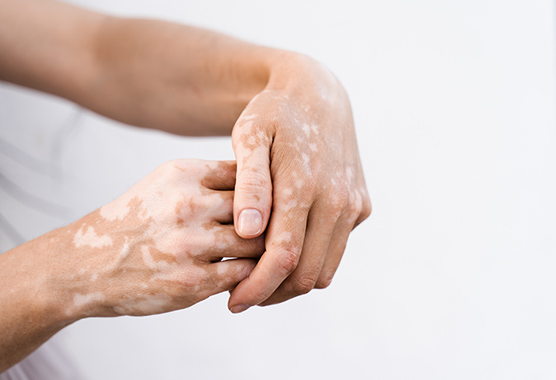
Vitiligo is a chronic skin condition in which patches of skin lose their pigmentation (color). This occurs when melanocytes, the cells that make your skin’s pigment, stop working due to autoimmune reactions.
The UC Davis Health Vitiligo Clinic provides specialized, personalized care for individuals living with vitiligo. Our team develops tailored treatment plans that may include medical therapies, phototherapy and surgical options based on each patient's goals and disease characteristics. As an active center for clinical research, we also offer access to innovative clinical trials and emerging therapies.
On this page
Symptoms of Vitiligo
Everyone’s vitiligo story is unique, and your symptoms may be different from someone else’s.
Skin Symptoms
Vitiligo can cause areas of skin to lose their pigment (color). Some patches are small and stay the same size for years, while others may get larger or spread. Vitiligo skin patches look different on everyone, and may appear:
- On any part of the body, including the face, arms, legs and hands
- Round, oval or linear with obvious borders
- Symmetrical (both sides of your body)
- White or lighter than your natural skin
Non-Skin Symptoms
Vitiligo can affect more than your skin. Some people with this condition may experience:
- Emotional stress
- Hearing loss
- White or gray patches of hair
- A higher susceptibility to other autoimmune conditions
Vitiligo Causes and Risk Factors
Vitiligo is an autoimmune disease where your immune system mistakenly attacks pigment-making cells in your skin. Certain things increase your risk of developing vitiligo or making symptoms worse, including:
Autoimmune Diseases
You have a higher risk of developing vitiligo if you have other autoimmune conditions, such as Addison’s disease, psoriasis, lupus or rheumatoid arthritis.
Chemicals
Certain chemicals used in factories and skin-lightening products can cause a loss of pigment in your skin.
Family History
You have a higher risk of having vitiligo if you have biological relatives with the condition.
Skin Injury
Cuts, scrapes, burns or sunburn can sometimes trigger patches of vitiligo.
Vitiligo Diagnosis
Health care providers do not fully understand what causes all autoimmune and connective tissue disorders. Some likely causes include:
Physical Exam
Your doctor will look for certain features that indicate vitiligo, such as the appearance of the patches. They may also ask you about other health conditions you have, your family history and when the patches appeared.
Wood’s Light Exam
This painless exam involves using a special light that can distinguish vitiligo from other skin conditions. It can also reveal patches that are not yet visible in normal light.
Biopsy
Your doctor may take a small sample of your skin and examine it under a microscope if other tests do not provide a clear diagnosis.
Blood Tests
Your provider may order blood tests to check for other autoimmune conditions that can occur with vitiligo.
Vitiligo Treatments
Our Vitiligo Clinic is one of only a few nationwide exclusively focused on vitiligo. Our vitiligo experts are board-certified dermatologists with advanced training and experience treating vitiligo.
Vitiligo treatment can slow or prevent the progression of patches and depigmented skin already affected. Our specialists consider your health needs and goals before creating a personalized treatment plan, which may include:
Medications
Topical (applied to the skin) medications can restore pigment in vitiligo. Systemic (internal) medications, such as pills, can slow the progression of vitiligo that is spreading rapidly.
Excimer Laser Therapy
The excimer laser delivers painless excimer light directly to vitiligo patches to restore color. This approach, which is not widely available, targets only the patches, leaving healthy skin unexposed to UV light. Our specialists have extensive experience using this equipment to achieve the best possible results.
Phototherapy (Light Therapy)
During phototherapy, you sit in a booth that emits UVB light, which signals your skin to produce pigment. This treatment is particularly effective for people with widespread vitiligo affecting large areas of the body. At UC Davis Health, we use state-of-the-art phototherapy equipment. Our dermatologists have specialized training in using light therapy for vitiligo.
Miniature Punch Grafting (MPG)
We may recommend miniature punch grafting if vitiligo does not respond to medications or light therapy. Your dermatologist uses a small tool to remove tiny pieces of healthy tissue from another part of your body. Then, they carefully transplant the tissue onto the vitiligo patches. Over time, the pigmented cells spread and cover the area.
Depigmentation
Depigmentation involves applying a special cream that removes pigment from your skin. Over several months, the skin on the rest of your body begins to match the vitiligo patches. This change in your skin color is permanent, so our specialists carefully discuss whether this treatment is right for you.
Preventing Vitiligo
You cannot prevent vitiligo, and if you have this condition, you didn’t do anything “wrong.” You can help keep your skin healthy if you:
Avoid Sun Exposure
UV rays darken your pigmented skin and make vitiligo patches more obvious. Vitiligo patches are also more susceptible to sun damage and sunburn which can cause the spots to spread.
Protect From Injuries
You can’t avoid every accident or injury to your skin. But you can help prevent new patches from developing if you wear protective gloves when working with your hands. Also take extra care when cooking to avoid burns.
About
70MPeople worldwide have vitiligo.
Source: Vitiligo Foundation: Vitiligo Facts
Request an Appointment
As Sacramento's No. 1 hospital, you'll benefit from unique advantages in primary care and specialty care. This includes prevention, diagnosis and treatment options from experts in 150 specialties.
Referring Physicians
To refer a patient, submit an electronic referral form or call.
Patients
Call to make an appointment.
Consumer Resource Center
Awards and Recognitions

Ranked among the best in 6 specialties
A U.S. News & World Report best hospital in cancer care, cardiology, heart & vascular surgery, geriatrics, neurology & neurosurgery, orthopedics, and pulmonology & lung surgery.

Ranked among the nation’s best children’s hospitals
U.S. News & World Report ranked UC Davis Children’s Hospital among the best in pediatric nephrology, orthopedics*, and neonatology. (*Together with Shriners Children’s Northern California)

Ranked Sacramento’s #1 hospital
Ranked Sacramento’s #1 hospital by U.S. News, and recognized in 23 types of care including acute kidney failure, cancer care, cardiology, heart & vascular surgery, COPD, colon cancer surgery, diabetes, diabetes & endocrinology, ear, nose & throat surgery, gastroenterology & GI surgery, geriatrics, gynecological cancer surgery, heart arrhythmia, heart attack, heart failure, hip fracture, hip replacement, leukemia, lymphoma & myeloma, lung cancer surgery, neurology & neurosurgery, orthopedics, pneumonia, pulmonology & lung surgery and stroke.

The nation’s highest nursing honor
UC Davis Medical Center has received Magnet® recognition, the nation’s highest honor for nursing excellence.
World-class cancer care
One of ~59 U.S. cancer centers designated “comprehensive” by the National Cancer Institute.

A leader in health care equality
For the 13th consecutive year, UC Davis Medical Center has been recognized as an LGBTQ+ Healthcare Equality Leader by the educational arm of America’s largest civil rights organization.
Latest Dermatology News