
Eye Care
Eye Trauma
Our specialists provide expert care for all types of eye trauma and injuries. We focus on preserving your vision and helping your eye heal.
Medically reviewed by Michele Lim on July 02, 2026.
Types of Eye Trauma
We provide comprehensive care for all types of eye injuries through our Department of Emergency Medicine and Eye Center. Our specialists combine their expertise to provide you with the best possible results.
On this page
Types of Eye Trauma
Eye trauma is an injury to your eye. Eye injuries can range from mild scratches on the surface to serious injuries to your eye’s structures.
Types of eye injuries include:
- Black eye: A black eye is a bruise around your eye. Your eyelid and surrounding tissues may temporarily swell, making it harder to see. A black eye may occur alone or with other eye trauma.
- Burn: Boiling water, chemicals, fumes and irritants can burn one or more layers of your eye.
- Corneal abrasion: This common eye trauma happens when something scratches your cornea (the front, clear layer of the eye).
- Orbital fracture: Trauma to your eye area can break one or more of your orbital bones (bones that make up your eye socket).
- Retinal detachment: Eye injuries and other conditions can cause your retina (thin layer in the back of your eye) to pull away from its blood supply.
- Subconjunctival hemorrhage: This injury is bleeding in your conjunctiva (vascular layer over the whites of your eyes). You might see a bright red spot of blood on your eye.
Eye Trauma Symptoms
Eye injuries can range from mild to severe. It can be hard to know whether eye trauma needs emergency care. If in doubt, always contact your provider or go to the nearest emergency room.
Common Symptoms
If you have eye trauma, you may notice:
- Eye watering
- Feeling of something in your eye
- Minor redness
- Sensitivity to light
- Eye pain
Emergency Symptoms
Seek immediate medical care if you have experienced an eye injury and notice:
- Blood in or around your eye
- Blurry vision or floaters (spots that seem to float across your vision)
- Dark shadow or appearance of a “curtain” in your vision
- Flashes of light in your vision
- Foreign object stuck in your eye
- Pupils (black center of your eyes) won’t get bigger and smaller with changes in light
- Pupil sizes are different
- Sudden or severe eye pain
- Trouble moving your eye
- Vision loss
Causes of Eye Injuries
Eye injuries have many different causes. Anything that hits your eye or gets in your eye can cause an eye injury. Common causes include:
Accidents
Car accidents, falls and fireworks are common causes of eye trauma. Other accidents include hot grease splashing during cooking or being hit with sticks or rocks while mowing your lawn.
Cleaning chemicals
Chemicals like ammonia, bleach and other cleaning supplies can splash into your eye, causing eye burns or scratches. Fumes from chemicals can also cause eye irritation.
Sports
Flying balls, fingers to the eyes, collisions and falls during a sports game can injure one or both of your eyes.
Workplace hazards
Workplace eye hazards include chemicals, flying shards of metal or glass, and particles of wood, sand or silica.
Risk Factors for Eye Trauma
People of all ages experience eye injuries. However, you may have a higher risk of eye trauma if you:
Work With Eye Hazards
About 20,000 workplace eye injuries occur in the U.S. each year. Certain occupations are more likely to experience eye injuries, such as work with machines, power tools, lasers or chemicals.
Play Sports
Sports cause more than 30,000 eye injuries in the U.S. each year. Basketball causes the most eye injuries, followed by baseball, softball, and activities with airsoft or pellet guns.
Diagnosing Eye Trauma
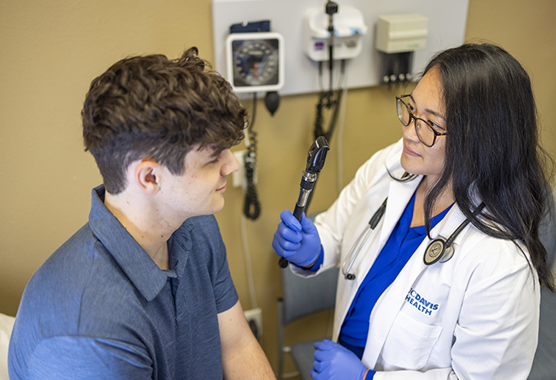
Diagnosing eye trauma requires the expertise of an experienced medical team. At UC Davis Health, our specialists provide a comprehensive eye exam to determine the type and severity of the eye trauma.
Eye trauma often requires emergency care. Our Department of Emergency Medicine is equipped to diagnose and treat all types of eye injuries. We quickly assess your eyes for trauma and use proven methods to treat them.
If needed, we may perform advanced ophthalmic imaging tests to check for damage to your retina and other internal structures. We may also order imaging tests like an MRI or CT scan. These tests show the bones and other structures surrounding your eyes.
After you receive emergency care, we may refer you to the UC Davis Eye Center for further evaluation and ongoing care. Our team provides the right combination of immediate care to treat the injury and long-term care to preserve your vision.
Eye Trauma Treatments at UC Davis Health
As a leading academic hospital and Level I trauma center, you can be confident you’ll receive the highest quality care for eye trauma. Our specialists regularly care for all types of eye injuries and accidents, providing you with a better chance of healing.
You have access to every subspecialty needed, from retinal disorders care to ophthalmic plastic and orbital surgery. Our team has the knowledge and experience to deliver customized treatment. We promptly evaluate your case and choose the treatment that will provide you with the best outcome.
Medications
Certain types of eye trauma may require antibiotics, steroids or other medications. Our specialists determine the most effective type and dosage based on your needs.
Procedures and Surgeries
We may need to flush out your eye or remove foreign substances. In severe cases, we may recommend surgery to preserve your vision. Our experts use the most advanced surgical techniques, backed by research and proven to be effective for your specific diagnosis.
Eye Trauma Prevention
Many eye injuries are preventable. You can help prevent eye injuries by wearing proper eye protection during sports and in high-risk work environments. Always wear safety goggles when working with any tools or chemicals, including lawn mowers and household cleaners.
How many eye injuries can be prevented?
90%With the use of proper eye protection
In the U.S.
2KAdults sustain a work-related eye injury every day
Sources: Prevent Blindness: Your Sight, Preventing Eye Injuries
National Institute for Occupational Safety and Health: Eye Safety
Request an Appointment
As Sacramento's No. 1 hospital, you'll benefit from unique advantages in primary care and specialty care. This includes prevention, diagnosis and treatment options from experts in 150 specialties.
Referring Physicians
To refer a patient, submit an electronic referral form or call.
Patients
Call to make an appointment.
Consumer Resource Center
Awards and Recognitions

Ranked among the best in 6 specialties
A U.S. News & World Report best hospital in cancer care, cardiology, heart & vascular surgery, geriatrics, neurology & neurosurgery, orthopedics, and pulmonology & lung surgery.

Ranked among the nation’s best children’s hospitals
U.S. News & World Report ranked UC Davis Children’s Hospital among the best in pediatric nephrology, orthopedics*, and neonatology. (*Together with Shriners Children’s Northern California)

Ranked Sacramento’s #1 hospital
Ranked Sacramento’s #1 hospital by U.S. News, and recognized in 23 types of care including acute kidney failure, cancer care, cardiology, heart & vascular surgery, COPD, colon cancer surgery, diabetes, diabetes & endocrinology, ear, nose & throat surgery, gastroenterology & GI surgery, geriatrics, gynecological cancer surgery, heart arrhythmia, heart attack, heart failure, hip fracture, hip replacement, leukemia, lymphoma & myeloma, lung cancer surgery, neurology & neurosurgery, orthopedics, pneumonia, pulmonology & lung surgery and stroke.

The nation’s highest nursing honor
UC Davis Medical Center has received Magnet® recognition, the nation’s highest honor for nursing excellence.

World-class cancer care
One of ~59 U.S. cancer centers designated “comprehensive” by the National Cancer Institute.

A leader in health care equality
For the 13th consecutive year, UC Davis Medical Center has been recognized as an LGBTQ+ Healthcare Equality Leader by the educational arm of America’s largest civil rights organization.
Latest Eye Health News
