Gallbladder Surgery (Cholecystectomy)
Our surgeons can ease pain from gallstones and improve your digestive health with minimally invasive gallbladder surgery.
Medically reviewed by Diana Farmer, M.D. on May 04, 2026.
Advanced Treatment for Gallstones
Your gallbladder is a small organ below your liver. It stores bile, which is produced by your liver. Bile helps your body digest fat when your gallbladder releases it into your small intestine.
Sometimes thickened bile forms into gallstones. Stones can appear in your gallbladder or block your bile ducts. For some people, this causes inflammation and pain.
Pain associated with gallbladder disease occurs in the middle of your stomach or below your rib cage on the upper right side of your abdomen. Recurring pain after eating fatty meals is a sign you need further evaluation.
If you need help for gallstones, you can come to the digestive health specialists in the UC Davis Hepatobiliary Surgery Program for expert care. Our surgeons have performed minimally invasive gallbladder surgery since 1990. They are part of our nationally recognized surgical team that helps more than 20,000 people each year.
On this page
Types of Gallbladder Removal Surgery
The most common treatment for gallbladder disease is the surgical removal of your gallbladder. Your body can function without a gallbladder by directing bile from the liver to the small intestine.
In most cases, we perform a cholecystectomy using minimally invasive techniques, including robot-assisted surgery. More than 90% of gallbladder removals in the U.S. are minimally invasive. This promotes faster healing with less discomfort and fewer complications.
Laparoscopic Cholecystectomy
Your surgeon makes one half-inch incision near your belly button to insert a laparoscope (a small camera attached to a thin tube). Tools are inserted through three half-inch incisions under your rib cage to remove your gallbladder and gallstones.
Open Cholecystectomy
An open procedure with a larger incision and longer recovery is less common. It may be necessary for an abnormal anatomy. Your surgeon may switch to an open cholecystectomy if there is too much bleeding or other concerns during a laparoscopic procedure.
Request an Appointment
As Sacramento's No. 1 hospital, you'll benefit from unique advantages in primary care and specialty care. This includes prevention, diagnosis and treatment options from experts in 150 specialties.
Referring Physicians
To refer a patient, submit an electronic referral form or call.
Patients
Call to make an appointment.
Consumer Resource Center
Preparing for Gallbladder Surgery
Your provider will order tests to determine if your gallbladder is causing your symptoms. Tests include bloodwork and an ultrasound to look for gallstones in the gallbladder or bile ducts. If gallstones are present, your provider will refer you to a surgeon to see if surgery is necessary. Your surgeon will check you and schedule your surgery.
-

When You Arrive for Surgery
Learn more about your stayCheck in at the information desk in the main lobby. We will guide you to the surgical waiting area. When it is time for your surgery, you will move through the pre-op area, the operating room and recovery.
-
Additional Testing
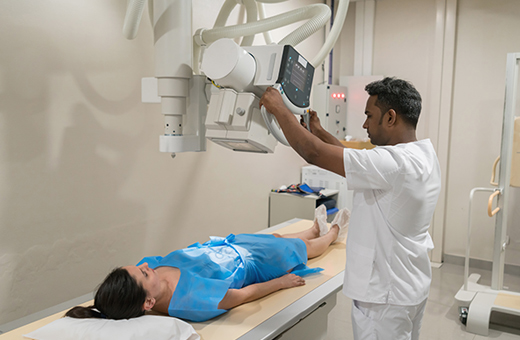
If your surgeon suspects you have a gallstone in your bile ducts, you may need another test at the time of surgery. You may have dye injected into your ducts and an X-ray to locate the stone.
-

After Surgery
Learn more about hospital dischargeIf you have a minimally invasive procedure, you may be able to leave the hospital in less than 24 hours.
Healing After Laparoscopic Cholecystectomy
Your surgeon will provide details about what you should do as you recover. Your care coordinator will discuss medication and lifestyle changes before you go home.
Wait to Shower
Wait 24 hours after surgery to shower. Your surgeon will tell you when it’s OK to take a bath or use a pool or hot tub.
Take It Easy
Avoid strenuous activity and heavy lifting following surgery. Most people can resume normal activities after minimally invasive surgery in one to three weeks. For some, it may take longer.
Watch Your Diet
Eat a high-fiber diet without spicy or greasy food. Drink plenty of water. You may feel gas and bloating after meals for several weeks.
"Gallstones," American Gastroenterological Association, https://patient.gastro.org/gallstones/
Awards and Recognitions

Ranked among the best in 6 specialties
A U.S. News & World Report best hospital in cancer care, cardiology, heart & vascular surgery, geriatrics, neurology & neurosurgery, orthopedics, and pulmonology & lung surgery.

Ranked among the nation’s best children’s hospitals
U.S. News & World Report ranked UC Davis Children’s Hospital among the best in pediatric nephrology, orthopedics*, and neonatology. (*Together with Shriners Children’s Northern California)

Ranked Sacramento’s #1 hospital
Ranked Sacramento’s #1 hospital by U.S. News, and recognized in 23 types of care including acute kidney failure, cancer care, cardiology, heart & vascular surgery, COPD, colon cancer surgery, diabetes, diabetes & endocrinology, ear, nose & throat surgery, gastroenterology & GI surgery, geriatrics, gynecological cancer surgery, heart arrhythmia, heart attack, heart failure, hip fracture, hip replacement, leukemia, lymphoma & myeloma, lung cancer surgery, neurology & neurosurgery, orthopedics, pneumonia, pulmonology & lung surgery and stroke.
The nation’s highest nursing honor
UC Davis Medical Center has received Magnet® recognition, the nation’s highest honor for nursing excellence.
World-class cancer care
One of ~59 U.S. cancer centers designated “comprehensive” by the National Cancer Institute.

A leader in health care equality
For the 13th consecutive year, UC Davis Medical Center has been recognized as an LGBTQ+ Healthcare Equality Leader by the educational arm of America’s largest civil rights organization.
Latest Surgery News