Hip Replacement
Our experts offer same-day surgery, minimally invasive procedures and hip preservation strategies to help you get back to your everyday activities.
Medically reviewed by Mauro Giordano, M.D. and Zachary Lum, D.O on Oct. 22, 2025.

Move Better With Less Pain
If you have an injury, arthritis or another hip condition, every step and movement can be painful. A hip replacement is one of the most common orthopaedic procedures and can provide significant pain relief. For some people, it can be life changing.
At UC Davis Health Department of Orthopaedic Surgery, our experts take a personalized approach to hip pain. We evaluate you thoroughly and work with you to decide whether hip replacement is right for you. Every day, adults across Northern California seek our care to feel and move better.
On this page
Surgical Approaches to Hip Replacement
You are in the care of our expert, compassionate orthopaedic surgery team when you need hip replacement. Our surgeons have expertise in a full range of surgical procedures for hip replacement and hip joint preservation. They use the most up-to-date techniques to make surgery safer and more effective for you.
Total Hip Replacement
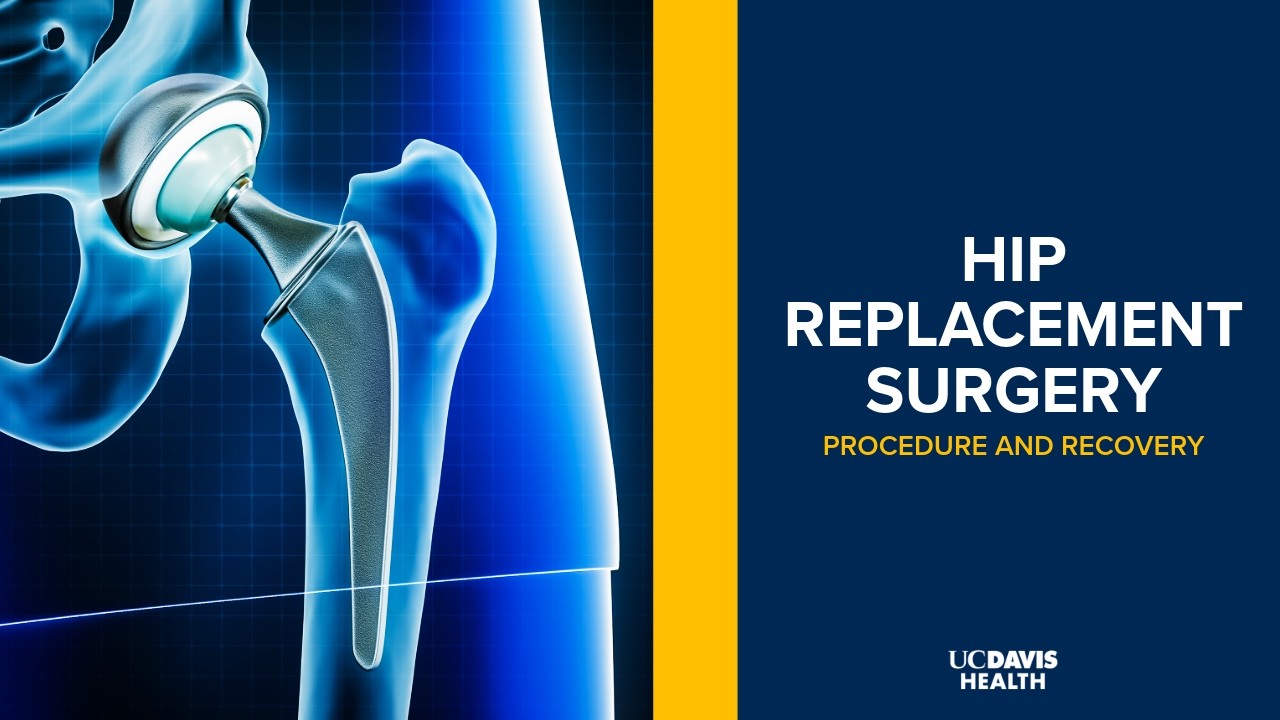
The ball of your leg bone (femur) fits into the socket of your pelvis within your hip. Hip replacement surgery uses artificial parts to replace the ball and socket of the joint.
Revision of Prior Surgeries
If you had a hip replacement and still have problems, we evaluate and recommend whether you should have revision surgery. Our surgeons also perform complex staged reconstruction for infections that develop after hip replacement.
Minimally Invasive Approaches
You may be a good candidate for minimally invasive robotic-assisted procedures. Our advanced technology enhances surgical precision, reduces pain after surgery and speeds recovery.
Request an Appointment
As Sacramento's No. 1 hospital, you'll benefit from unique advantages in primary care and specialty care. This includes prevention, diagnosis and treatment options from experts in 150 specialties.
Referring Physicians
To refer a patient, submit an electronic referral form or call.
Patients
Call to make an appointment.
Consumer Resource Center
Preparing for Hip Replacement Surgery
Our team is by your side at every step. We help you understand what to expect before, during and after hip replacement. If you have any questions or problems, we are here for you.
-

Before Surgery
Several weeks before surgery, you will have medical tests to make sure you are healthy enough for the procedure. These may include X-rays and blood tests. You get instructions from your team to help you prepare your home for a safe and comfortable recovery. You also get details on when to stop eating and drinking before surgery, when to arrive at the hospital and what to bring with you. Your surgeon may also tell you to have any necessary major dental work done several weeks before your knee replacement. Dental work can be a source of infection that can spread to your new knee.
Your care team will work with you to manage any chronic conditions, such as diabetes or heart health. All patients are required to attend a pre-operative informational class. This session will give you all the information about the surgery preparation process.
-

During Surgery
You receive anesthesia to ensure you are asleep and don’t feel pain during the operation. The surgeon makes an incision to access your hip. The location and size of the incision depend on the problem with your joint and the specific procedure. The surgeon then removes the damaged areas of bone and cartilage and installs artificial devices made of metal, ceramic or plastic.
-

After Surgery
You may go home the same day or stay one or more nights in the hospital. Some people have go to physical therapy rehabilitation facility before going home. The main goal after surgery is to help you stand and start some light activity, although this takes time. You will have an exercise plan and may need to use devices like a walker or crutches and go to physical therapy. Your care team will help you manage pain after the surgery, monitor your recovery and help you learn to live with your new hip.

Home Care
Most people experience a significant reduction in pre-surgery pain after hip replacement. With time and proper care, you should notice a gradual, steady recovery and improved strength and endurance.
Care for Your Incision
Keep your incision clean and dry to prevent infection and change the dressing as directed.
Do Your Exercises
You will have an exercise plan to strengthen your hip and improve your range of motion. Doing these exercises regularly will help you return to your everyday activities faster.
Prevent Dislocation
It’s possible for the new joint to become dislocated. Avoid bending at the waist beyond 90 degrees or turning your legs too much inward or outward.
Awards and Recognitions

Ranked among the best in 6 specialties
A U.S. News & World Report best hospital in cancer care, cardiology, heart & vascular surgery, geriatrics, neurology & neurosurgery, orthopedics, and pulmonology & lung surgery.

Ranked among the nation’s best children’s hospitals
U.S. News & World Report ranked UC Davis Children’s Hospital among the best in pediatric nephrology, orthopedics*, and neonatology. (*Together with Shriners Children’s Northern California)

Ranked Sacramento’s #1 hospital
Ranked Sacramento’s #1 hospital by U.S. News, and recognized in 23 types of care including acute kidney failure, cancer care, cardiology, heart & vascular surgery, COPD, colon cancer surgery, diabetes, diabetes & endocrinology, ear, nose & throat surgery, gastroenterology & GI surgery, geriatrics, gynecological cancer surgery, heart arrhythmia, heart attack, heart failure, hip fracture, hip replacement, leukemia, lymphoma & myeloma, lung cancer surgery, neurology & neurosurgery, orthopedics, pneumonia, pulmonology & lung surgery and stroke.
The nation’s highest nursing honor
UC Davis Medical Center has received Magnet® recognition, the nation’s highest honor for nursing excellence.
World-class cancer care
One of ~59 U.S. cancer centers designated “comprehensive” by the National Cancer Institute.

A leader in health care equality
For the 13th consecutive year, UC Davis Medical Center has been recognized as an LGBTQ+ Healthcare Equality Leader by the educational arm of America’s largest civil rights organization.
Latest Orthopaedics News